





Tuto proposed by Gérard PATOUX, President of the Bâteaux et Gréements de Tradition de Saint Raphaël.
On the wooden boats built by our ancestors, there are parts that show, with the years, signs of fatigue. Often, in places where changing the part requires a considerable amount of work, which leads to other discoveries... This increases the bill and discourages the owner from wanting to refurbish his pointu.
With the help of modern products, patience, you can remedy this and save this heritage to sail again at a reasonable cost.
The Association des Bateaux et Gréements de Tradition de Saint Raphaël, which has been restoring Provençal pointus since 1998, uses resins that our elders would have liked to have had in order to alleviate this kind of problem.
In most cases, the damaged parts are located between the planking and the parts making up the bow or the stern, but also between the port side planking and the parts of the keel (keel and false keel). Most of the time, the wooden parts that have contact with fresh water, rain that stagnates in the bottom for example.
The first thing to do is to work on the boat in dry conditions, on land, on dry parts that have been rinsed with fresh water.
1 - Start by removing what crumbles easily by hand, or with a tool, then sand down to the sound wood of the surrounding parts. Blow it out with a compressor to remove the dust.
2 - Prepare liquid resin. To do this, mix epoxy SR 5550 with hardener SD 5503 (according to the prescribed proportions) and dilute with EP 217. Using a brush, impregnate the sick part of the wood with this mixture and saturate the whole.
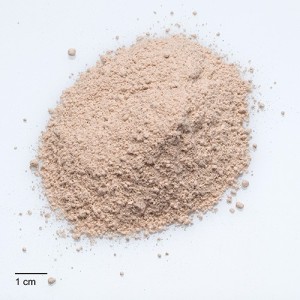
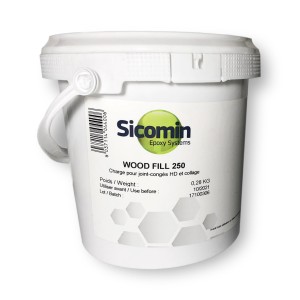
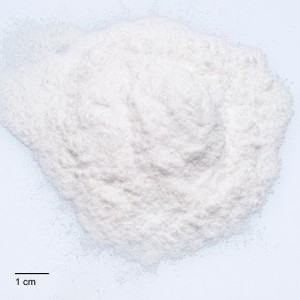
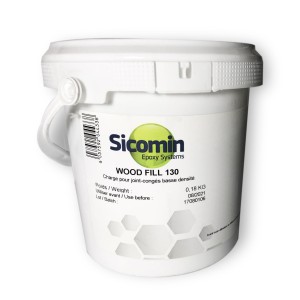
3 - Prepare a thick paste: SR 5550 + hardener SD 5503 and mix with WOOD FILL 250.
If necessary, add sawdust to make the paste more consistent. When the hole is large, add a piece of wood roughly fitted, fill to bring it to the same level as the surrounding parts.
If the hole is too large, to prevent the product from leaking during the curing process, cover it with a piece of plastic or tear cloth, holding it in place with tape.
As soon as it has cured after about 12 hours, sand (before you do, you will clog the disc). If imperfections appear, adjust with a little paste (SR5550 / SD5503 / WOOD FILL 250) then sand.
When the desired surface is obtained, cover with paint or varnish and you're done.
This method has been used on our pointus for over ten years now, both above and below the waterline. It is very efficient and the whole thing ages very well!
Thanks to Gérard PATOUX !