Guides & Tips
 Your achievements
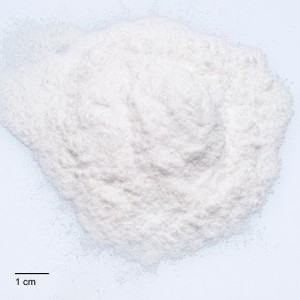
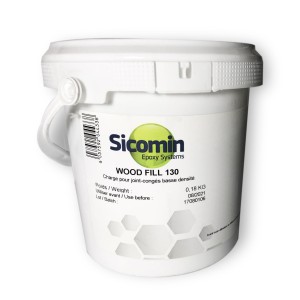
WOOD FILL 130
Price
€13.92
There are 12 products.
Sous titre pour préciser…
Our answers to your most frequently asked questions
Epoxy resin fillers are used to modify the properties of the mixture: weight reduction, thixotropy, mechanical reinforcement, thermal improvement, or the creation of fillers and fairing compounds adapted to each application.
Without fillers, the resin remains fluid. Adding fillers makes it possible to thicken the mixture, make it non-sagging, stronger, or easier to sand depending on the need, while improving its overall performance.
A thixotropic filler prevents the resin from flowing on vertical or inclined surfaces. It is ideal for bonding, filleting, fairing, and composite lamination applications.
Yes, certain fillers make it possible to create lightweight epoxy mixtures. They are particularly used to produce easy-to-sand fillers or repairs without adding weight to the structure.
Yes, certain fillers enhance the mechanical strength, stiffness, or impact resistance of the epoxy mixture, which is essential for highly stressed composite parts.
Yes, specific fillers can improve the thermal conductivity of epoxy resin, particularly for technical or industrial applications requiring better heat dissipation.
Epoxy filler is a mixture of epoxy resin and fillers that forms a thick, moldable, and highly resistant paste used for repair, fairing, bonding, or sealing.
Yes, epoxy filler is completely waterproof once cured. It can be used to fill cracks, repair leaks, or restore joints in humid or submerged environments.
Epoxy filler adheres to most substrates: wood, metal, fiberglass, carbon, ceramic, concrete, or composites, provided the surface is clean and properly prepared.
Epoxy filler does not shrink, is waterproof, and offers better resistance to mechanical and chemical stress. Unlike polyester, it does not require a protective gelcoat and provides greater durability.
To help you find inspiration