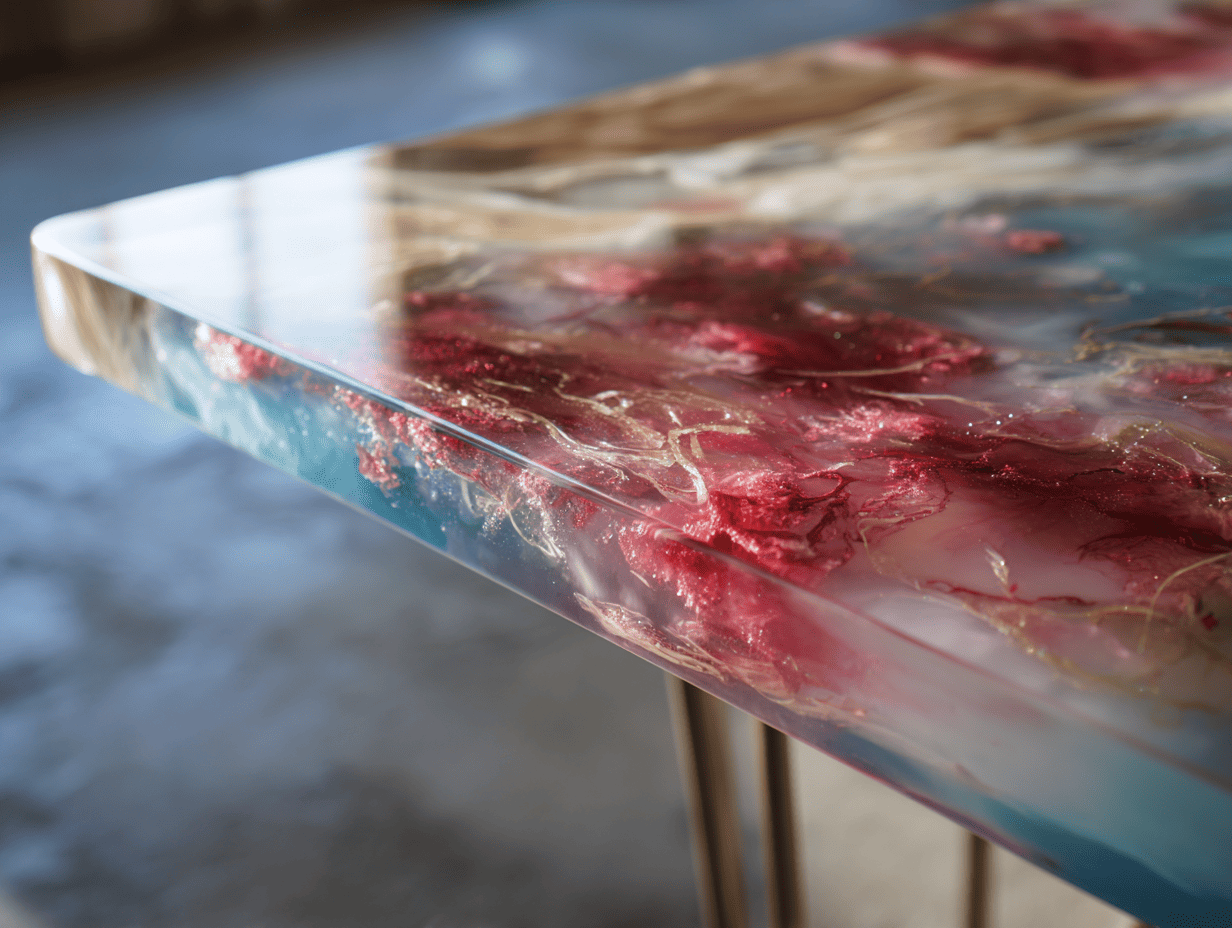
Wood and Epoxy Craftsmanship: A Professional Guide
The combination of wood and epoxy resin has gone far beyond a simple trend to become a true signature of contemporary craftsmanship. For cabinetmakers, carpenters, and makers, epoxy is no longer just a pore filler, but a fully fledged creative medium—capable of turning an imperfection into a focal point and a simple tabletop into a work of art.
However, moving from a successful one-off creation to a profitable, marketable product range requires more than creativity. It demands technical mastery, process optimization, and a deep understanding of finishing techniques that create perceived value.
This article is a professional guide for woodworkers who want to integrate epoxy resin into their offerings. Far from beginner tutorials, we will cover the key factors that make the difference between a hobby and a thriving professional activity: material selection, precise mixing, the art of finishing, and profitability calculations.
Material selection: the foundation of a premium product
The quality of your final piece is directly linked to the quality of your raw materials. No technique can compensate for unsuitable wood or poor-quality resin.
Wood: dry and stabilized above all
The main enemy of epoxy resin is moisture. Using wood that is not perfectly dry (ideally below 12% moisture content) is a guarantee of bubbles forming during curing—or even delamination months later.
Pro tip: Invest in a quality moisture meter. For high-value pieces such as river tables, prioritize stabilized wood slabs or vacuum-dried lumber. Dense hardwoods like oak, walnut, or olive wood deliver excellent results.
Resin: one epoxy system for each application
Not all epoxy resins are the same. Using a laminating resin for a thick pour will lead to overheating (violent exothermic reaction) and premature yellowing.
-
For thick pours (river tables, massive castings): Choose a casting resin such as Sicomin SR 1670. These systems are formulated for low exotherm, allowing large thicknesses to be poured in a single operation while providing crystal clarity and excellent air release.
-
For coating and finishing: A glazing or top-coat resin such as Sicomin SR 1500 is ideal. More viscous, it is applied in thin layers to achieve an ultra-glossy, protective finish.
-
The eco-friendly choice: To meet growing demand for sustainable products, consider the GreenPoxy® range. These bio-based resins offer high technical performance while reducing the carbon footprint of your creations—an increasingly powerful selling point.
Mixing and finishing: where technique creates value
The difference between an amateur piece and a professional one lies in execution details and, above all, the hours invested in finishing.
Mixing and ratios: precision is not optional
A resin that remains soft or tacky is every craftsman’s nightmare. The cause? Nine times out of ten, incorrect mixing or inaccurate ratios.
Pro tip: Forget measuring cups. Use a precision scale accurate to the gram. Strictly follow the weight-based mixing ratio specified in the technical data sheet. Apply the “double-pot” method: after an initial thorough mix, transfer the resin into a clean second container and mix again. This ensures that no unmixed material contaminates your pour.
Finishing: from raw surface to mirror polish
This is the longest—but most rewarding—stage. It is what justifies a high selling price.
-
Flattening: After casting, the surface is never perfectly flat. Using a router sled is the most accessible method to achieve perfect flatness.
-
Sanding: This is the core of the process. Start with a relatively coarse grit (P80 or P120) to remove machining marks, then progress gradually (180, 240, 320, 400, 600, 800…). Do not skip steps—each grit must remove the scratches from the previous one. For ultra-fine finishes, wet sanding from grit 1000 upward is essential.
-
Polishing: After sanding to 2000 or 3000 grit, the surface will be smooth but satin. Applying a cutting compound followed by a finishing polish with an orbital polisher will reveal a mirror-like gloss and depth in the resin.
-
Final protection: Even polished resin can scratch. For tabletops, applying a hardwax oil or ceramic varnish over the entire piece (wood and resin) unifies the finish (satin or matte) and provides superior resistance to scratches and stains.
Optimizing profitability: from cost calculation to sales
A beautiful piece that is not profitable remains a hobby. To build a sustainable business, you must control your costs and properly value your work.
Calculating the true cost
Your selling price should not be based solely on the cost of wood and resin. Be sure to include:
-
Raw materials: Wood, resin, pigments, etc.
-
Consumables: Abrasives (you will use many), polishing compounds, masking tape, gloves, mixing containers…
-
Fixed costs: Electricity, tool depreciation, workshop rent…
-
Your time: Estimate the total hours spent—from wood preparation to packaging—and set an appropriate hourly rate.
Adding value and selling
Your customer is not just buying a table—they are buying a unique handcrafted piece. Highlight your expertise.
-
Photography: Take high-quality photos from multiple angles. Include close-ups that showcase resin clarity, fine details, and flawless polishing.
-
Storytelling: Tell the story of the piece. What wood species was used? What technique? The fact that you use bio-based resin is a powerful selling argument.
-
Fair pricing: Do not undervalue your work. A high price, when justified by impeccable finishing and premium materials, signals quality to a discerning clientele.
By adopting a professional approach at every stage—from selecting your Sicomin epoxy system to final photography—you can transform your craftsmanship into a creative and profitable business.