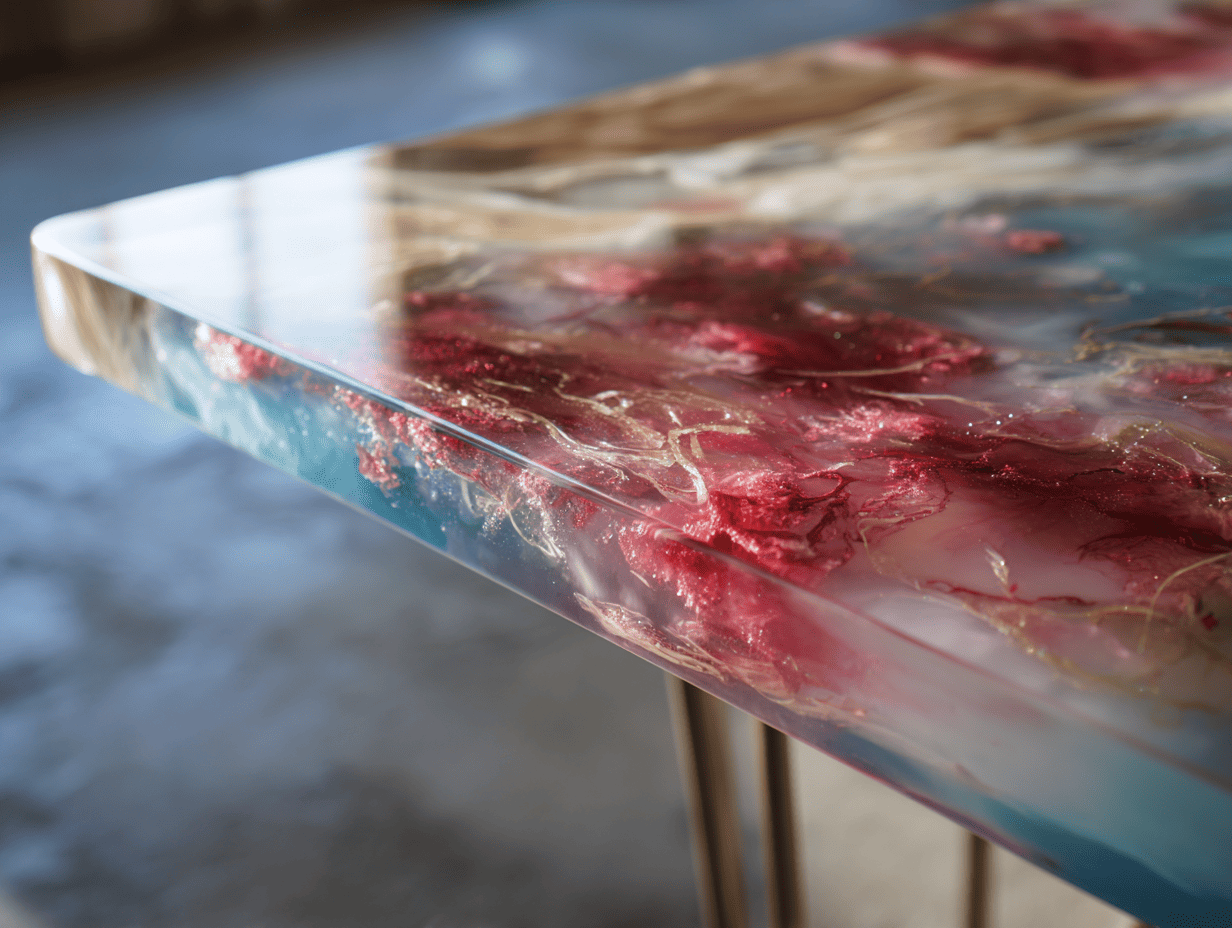
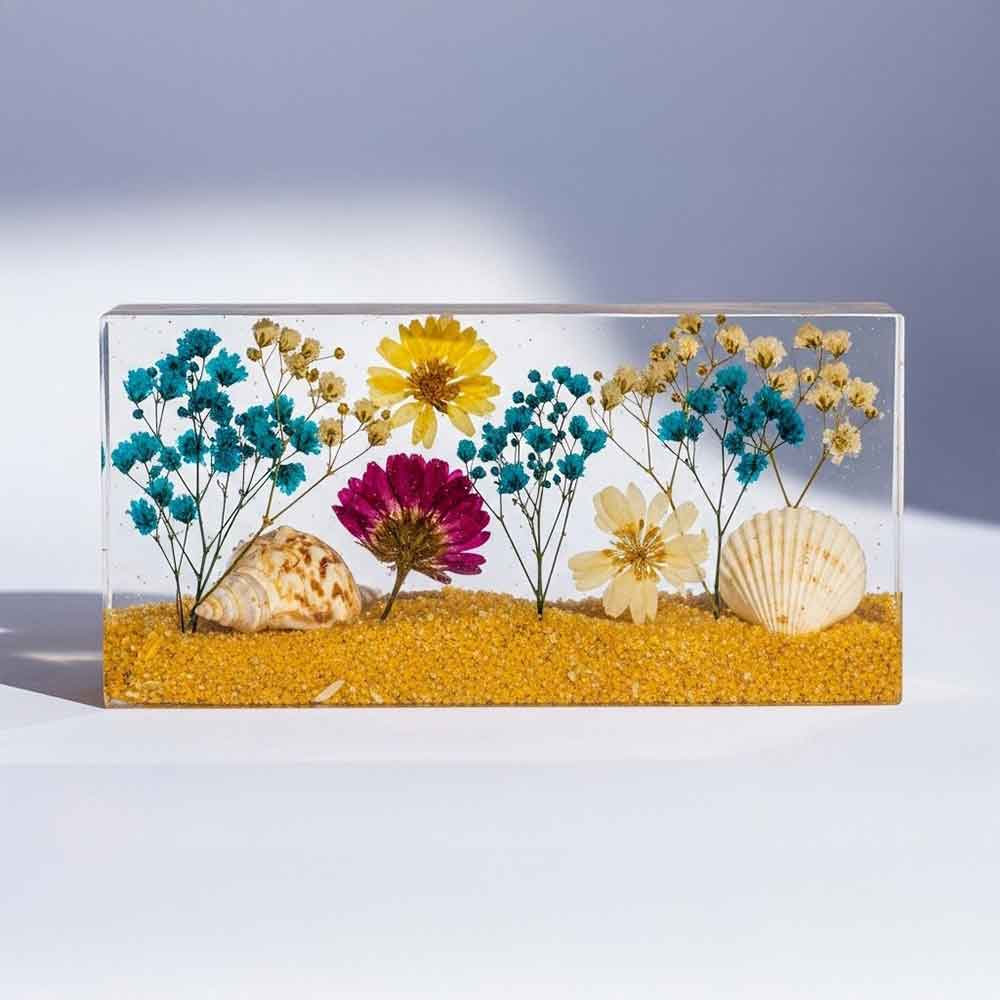
In recent years, epoxy resin has become increasingly popular. Quite simply, it’s everywhere—and for good reason. It is easy to work with and allows you to create a wide variety of practical and decorative projects. This resin is made up of two components that are mixed together to form a solid material. Depending on your needs, it can repair, enhance, and even beautify many things.
Although very practical, epoxy resin can hold a few surprises for beginners. That’s why we’ve put together this practical guide covering the most common problems related to using epoxy resin.
I didn’t get the result I expected
Epoxy resin adheres very well to wood. This is why so many creations combine wood and epoxy resin: river tables, countertops, custom trays, and more. The possibilities are almost endless when combining these two materials.
Epoxy resin penetrates deeply into the pores of the wood. However, it is essential to choose the right type of epoxy resin for your project. The main challenge with wood is that it is a living material that reacts to humidity and temperature changes. To make the right choice, think in advance about how you intend to use it:
-
If you want to revive and protect your wood, you will need a low-viscosity resin that can penetrate the wood more easily.
-
If you want to fill holes or a mold, it is better to choose a more viscous resin.
-
Finally, if you plan to use it on outdoor furniture, you will need a resin that is resistant to UV rays.
There are bubbles in my resin
If you notice air bubbles forming in your resin, this means that the resin and hardener were not mixed properly. Ideally, you should ensure the mixture is thoroughly blended before pouring the resin. However, there are a few tricks to reduce or even eliminate these unsightly air bubbles.
You can try removing them with a blowtorch. Heat the area where the bubbles appear using quick, sweeping motions. This should cause the bubbles to rise to the surface and escape. Be careful not to overheat the resin.
If bubbles remain on the surface, use a toothpick or a skewer to pop them. This is also a good opportunity to remove any debris that may have fallen into the resin during pouring.
My resin heats up too much and too quickly
This can happen if you do not respect the recommended mixing ratios indicated for your resin. In general, epoxy resin should be applied in thin layers (between 1 and 2 cm), depending on the product used. To achieve greater thickness, you should work in several stages, applying layer after layer.
Another possible explanation is that you waited too long to apply the resin after mixing it. When the resin and hardener are combined, a chemical reaction begins, generating heat. This is also why it is not recommended to use metal containers or to mix large quantities at once.
My resin has a cloudy appearance
After curing, you may be surprised to find a cloudy or hazy appearance. The resin may look almost opaque. There are several possible reasons for this:
-
The product may be too old and no longer usable.
-
The prescribed mixing ratios may not have been respected, preventing proper curing.
-
The resin may simply be of poor quality.
If you notice yellowing of your resin over time, this may be due to UV exposure. If your creation is intended to be exposed to sunlight, be sure to use a UV-resistant epoxy resin.
Our tips for optimal use of epoxy resin
To sum up, if you want a high-quality finish with your resin, be sure to follow these key rules:
-
Use the resin that is suited to your specific needs
-
Buy a high-quality product
-
Do not use a product that has been stored for more than one year
-
Strictly follow the mixing ratios indicated on the packaging