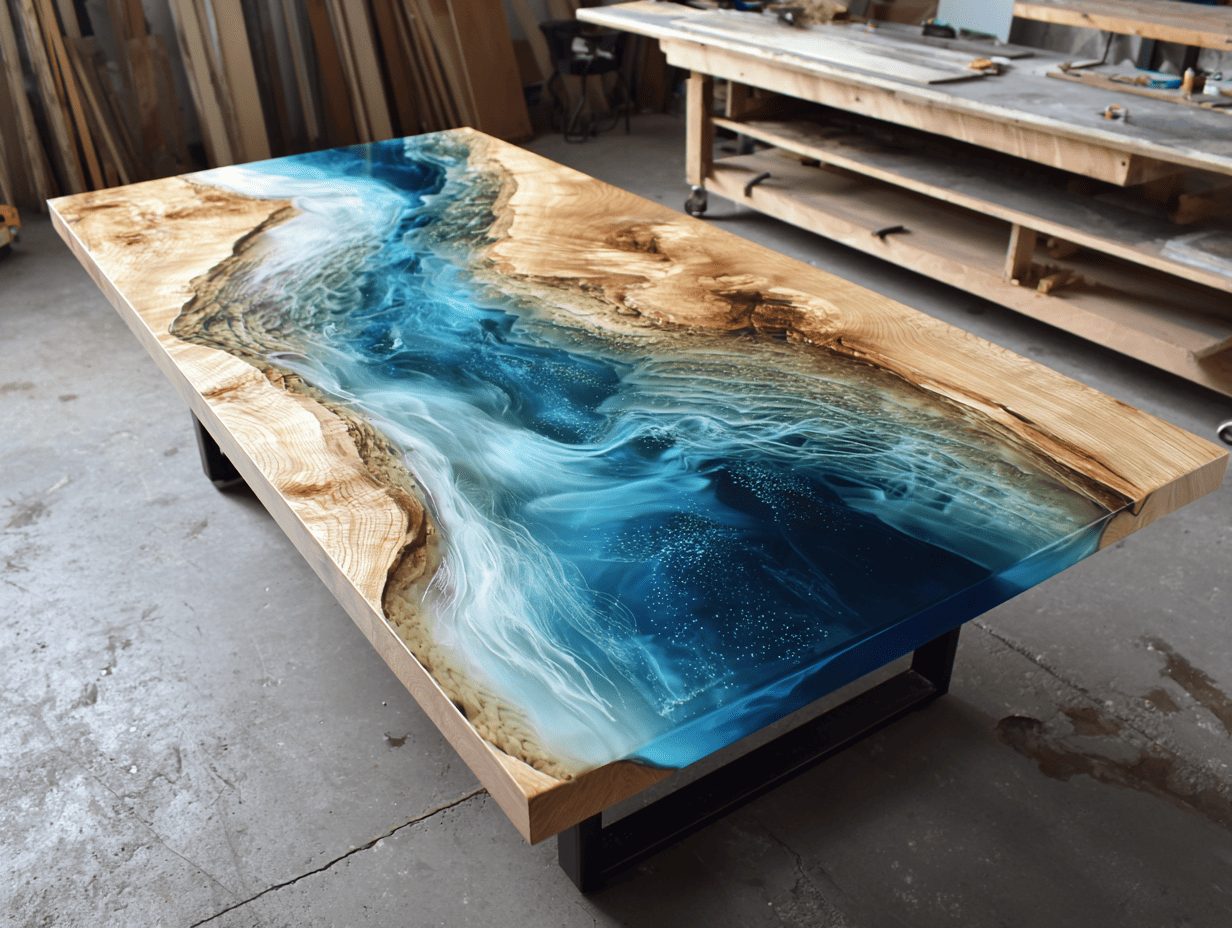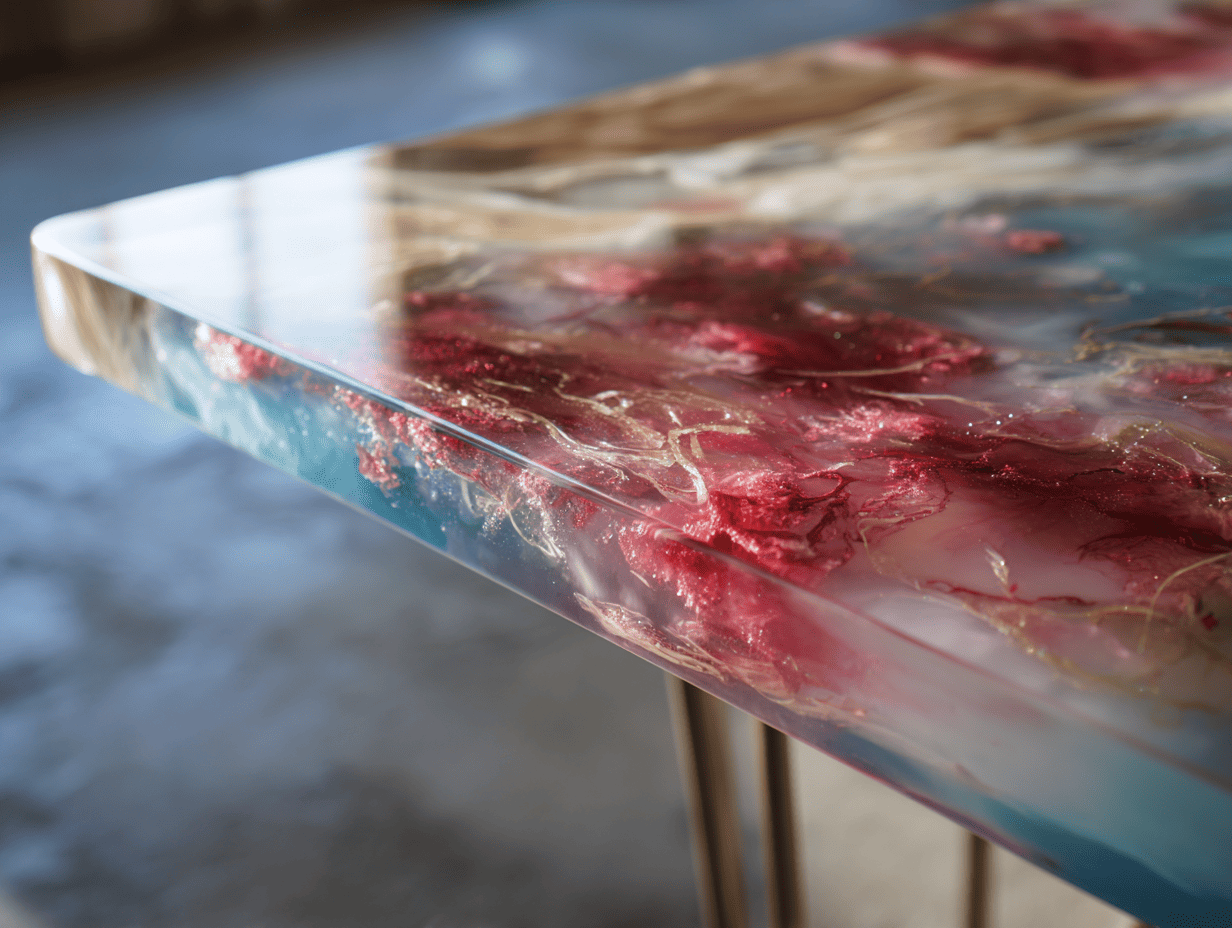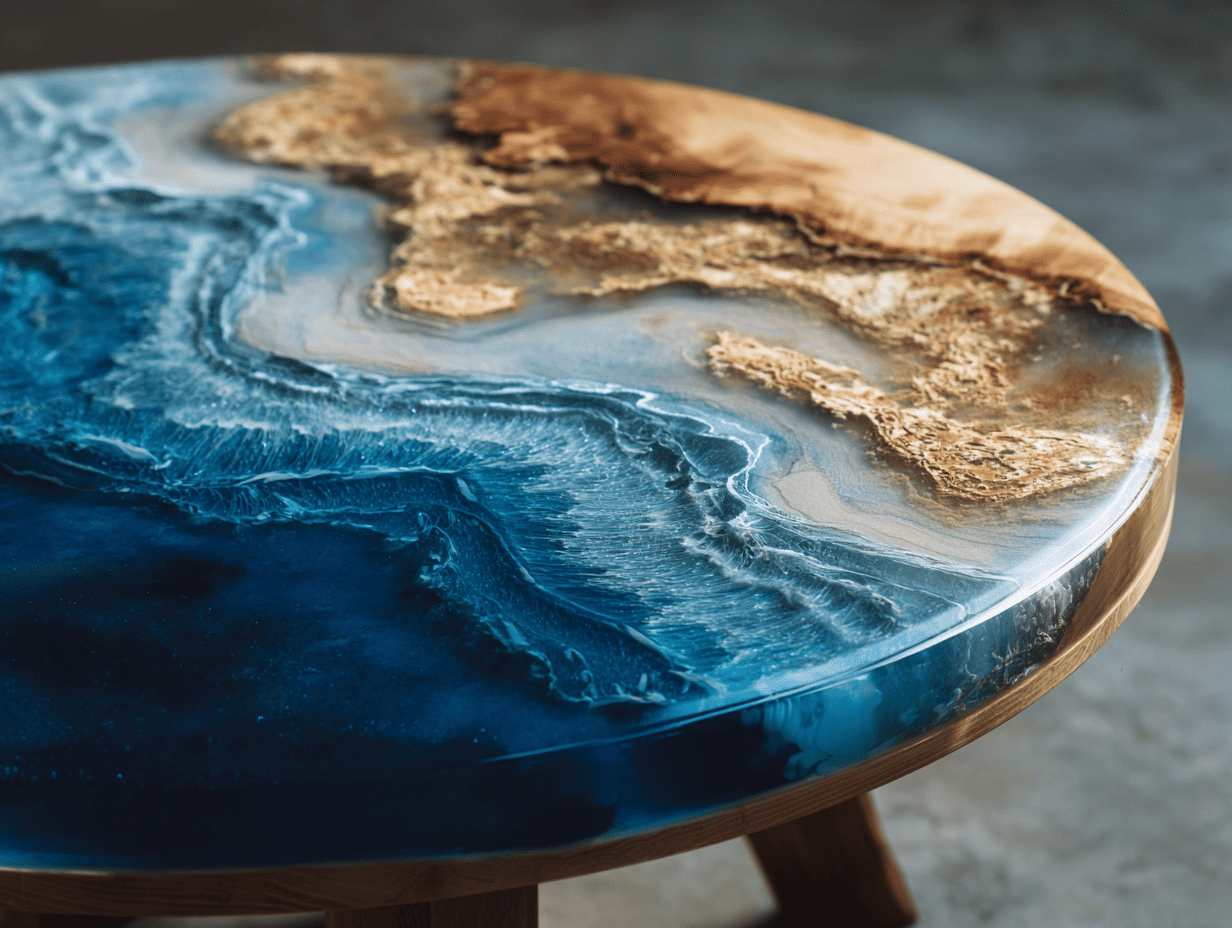




Epoxy resin is an extremely versatile product that offers a wide range of applications. If you have already worked with it, you know that it can easily be used for repairs, bonding, jewelry making, and much more. But did you know that epoxy resin can perfectly imitate marble? Yes—epoxy is an ideal material for creating a marble effect and enhancing your interior with a luxurious decorative finish. To achieve this effect, follow our step-by-step guide.
Materials Required:
-
Casting epoxy resin
-
Heat gun
-
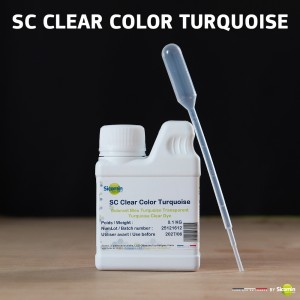
White pigments or white colorant
-
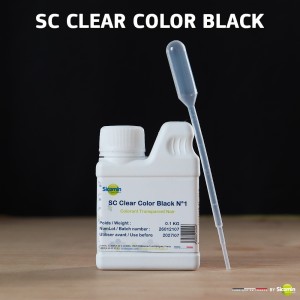
Black pigments
-
Grey pigments
-
Silver or metallic pigments
-
One mixing cup
-
Three small mixing cups
-
Mixing sticks
-
Rubber gloves
Step 1: Mix the Epoxy Resin
Start by accurately measuring the resin and mixing it with the hardener. Be sure to respect the ratio recommended by the manufacturer, which is usually indicated on the resin container. In most cases, the ratio is 1:1, meaning you should use the same amount of hardener as resin.
Once measured, proceed with mixing. Take your time and mix thoroughly to obtain a homogeneous blend. You can use wooden mixing sticks or a drill fitted with a mixing paddle set to the lowest speed. Be careful not to use a high speed, as this may introduce air into the mixture and cause the epoxy resin to become cloudy.
Step 2: Add Pigments to the Epoxy Resin
Once the resin is thoroughly mixed, pour small amounts of epoxy into the small mixing cups. Then add the pigments of your choice. Black, silver, and grey pigments are ideal for recreating the look of natural marble.
Add a small quantity of pigment to each cup and mix carefully until the resin is evenly colored.
Step 3: Prepare the Colored Resin
During mixing, continue adjusting the pigment levels until you obtain the desired shades. Your colored resins are now ready and can be poured onto the chosen surface.
Step 4: Pour the Base Layer
Pour the white epoxy resin onto your chosen surface and spread it evenly. You can use a rubber glove, a foam brush, or a plastic spreader for this step.
To finish, use a heat gun to gently apply heat to the resin surface in order to release any air bubbles that may have formed.
Step 5: Create the First Veins
Once the base layer is applied, use the black epoxy resin to create fine lines on the surface using a wooden stick.
For a subtle and realistic look, make very thin lines. It is best to start small to get a feel for the technique and determine the right amount of color needed to achieve a marble effect. Repeat this process with the other pigment colors.
Step 6: Create the Marble Effect
This is the fun part. Using your heat gun, begin moving the black epoxy resin lines to blend them into the base layer.
Start with the heat gun at a distance of about 15 cm and move it slowly across the surface.
You will quickly notice that the warm airflow pushes the epoxy and breaks up the lines. Continue applying heat and manipulating the veins until you achieve the desired marble pattern.
Step 7: Allow the Epoxy Resin to Cure
The final step is simply to let the epoxy resin cure completely without touching it. That’s it—you’ve created your own incredibly realistic faux marble using epoxy resin!
This technique can be used to create trays, tables, or even countertops with a marble effect. On a larger scale, you can also produce flooring that perfectly imitates marble, giving your interior a luxurious look at a much lower cost.