Epoxy resin is a versatile material used across many industries, in renovation work, as well as in creative hobbies by a wide range of individuals. There is more than one type of epoxy resin, and each has its own specific characteristics. Discover the different types of epoxy resin in this article.
Epoxy Resin (Standard)
Standard epoxy resin consists of two components: a resin base and a hardener. It is the mixing of these two components that allows the system to cure and become solid.
This type of epoxy resin can be used for many projects, including DIY work, jewelry making, floor coatings, and the repair of various materials. To make the right choice, it is important to distinguish the characteristics of each resin, particularly its viscosity and curing time.
These two parameters are essential to achieving the desired final result.
Casting Resins
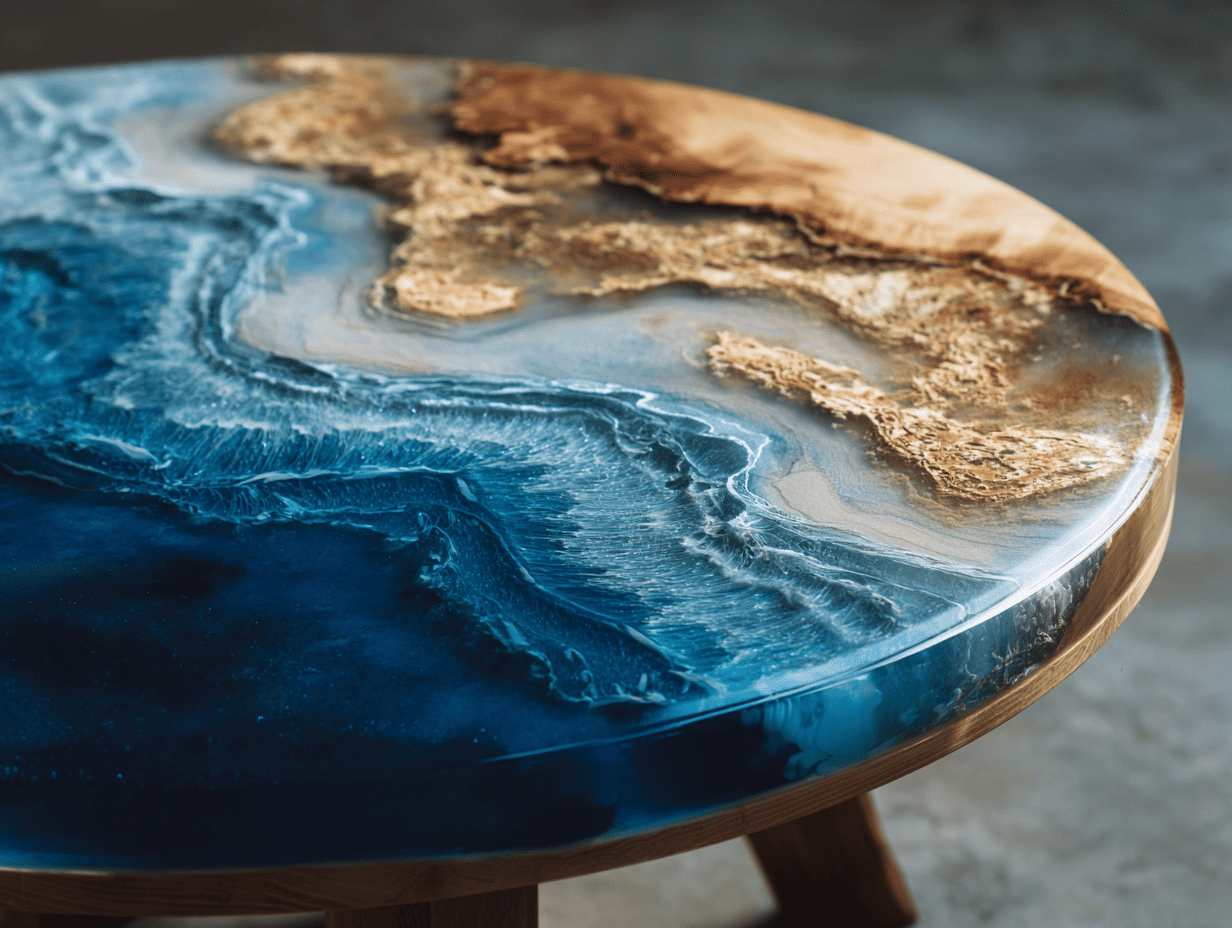
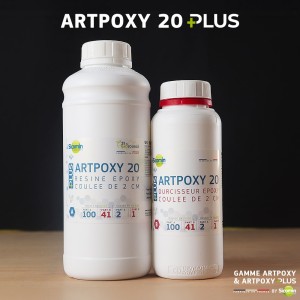
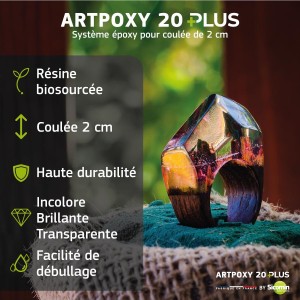
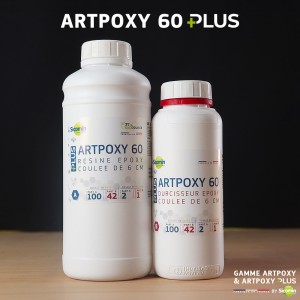
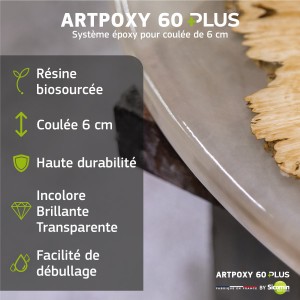
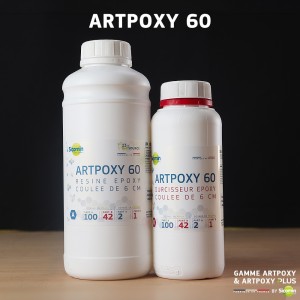
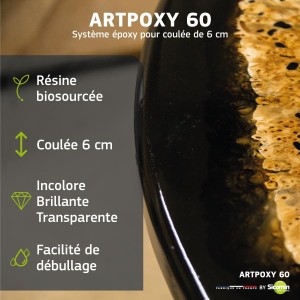
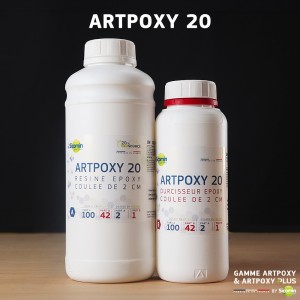
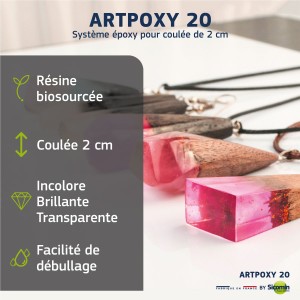
A casting resin is an epoxy resin with low viscosity. Some systems can even have an almost water-like consistency. Casting resins are recommended for mold casting, jewelry making, furniture manufacturing such as river tables, floor coatings, and filling cracks in wood.
Their low viscosity makes them easier to work with. Their curing time is slower, allowing application without rushing and giving more time to work the resin properly. In addition, because the reaction occurs more slowly, casting resins allow thicker pours without excessive heat buildup.
Laminating Resins
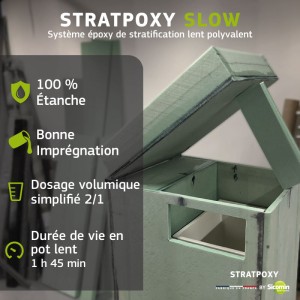
Unlike casting resin, laminating resin has a higher viscosity, similar to that of honey. It can be used as a protective coating or varnish for furniture. It is also an excellent choice for decorative projects such as creating resin geodes or Petri-style resin art.
Because laminating resin is more viscous, the chemical reaction is faster and generates more heat. It is therefore essential to strictly follow the manufacturer’s instructions regarding the maximum layer thickness at each application stage.
Foaming Epoxy Systems
Another type of epoxy resin, less well known to the general public, is foaming epoxy. These systems also consist of a resin base and a hardener. Once mixed, the system expands and transforms into an expanding foam.
These foaming epoxy systems, specifically developed by Sicomin, are used to produce high-performance structural core materials. The main advantage of epoxy foam lies in its enhanced adhesion and ease of application.
The use of foaming epoxy is particularly relevant in the aerospace and marine industries. These innovative systems make it possible to replace certain core materials in structures where rigid materials such as PVC would be difficult to use. Epoxy foam can take virtually any shape and easily adapts to complex parts.
This results not only in significant time savings, but also in cost reductions for manufacturers, especially when producing parts with complex geometries.
Furthermore, the range of foaming epoxy systems developed by Sicomin has been designed to cover a wide variety of applications. These systems can be adapted to different density requirements and mechanical constraints.
The expansion of epoxy foam can be controlled at low pressure, making it possible to use lightweight tooling that requires fewer structural reinforcements while still achieving high-performance results.
There is also a sprayable version of epoxy foam designed for application using a spray gun.