Epoxy resin has become an essential material for decorative object creators, offering a unique combination of durability, transparency, and versatility. Whether you want to create elegant jewelry, wood-and-resin tables, or artistic wall decorations, choosing the right epoxy resin is key to the success of your project. With a wide variety of resins available on the market—each with specific characteristics—it is essential to understand the selection criteria in order to make the best choice.
This article aims to guide you through the different epoxy resin options, taking into account the specific needs of your decorative project. We will cover the types of resins available, the aesthetic and technical criteria to consider, as well as the environmental factors that can influence your choice. With these tips, you will be able to select the ideal epoxy resin to create decorative objects that are both beautiful and durable.
Different Types of Epoxy Resin for Decorative Objects
When planning to create decorative objects with epoxy resin, it is essential to understand the different types of resin available on the market. Each type of epoxy resin has unique properties that make it more or less suitable for certain projects. Making the right choice based on your decorative project will help you achieve optimal results both aesthetically and functionally.
Clear Epoxy Resin
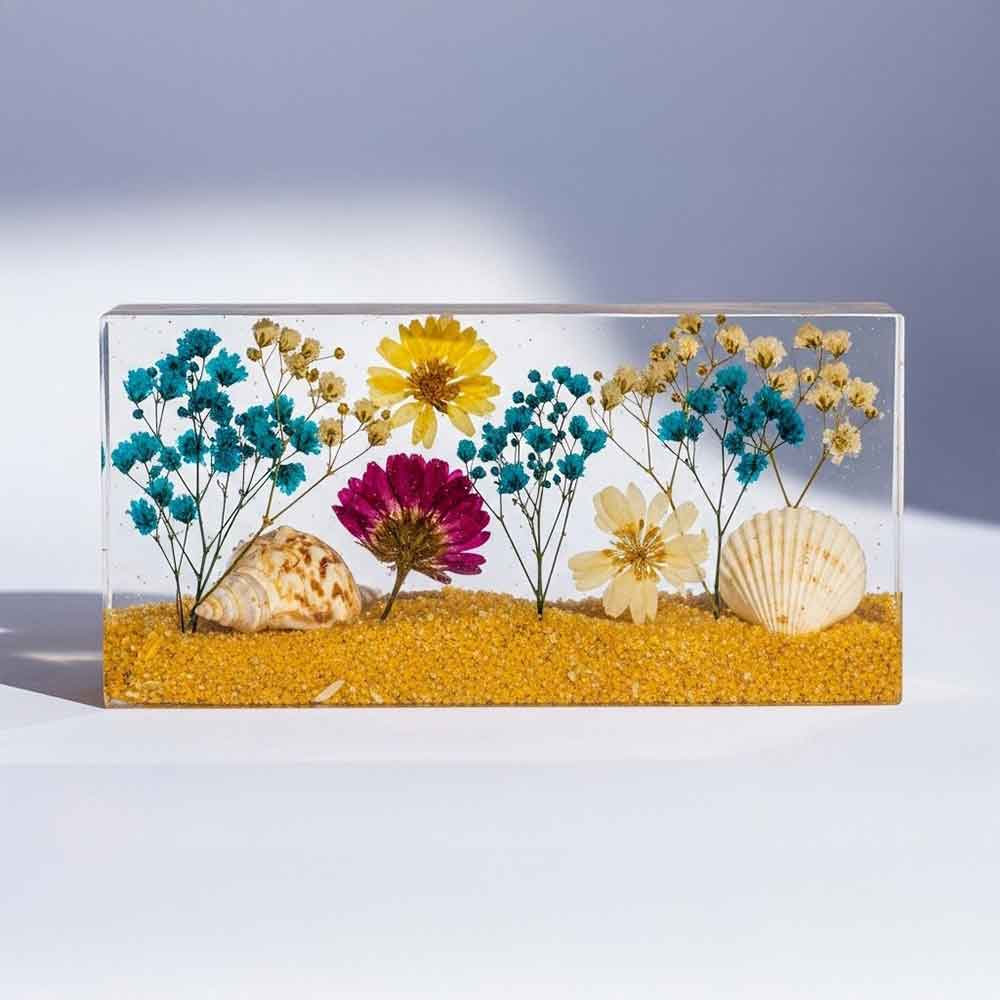
Clear epoxy resin is widely used for projects where clarity and transparency are key elements. This type of resin is particularly well suited for decorative objects such as jewelry, wood inlays, or projects requiring depth effects or inclusions. Its ability to remain crystal clear—without significant yellowing over time (especially when UV-protected)—makes it a preferred choice for creations where every detail matters.
Tintable Epoxy Resin
If your project requires a touch of color, tintable epoxy resin is ideal. It allows you to create decorative objects in rich and varied shades, ranging from subtle tones to vibrant colors. Tintable epoxy resins are often used for artistic projects where creative expression is essential. They can be combined with pigments, inks, or powders to create unique visual effects such as marbling, shading, or gradients.
Effect Epoxy Resin (Glitter, Marbling, etc.)
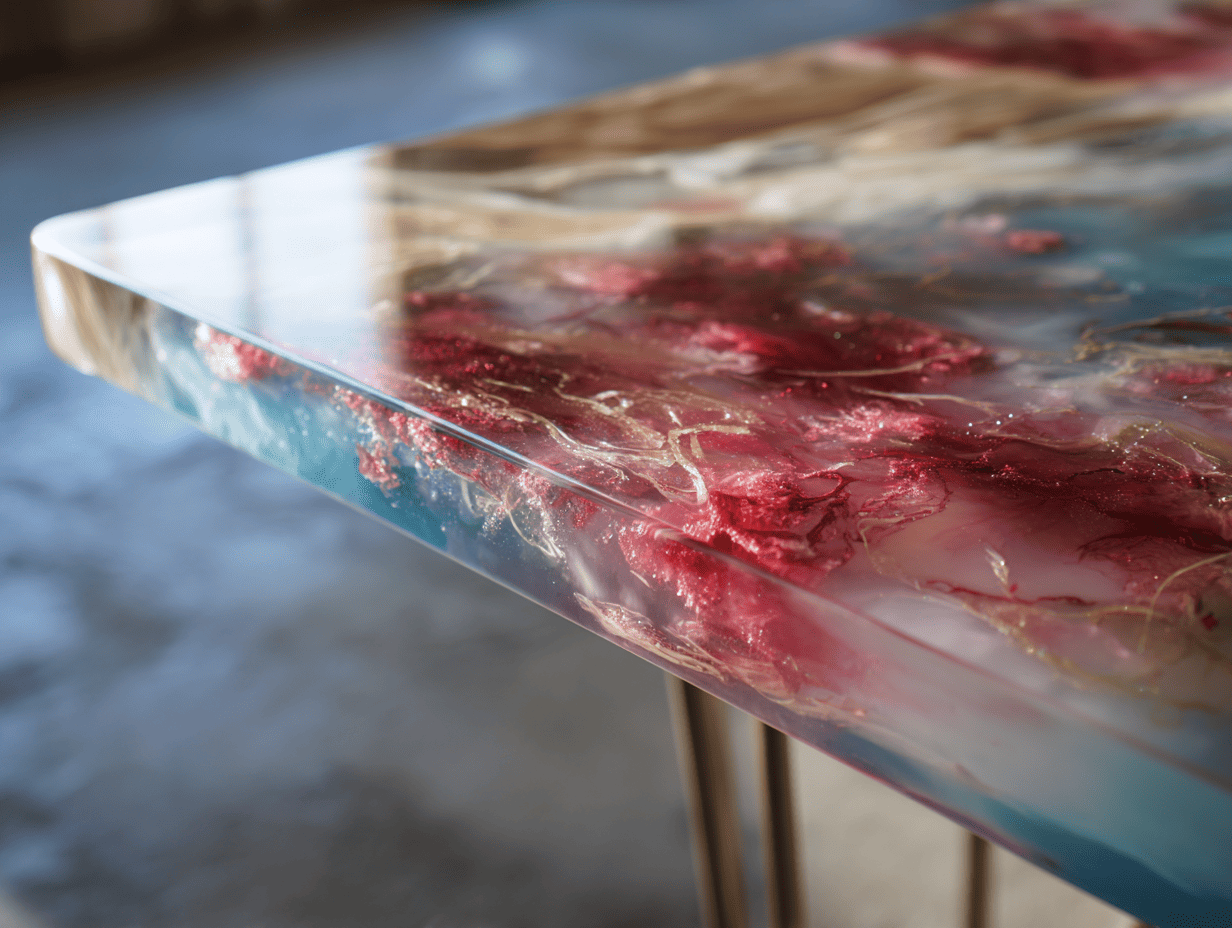
For bolder decorative objects, special epoxy resins with built-in effects are available. These resins may contain glitter, metallic pigments, or other additives to create spectacular finishes. They are perfect for projects that require a luxurious or artistic appearance, such as serving trays, tabletops, or wall art pieces.
Selection Criteria Based on the Decorative Project
Choosing the ideal epoxy resin largely depends on the type of decorative project you plan to create. Each project has specific requirements in terms of durability, finish, and working time. Understanding these criteria will help you select the resin that best fits your needs.
Nature of the Project
Different projects require different types of resin depending on detail level, layer thickness, and desired final effect.
-
Jewelry and small objects: The resin should be easy to work with and have low viscosity to properly fill molds and capture fine details. A fast-curing resin may be preferable.
-
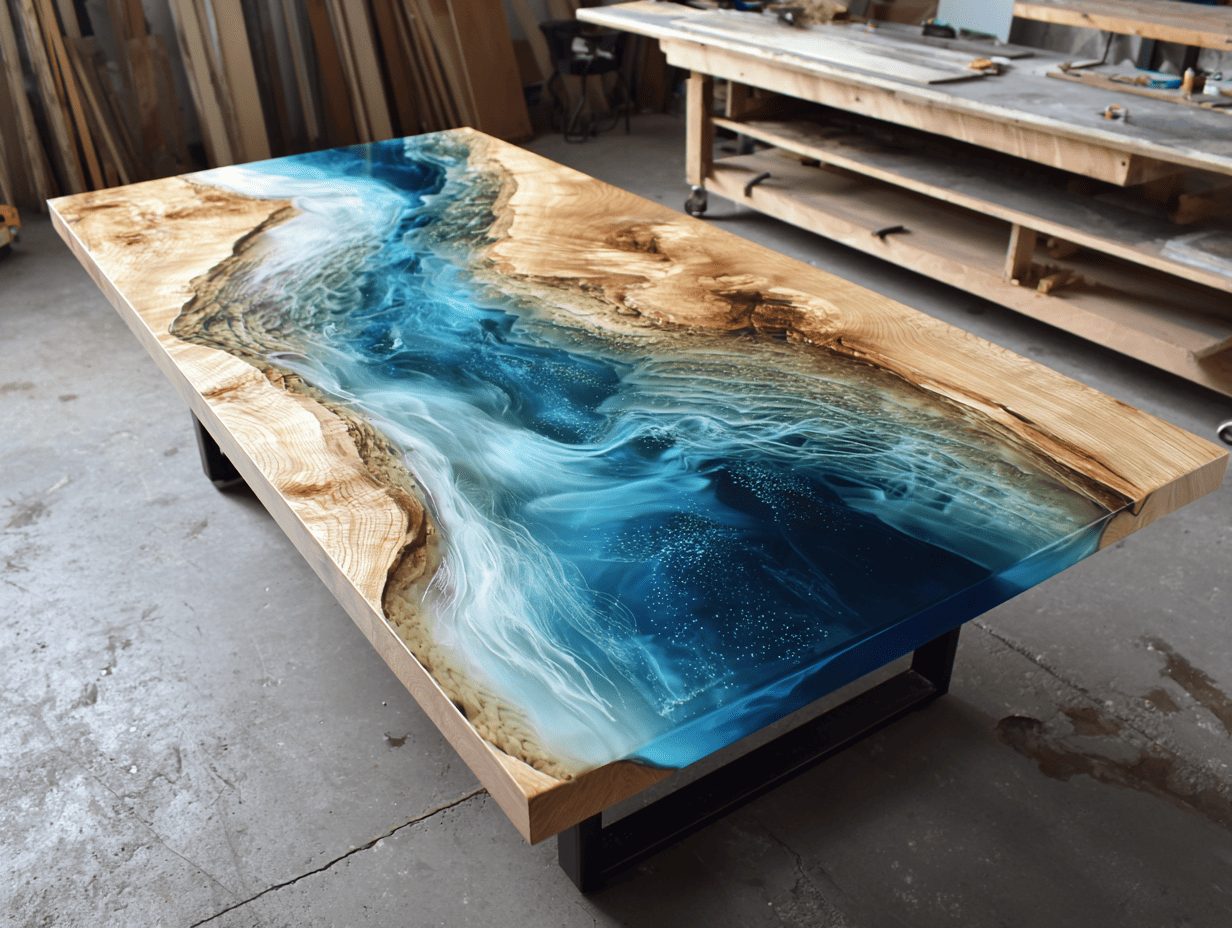
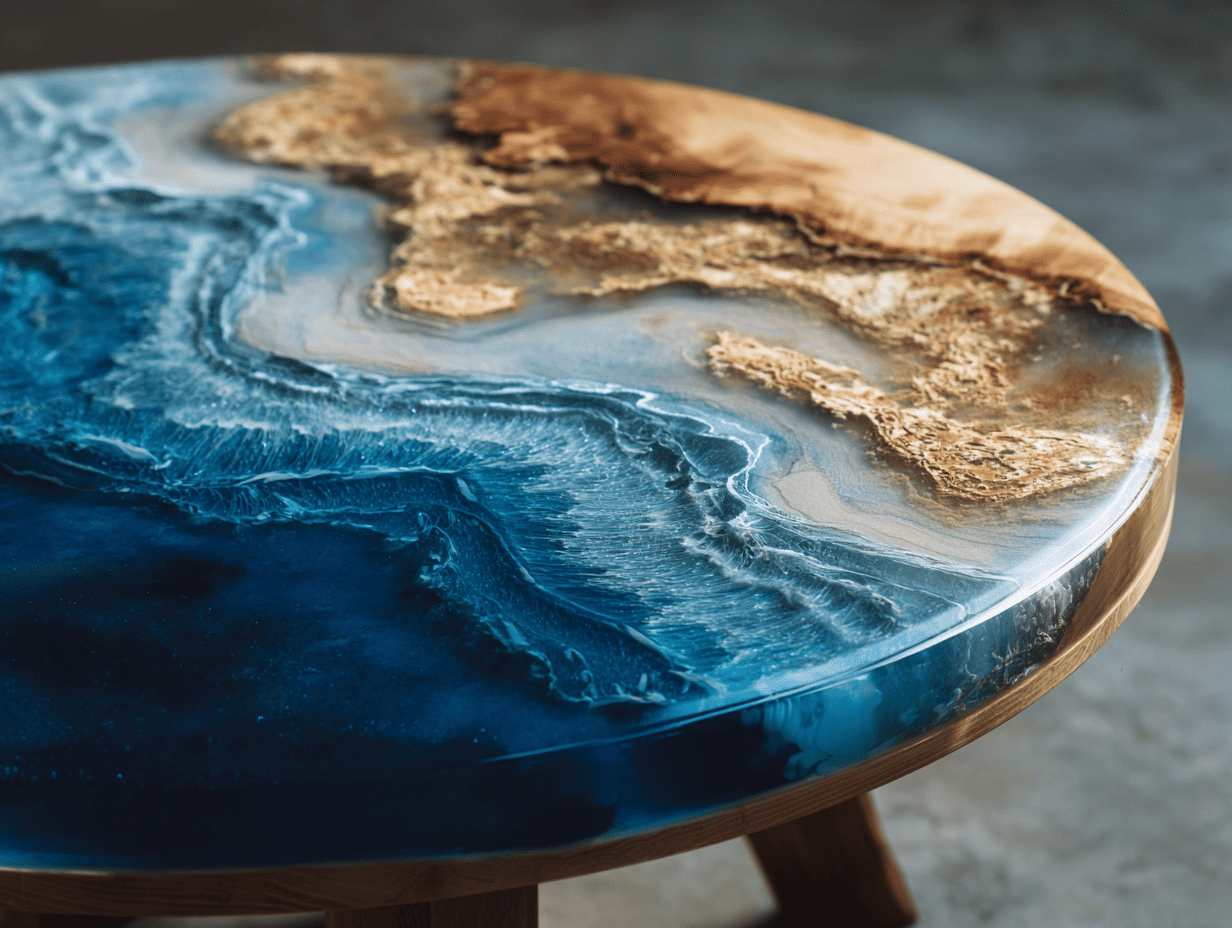
Wood and resin tables: These often require a thicker resin capable of deep pours without sagging, along with good UV resistance.
-
Wall coverings and large surfaces: For these applications, a self-leveling resin with a longer working time is ideal to achieve a smooth surface.
Durability and Resistance
-
Scratch and impact resistance: Choose a high-impact epoxy resin for objects that are handled daily.
-
UV resistance: Opt for a UV-protected epoxy resin if the object will be exposed to daylight.
Curing Time
-
Fast curing: Ideal for simple projects and small items such as jewelry.
-
Slow curing: Better suited for complex projects where extra working time is needed to avoid imperfections.
Aesthetic Considerations
Aesthetic considerations play a central role when choosing epoxy resin for decorative objects. The final appearance of the resin can greatly influence the visual impact of your creation—whether through transparency, clarity, or special effects.
Transparency and Clarity
Transparency and clarity are crucial for projects where a clean, pure visual appearance is required. For optimal results, choose a high-quality epoxy resin with low degassing to minimize air bubbles.
Special Effects and Pigments
Adding pigments or special effects can turn a simple project into a true work of art. Use pigments specifically designed for epoxy resin to ensure good dispersion and uniform color.
Compatibility with Other Materials
When combining epoxy resin with other materials (wood, metal, glass), it is essential to choose a resin compatible with these surfaces to ensure proper adhesion.
Environmental Factors to Consider
When selecting epoxy resin for decorative object projects, it is important to take into account environmental factors that can affect the quality and durability of the finished product.
Light Exposure
UV rays can cause epoxy resin to yellow or degrade over time. For projects exposed to natural light, choose an epoxy resin with UV protection.
Temperature and Humidity
Temperature and humidity conditions during curing affect the final result. Make sure to work in an environment with a stable temperature between 20°C and 25°C (68–77°F) and moderate relative humidity.
Outdoor Use
If your creations are intended for outdoor use, choose an epoxy resin specifically formulated to withstand weather conditions, rain, and UV exposure.
By taking these environmental factors into account, you will be able to choose an epoxy resin that not only perfectly suits your decorative object project but also ensures durability and resistance to the elements your creations will face.