Résine époxy et upcycling : donnez une nouvelle vie à vos vieux meubles
Bringing an old piece of furniture back to life while enhancing its appearance is an increasingly popular approach, both among DIY enthusiasts and design professionals. Upcycling, in particular, makes it possible to transform worn objects into unique, functional pieces. Epoxy resin stands out as an ideal material for these renovation projects. It not only provides a flawless finish, but also enables a wide range of decorative effects while ensuring long-lasting surface protection. Whether you want to modernise a tabletop, restore drawers, or protect wooden furniture, epoxy offers endless possibilities for customisation.
Why use epoxy resin for furniture upcycling?
Epoxy resin offers numerous advantages when it comes to restoring or customising furniture. Highly valued in the DIY and home décor world, this material combines aesthetics and durability to give old pieces a second life while delivering a high-quality finish.
Strength and durability
Epoxy resin is known for its toughness and its ability to protect surfaces against wear over time. When applied to furniture, it provides long-lasting protection against moisture, scratches, and impacts. This makes it an excellent choice for everyday furniture such as tables, desks, or chests of drawers. Its durability significantly extends the lifespan of renovated items while keeping them looking flawless for years.
Customisable aesthetics
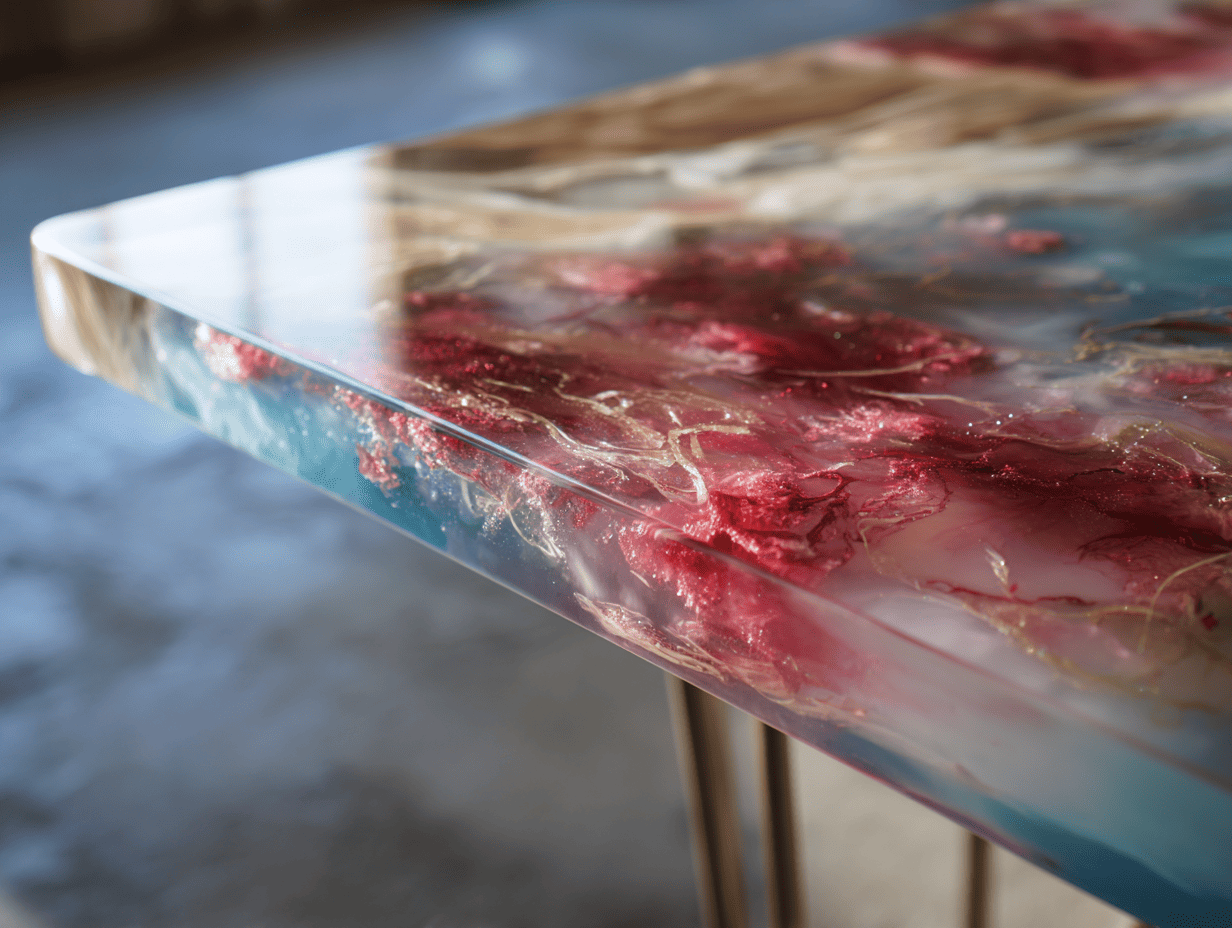
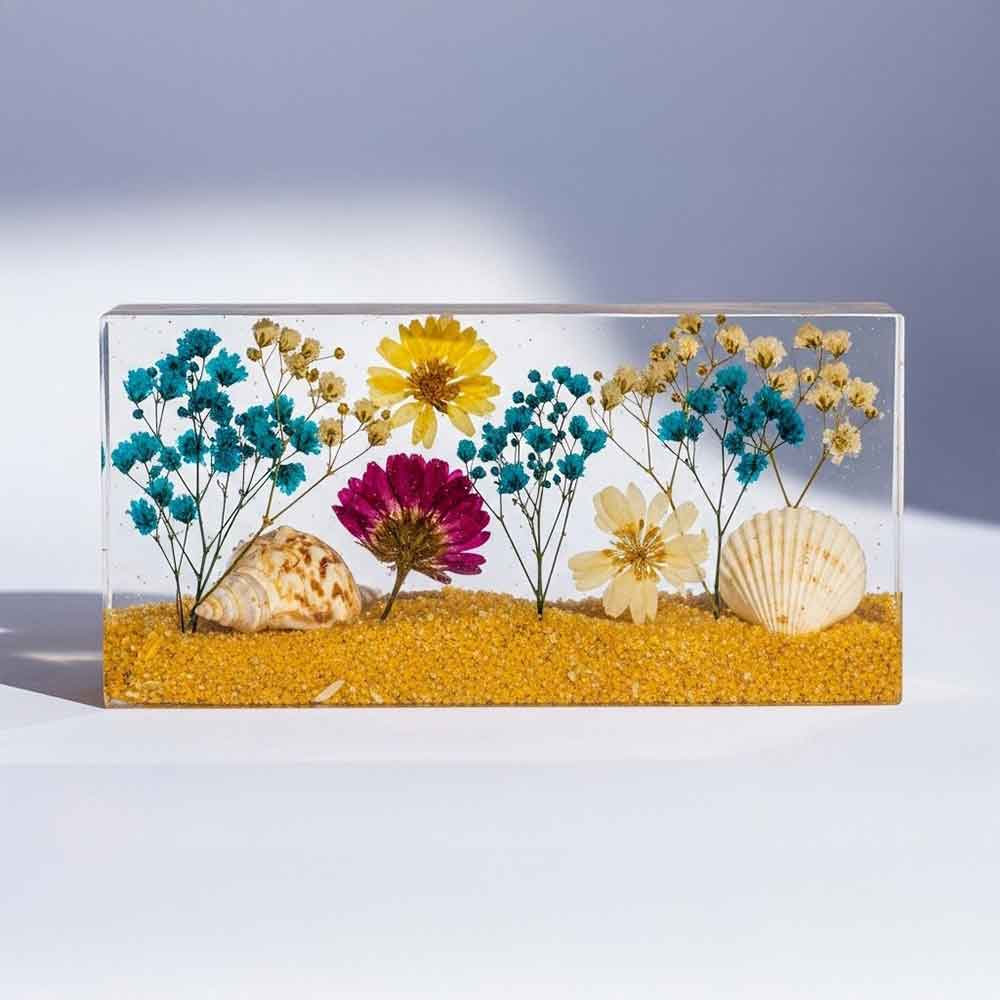
One of epoxy resin’s greatest advantages is its aesthetic versatility. Naturally transparent, it can be tinted or enhanced with a variety of pigments to create unique effects: marbling, colour gradients, glitter, or even embedded objects within the resin, and more. This ability to customise surface appearance allows you to transform ordinary furniture into true works of art, suited to a wide range of interior styles—from modern to classic.
Ease of application
Although it delivers professional-looking results, epoxy resin remains accessible even to beginners. It does not require heavy equipment or complex techniques. By following a few basic guidelines for mixing and application, anyone can achieve a satisfying outcome. This makes epoxy resin upcycling especially appealing for those who want to take on creative home projects without needing advanced woodworking or restoration skills.
Steps for upcycling a piece of furniture with epoxy resin
Step 1: Preparing the furniture
Before applying epoxy resin, it is essential to properly prepare the surface to ensure optimal adhesion and a flawless final result. The first phase involves thoroughly cleaning the furniture to remove any dust, dirt, or traces of paint residue. If the piece has cracks or irregularities, it is recommended to repair them using a suitable wood filler or patching compound to achieve a smooth surface.
Next, lightly sanding the surface is necessary to ensure the resin bonds properly. Depending on the type of material (wood, metal, plastic), it may be useful to choose a specific sandpaper grit to avoid damaging the substrate. A final wipe with a damp cloth or rubbing alcohol helps remove the fine particles left by sanding.
Step 2: Applying the resin
Once the furniture has been prepared, the epoxy resin can be applied. First and foremost, it is crucial to respect the mixing ratios between the resin and the hardener. The dosage must be precise to avoid curing issues or bubble formation during drying. It is strongly recommended to follow the manufacturer’s instructions exactly for this step.
Application is ideally carried out using a wide, flat brush, or by pouring the resin directly onto the surface and spreading it evenly. The resin should be applied in thin layers to prevent pooling or drips. At this stage, you can add pigments, glitter, or embed objects in the resin to achieve unique decorative effects. If air bubbles appear, they can be removed using a blowtorch or a heat gun, ensuring a smooth surface.
Step 3: Curing and finishing
Curing requires patience. Depending on layer thickness and ambient temperature, curing time can vary. It is important to let the resin cure in a clean, dust-free environment to prevent particles from settling on the surface.
Once the resin has cured, several finishing options are available. You can lightly sand the surface to remove minor imperfections and achieve a perfectly smooth result. For projects requiring additional protection, a second coat of resin can be applied. Alternatively, you may apply a protective varnish to enhance durability while increasing gloss or providing a matte finish, depending on the desired outcome.
Upcycling project ideas using epoxy resin
Renovating old tables with a modern touch
Epoxy resin is often used to modernise worn or dull surfaces, especially tables. Renovating an old table with epoxy not only protects it but also gives it a contemporary look. By embedding decorative elements such as dried flowers, seashells, or pieces of coloured glass, you can transform a simple table into a unique artistic statement. Adding pigments to create marbled effects or areas of transparency further enhances the furniture’s originality. This type of renovation is particularly popular in modern or industrial interiors.
Customising drawers and dresser handles
Epoxy resin is not limited to large surfaces like tabletops. It can also be used to add character to smaller furniture elements, such as drawers and handles. By coating drawer fronts with a thin layer of coloured epoxy resin, you can create striking visual effects, or even add graphic patterns for a unique style. In addition, epoxy can protect these surfaces from scratches and daily wear. Drawer handles, often overlooked, can also be refreshed with resin to create a cohesive look with the rest of the piece.
Creating artistic trays
For those who prefer smaller projects, trays are an excellent option. With epoxy resin, a simple serving tray can be transformed into a functional work of art. Simply pour the resin over the surface while embedding decorative elements such as pieces of wood, glitter, or even photographs for a personalised effect. Popular marbled or wave effects can be achieved by adding pigments to the resin before application. This upcycling project is both creative and extremely practical for everyday use.
Tips for a successful upcycling project
Choosing the right resin
Selecting the appropriate epoxy resin is essential to achieve a satisfying result. There are different types of resin, each suited to specific uses. For indoor furniture, a transparent resin with good self-levelling properties is ideal for achieving a smooth, glossy finish. For more technical projects—such as embedding objects or creating artistic effects—it is recommended to choose a thicker or pigmented resin that provides better control over details. For those looking for a quick solution, UV resins, which cure under light, can be a good option, especially for small projects.
Protecting your workspace
Working with epoxy resin requires certain precautions to avoid splashes or accidental damage. It is recommended to protect your work surface with plastic sheets or newspapers and to wear gloves, a mask, and protective goggles. Ventilation is also important, as fumes released by liquid resin can be irritating. In addition, to prevent dust or particles from settling on the resin during curing, it is best to work in a clean area and cover the furniture with a light protective cover while it hardens.
Working in stages
Epoxy resin requires precision and patience. It is best not to rush and to work step by step. If the piece requires several coats of resin, be sure to respect the curing time between each application to avoid bubbles or cracking. Every stage—from preparing the resin mixture to applying the final finish—must be carried out carefully. Taking the time to follow each phase properly ensures a high-quality, durable final result.
Upcycling with epoxy resin is an effective method for transforming and enhancing old furniture while providing long-lasting, attractive protection. Thanks to its versatile properties and ease of use, epoxy resin allows you to experiment with a wide variety of styles—whether you want to modernise older pieces or create one-of-a-kind works. To succeed, it is essential to prepare the furniture properly, choose the right resin, and work precisely while respecting curing times. Whether you are a DIY enthusiast or a professional, this technique offers a wide range of creative possibilities while supporting an eco-responsible approach.