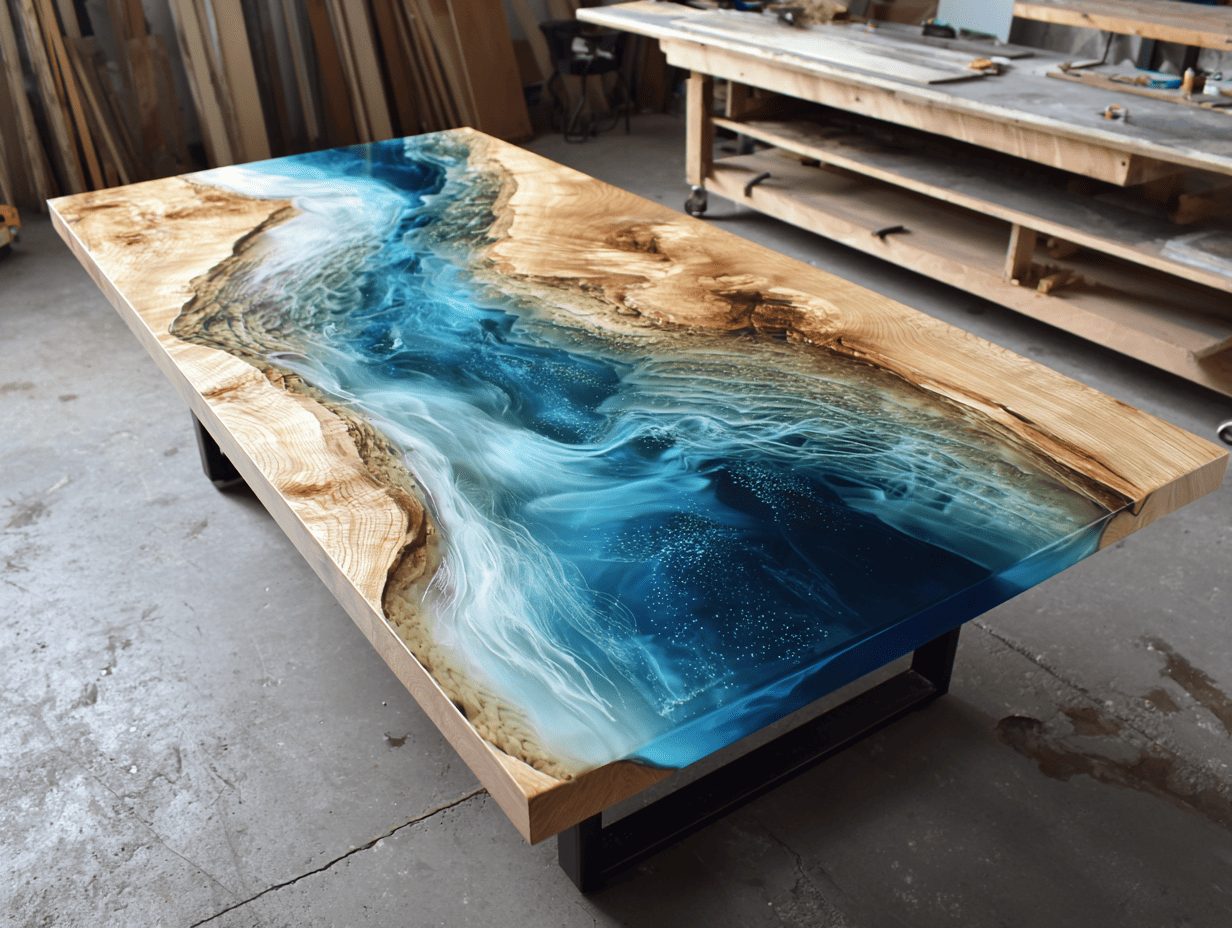
To achieve professional results with your epoxy resin creations, it is essential to pay close attention to finishing techniques. A good finish goes beyond visual appeal: it enhances durability, protects against wear, and can transform an ordinary piece into a true work of art. Whether you’re aiming for a high-gloss shine, an elegant matte look, or unique textured effects, finishing techniques play a decisive role in the final result. This article presents the five best methods to elevate your epoxy resin projects and ensure a finish that meets your expectations.
1. Glossy Finish (Polishing)
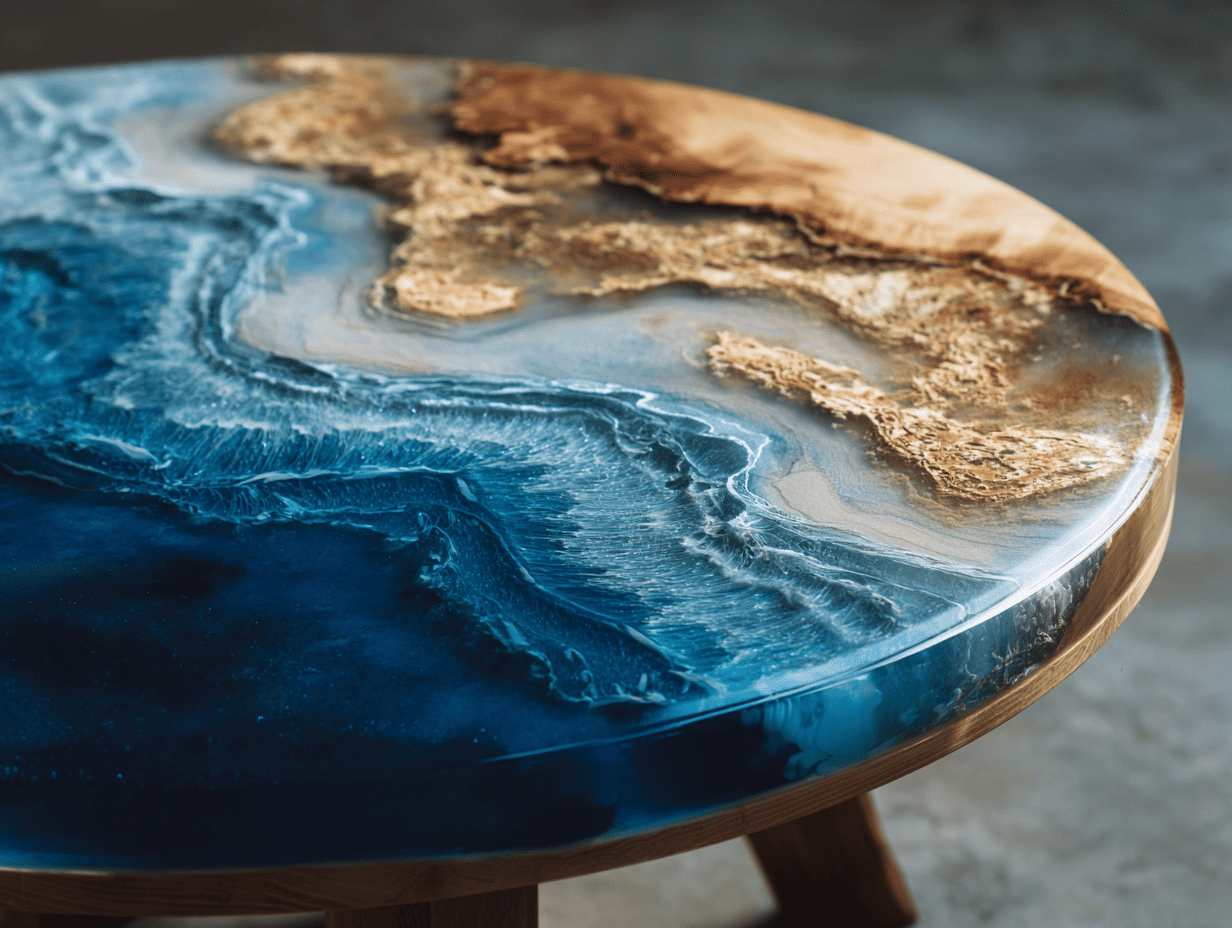
Polishing is an essential technique for achieving an ultra-glossy finish on epoxy resin creations. This process involves progressively sanding the surface with increasingly fine abrasive papers to remove minor imperfections and achieve a perfectly smooth texture.
After an initial sanding with a medium grit (around 600), move on to finer grits, up to 1500 or 2000. Once sanding is complete, apply a polishing compound specifically designed for resin to enhance surface shine. Using a polisher with suitable pads intensifies the gloss and produces the characteristic mirror effect.
This method is particularly suitable for projects requiring an impeccable aesthetic finish, such as large furniture pieces, countertops, or artistic works. It also provides enhanced protection, making the resin more resistant to scratches and everyday wear.
2. Matte Finish (Light Sanding)
A matte finish, achieved through light sanding, gives epoxy resin creations a more understated and elegant look. Unlike a glossy finish, it does not excessively reflect light, resulting in a more natural and discreet appearance.
To achieve this finish, perform fine sanding using very high-grit sandpaper, typically between 1500 and 3000. The goal is not to polish to a shine, but to create a smooth, non-reflective surface. Sand gently and evenly to avoid damaging the resin or creating visible irregularities. Circular motions help ensure a uniform finish.
This technique is especially recommended for projects where a subtle look is desired, such as minimalist furniture or contemporary decorative objects. The matte finish highlights texture and details without overwhelming the visual appearance.
3. Satin Finish (Varnish or Oil Application)
A satin finish strikes a subtle balance between gloss and matte, offering a soft-to-the-touch surface with a delicate sheen. To achieve this finish, apply a varnish or oil specifically formulated for epoxy resin. These products provide additional protection while delivering a gentle shine without the mirror effect of intensive polishing.
Application is typically done in thin layers using a brush or roller, with carefully controlled drying times between coats to avoid streaks or bubbles. Satin varnish is ideal for furniture or decorative objects that require durable protection while maintaining a natural, less flashy appearance. Oils can also enhance the material beneath the resin, subtly intensifying colors and textures.
This finishing technique is particularly well-suited for furniture or objects that need to retain an elegant, understated look while benefiting from the protection and durability of epoxy resin.
4. Textured Finish (Marbled or Grained Effect)
Textured finishes add unique visual and tactile effects to epoxy resin creations, bringing an artistic and decorative dimension. Two main types are commonly used: marbled effects and grained effects, each offering a distinct aesthetic.
Marbled Effect
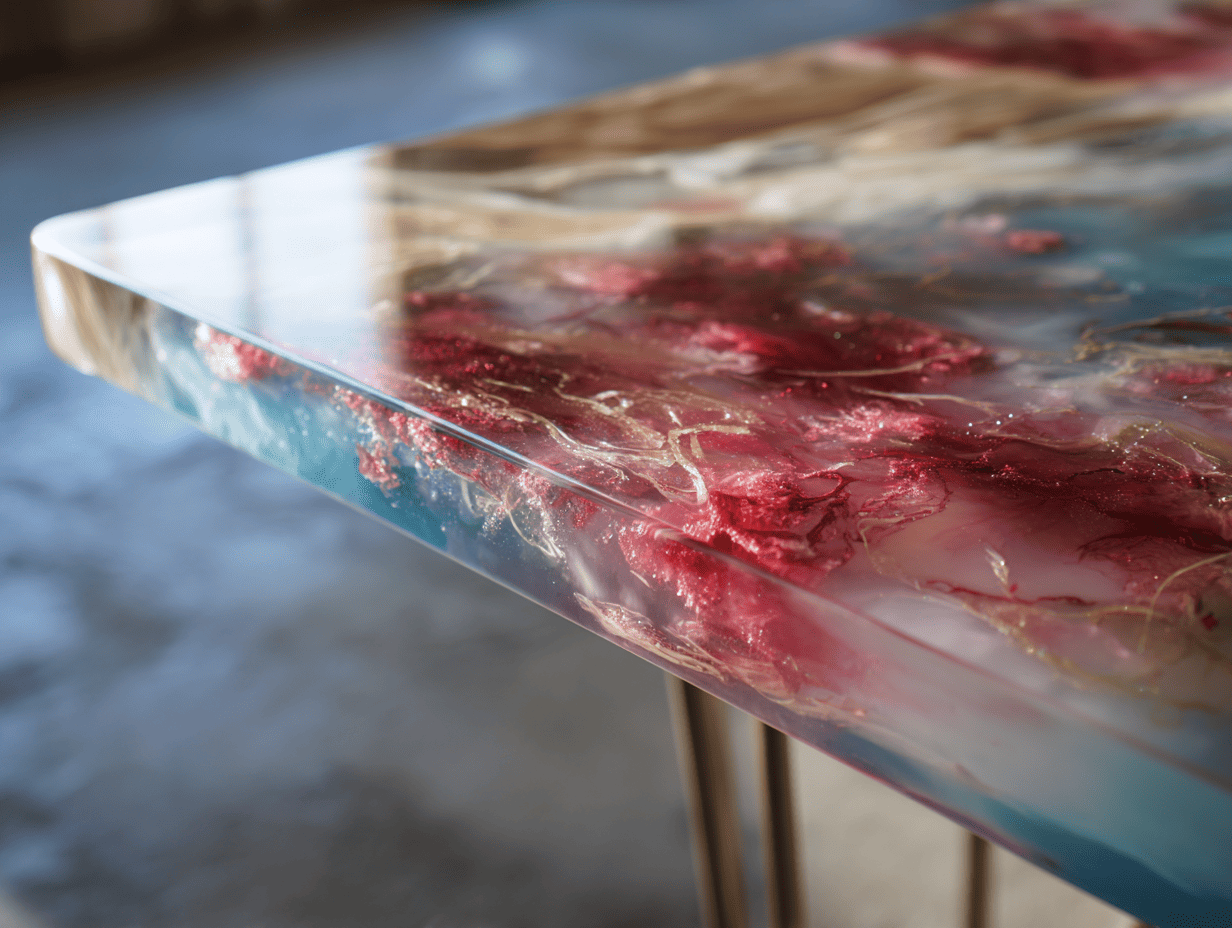
The marbled effect is created by mixing pigments directly into the resin before application to form patterns resembling natural marble veining. Different colored pigments are added to liquid resin and gently mixed with a stick or spatula. Controlled movements create flowing, dynamic patterns that mimic marble. This technique is ideal for surfaces such as countertops, tables, or trays, delivering a luxurious, artistic appearance.
Grained Effect
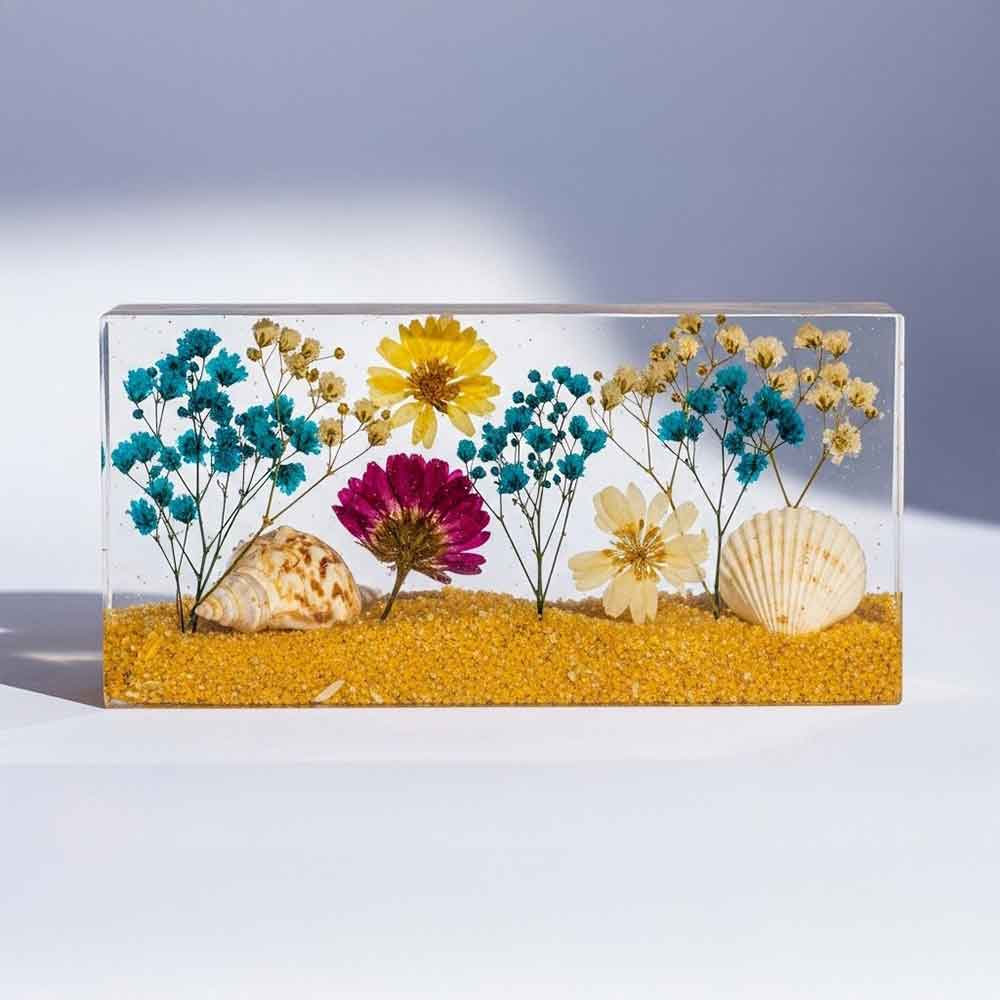
For a more tactile result, the grained effect is achieved by incorporating materials such as fine sand, granules, or microbeads into the resin. These materials can be mixed into the resin or sprinkled onto the surface just before it begins to cure. This creates a slightly rough or granular texture, often used for decorative objects or surfaces where grip is needed, while maintaining an original artistic look.
Both techniques add unique character and personalization to epoxy resin creations, enhancing both visual and sensory appeal.
5. UV Finish (Additional UV Protection)
UV protection is a crucial step for epoxy resin creations exposed to direct sunlight. Although epoxy resin is durable, prolonged exposure to ultraviolet rays can cause yellowing or discoloration. To prevent these effects, adding UV protection to the finish is essential.
UV protection can be integrated directly into the resin through UV-stabilized formulations or applied as a protective varnish once the piece is finished. UV-resistant varnish is applied in a thin layer over the cured resin and works by filtering UV rays while preserving the resin’s transparent, glossy, or matte appearance.
This technique is especially recommended for outdoor projects such as garden furniture, sculptures, or decorative panels exposed to natural light. It is also beneficial for artworks, tables, or transparent resin creations that must retain their original appearance over time without yellowing.
Epoxy resin finishing techniques can transform simple creations into truly personalized and durable works. Depending on the desired result, each method offers unique possibilities: the brilliant shine of polishing, the softness of a matte finish, the subtlety of satin, or the originality of marbled and grained textures. Finally, for projects exposed to light, UV protection is a strategic choice to preserve their beauty over time. These techniques, tailored to different projects, ensure professional results and optimal protection.