

The growth of connected objects and DIY electronics projects has raised a simple but essential question: how can fragile circuits be effectively protected from external aggressions without compromising their performance? Whether it’s an outdoor sensor, a home automation prototype, or a simple Arduino setup, electronic components are exposed to moisture, dust, and impacts. To extend their lifespan and ensure reliable operation, epoxy resin emerges as a solution that is protective, insulating, and aesthetic.
Used as a thin coating or for full encapsulation, it provides a durable and reliable barrier. And when properly selected—such as the solutions offered by the Sicomin epoxy resin shop—it becomes a powerful ally for makers, engineers, and creators of custom electronic objects.
Why Use Epoxy Resin to Protect Electronic Circuits?
Epoxy resin is highly valued in electronics for its insulating properties. Once cured, it prevents short circuits by perfectly isolating components from one another. It also forms a barrier against moisture and dust—two common enemies of electronic boards—especially when used outdoors or in sensitive environments.
Beyond protection, epoxy adds an appealing aesthetic dimension. Its transparency allows circuits to remain visible while giving them a clean, professional appearance. Some creators even play with colors to highlight their projects or integrate resin into functional decorative objects.
Finally, epoxy’s mechanical strength provides resistance to shocks and frequent handling. It’s an ideal solution for reinforcing a prototype, enclosure, or connected accessory without investing in industrial molds.
When a project is exposed to light or UV radiation, it is recommended to choose a resin resistant to yellowing to preserve the object’s original clarity over time.
Which Resin Should You Choose to Encapsulate or Protect a Circuit?
Not all epoxy resins are equal when it comes to protecting electronic components. The choice depends on the type of project, the environment in which it will be used, and technical constraints (heat, humidity, movement, etc.).
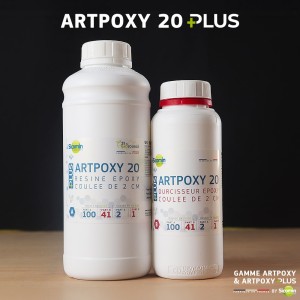
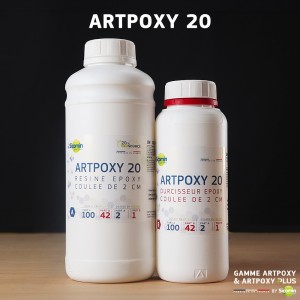
For simple assemblies or small connected objects, a transparent, low-viscosity resin allows precise application and a clean visual result. It easily flows between components without trapping bubbles. The products offered by the Sicomin epoxy resin shop are particularly well suited to this use thanks to their self-leveling properties and consistent curing.
For full encapsulation, it is preferable to choose a resin specifically designed for electronics, with good thermal insulation properties. Some products are even formulated to better dissipate heat, which can be useful for continuously powered circuits.
Resistance to temperature variations, adhesion to plastics, and long-term stability are all criteria to consider. Poor-quality resin may crack, deform, or lose its insulating properties over time.
Steps to Apply Epoxy Resin to a Connected Object or Printed Circuit Board
The success of an epoxy-encapsulated electronics project largely depends on preparation and application method. First and foremost, the circuit must be thoroughly cleaned. Dust, flux residues, or moisture can compromise resin adhesion or cause visual defects.
It is recommended to protect sensitive areas—such as connectors or parts that must remain accessible—using masking tape or temporary silicone. Once precautions are taken, the resin can be mixed according to the specified ratios. Respecting the dosage is essential to ensure proper curing.
To avoid defects, bubble formation must be minimized. This involves slow mixing, degassing if necessary, and gradual pouring. The resin can be poured directly onto the circuit or applied with a syringe for greater precision.
Finally, curing should take place in a stable, dust-free environment with no temperature fluctuations. Once cured, the surface can be sanded and polished for a cleaner finish, as explained here: sanding and polishing epoxy resin.
Tips and Precautions for Successful Encapsulation
Working with epoxy resin in an electronics context requires additional precautions to avoid irreversible mistakes. The first rule is to always work in a clean, dry, and well-ventilated space. Dust or moisture can not only affect resin adhesion but also compromise circuit functionality.
Before any pour, it is advisable to test resin compatibility with the materials present on the circuit. Some plastics or heat-sensitive components may react negatively, deform, or become inoperable. Testing on a scrap piece or test circuit is often recommended.
It is also important to control resin layer thickness. A layer that is too thin will not provide real protection, while a pour that is too thick can generate heat during curing and risk damaging components. To adjust the amount of product to your project, this guide on epoxy resin thickness is a solid reference.
Finally, for your safety, wearing gloves and a mask is strongly recommended—especially in enclosed spaces or during repeated projects. Epoxy resin, although stable once cured, can release irritating compounds in its liquid state. Working under proper conditions helps protect both your health and your circuits.
DIY Project Inspirations with Resin and Electronics
Epoxy resin is not limited to purely technical use. It also offers real creative freedom for designing original, durable, and aesthetic connected objects. For example, some enthusiasts create illuminated enclosures for LEDs or Arduino boards, using resin transparency to diffuse soft light while securing the circuits.
Others use epoxy to waterproof outdoor sensors for home automation or connected garden projects. It is also possible to encapsulate small connected objects such as GPS trackers, personalized badges, or alert buttons—adding a decorative touch to the enclosure.
When used thoughtfully, epoxy resin stands out as both a functional and aesthetic solution for protecting electronic circuits in connected objects. It extends component lifespan while providing a refined, customized finish—whether for a prototype, a decorative project, or an everyday tech object.
By choosing a suitable resin, such as those offered by the Sicomin epoxy resin shop, you benefit from a reliable, easy-to-use product compatible with many applications. The wide range of possible uses shows that resin is not limited to artistic or industrial fields but also has a strong place in the digital and DIY worlds.