Creation of a carbon gearshift
Tutorial proposed by POLUX (Gex)
First of all, the reference prototype is made with sagex or polystyrene (for the purists).
Polystyrene can be sanded very well with sandpaper or with a small hand sander. Elaboration of the mechanical fastening parts on the lathe with round aluminum profile. Assembly of the polystyrene parts on with special polystyrene glue, which can be found in any DIY store (cartridge for (Cartridge for gun).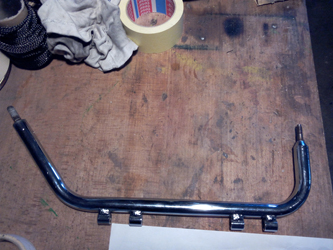
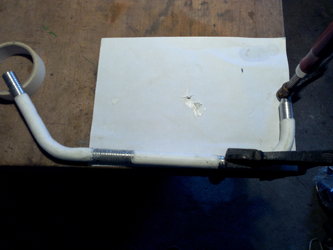
Sheathing on the prototype with 45° HR carbon sheathing 20 mm in diameter; carefully slip the sheathing on so as not to so as not to detach the assembly, repeat the operation for three layers. Each layer I attached at the end each layer with bodybuilder's tape to prevent the lower layer from slipping. Not easy, don't lose not to lose patience! (Be careful not to laminate more than one layer at a time, it could be too thick to have a good to have a good penetration of the resin!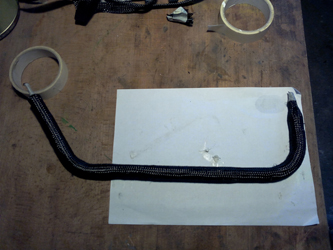
For a well-prepared work before having the gloves sticky, make the vacuum bag leaving a 10 cm of margin, it is necessary to think of the increase of the diameter with Feltrex, to prepare also the cuttings of the tear cloth and Feltrex.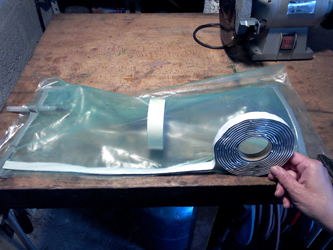
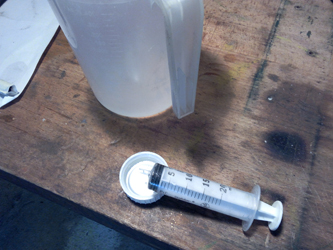
Preparation of the epoxy resin (Résine époxy SR8200 + Durcisseur standard SD 7204). Two solutions for the mixture either by weight (with a small precise scale 100gr / 37gr) or by percentage (dosage in volume 100 / 44). Not having a precise scale I opted for the second solution with a graduated jar and a syringe. Once the mixture is calculated and well dosed, mix well.
Soak up the epoxy resin with a hard brush, to impregnate the inner layers, being generous to ensure the penetration of the lower layers.
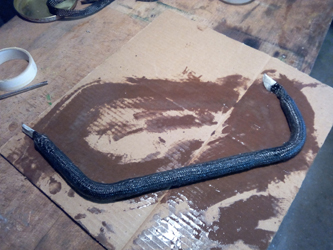
Then it is necessary to wrap the piece of tear away fabric and Feltrex; but not like on the following picture (My first try was not conclusive, I had rolled up the fabrics like bicycle handlebar. But once the resin dried, I had to remove it with a disc sander).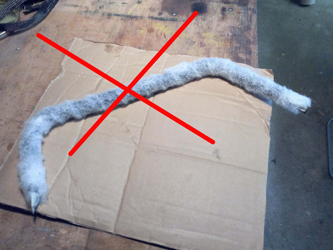
It is therefore necessary to sheath by folding the edges and folding on itself the fabric and using a good stapler, staple the tear away fabric as close as possible to the piece. This is to avoid the This is to avoid the inconvenience of having fiber bulges, and to have bulges once the piece is dry. Also it is necessary to leave 5 cm of margin to the fabrics to facilitate the tearing once the whole dried. (See the three following pictures as a model of another piece I made later).
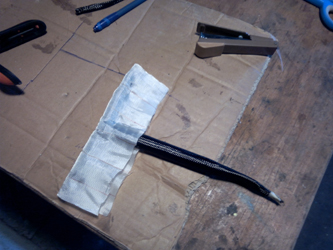
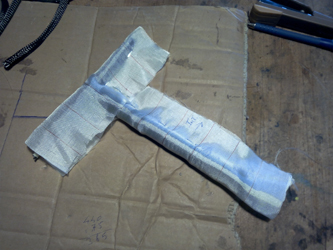
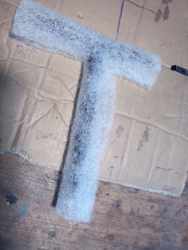
Once this operation is done, we can move on to the vacuum and drying operation. We put our piece in the vacuum bag
our piece in the vacuum bag, which we close carefully with the "Sealtex", do not forget the suction hose!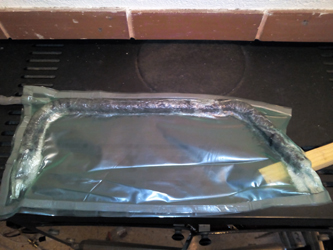
To make the vacuum, I used an old refrigerator motor, adapted a vacuum meter and an infusion valve to manage the suction, because at the time of the vacuum, it is necessary to ensure the good positioning of the part and that it does not deform it.
vacuum meter and an infusion valve to manage the suction, because at the time of the vacuum it is necessary to ensure the good positioning of the part and that it does not deform it. It is necessary to put in place by pressing strongly on all the contours of the piece, as well as on the contours of the bag, in order to eliminate possible air leaks.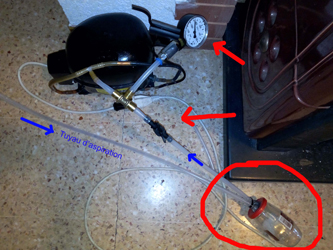
You can also see a pickle jar that I drilled two holes in the lid to serve as a
serve as a resin collector. To avoid sucking resin into the pump! I sealed the pipes
on the lid of the jar with Sealtex, it goes very well.
That's it, let it cure for six hours at room temperature. Then, take your piece out of the vacuum bag, and
fight with two pliers to tear off the tear away fabric! (watch out for the staples, they love
meat!).
Then let the piece rest for 12 hours and then discreetly put your piece in mom's oven!
Attention thermostat at 60°, not more!
Let it simmer for 6 hours!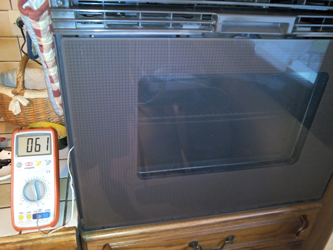
Once the firing is complete, it is time to move on to sanding. Alignment of mechanical bearings in this type of part.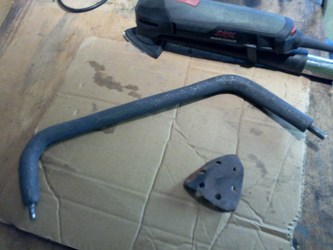
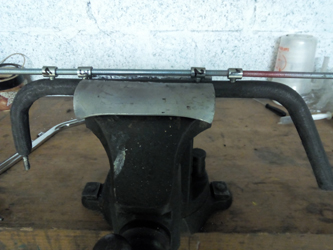
To have a stronger part I repeated the operation by sheathing again with three other layers of carbon fiber. The operation is less delicate to perform since you already have a rigid part which facilitates the installation of the sheath.
Once the second molding is done, sand your part again to get a nice finish. Then I sprayed three coats of gloss varnish, between each layer of varnish sanded with 120 paper.
Here is the finished piece on the beast!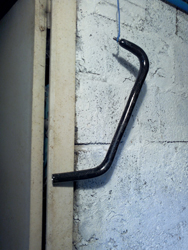
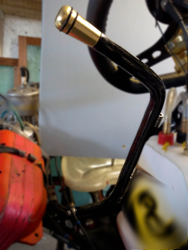
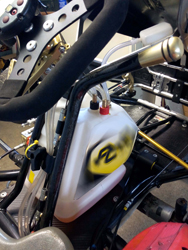
Areas of application related to this tutorial :