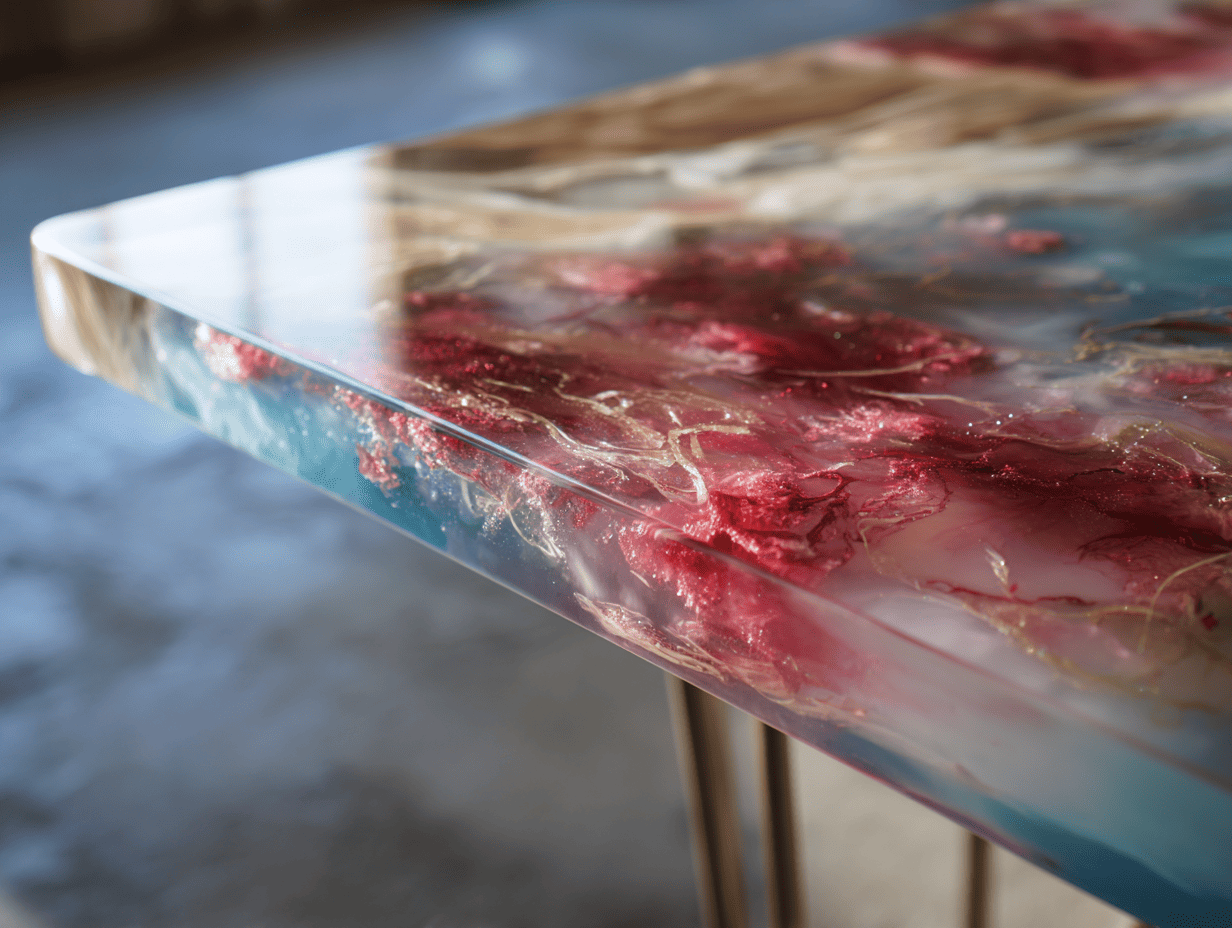
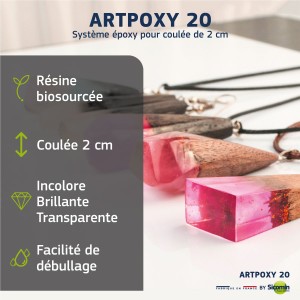
Thanks to its characteristics and numerous advantages, epoxy resin can be used in many different fields, from surfboard manufacturing and boat hull repair to the agri-food industry, as well as decoration and object customisation. With its strong adhesive properties, this resin adheres to almost all materials and is easy to handle, allowing for countless combinations and offering a great deal of creative freedom.
What are the different possibilities for customising objects with epoxy resin? What techniques should be used, and what precautions should be taken? Discover ideas, tips and advice from our specialists in this article.
Epoxy resin and object customisation: what are the different possibilities?
As you have probably understood, epoxy resin offers a wide range of possibilities when it comes to object customisation and decoration. Discover some of the creations you can make using epoxy resin.
Customising coasters
As simple as they may be, some accessories can make all the difference when you welcome family or friends into your home. Coasters are a perfect example. Usually basic and purely utilitarian, they are rarely given any decorative value. Yet, by adding a unique touch, you can brighten up your table and spark conversation during drinks.
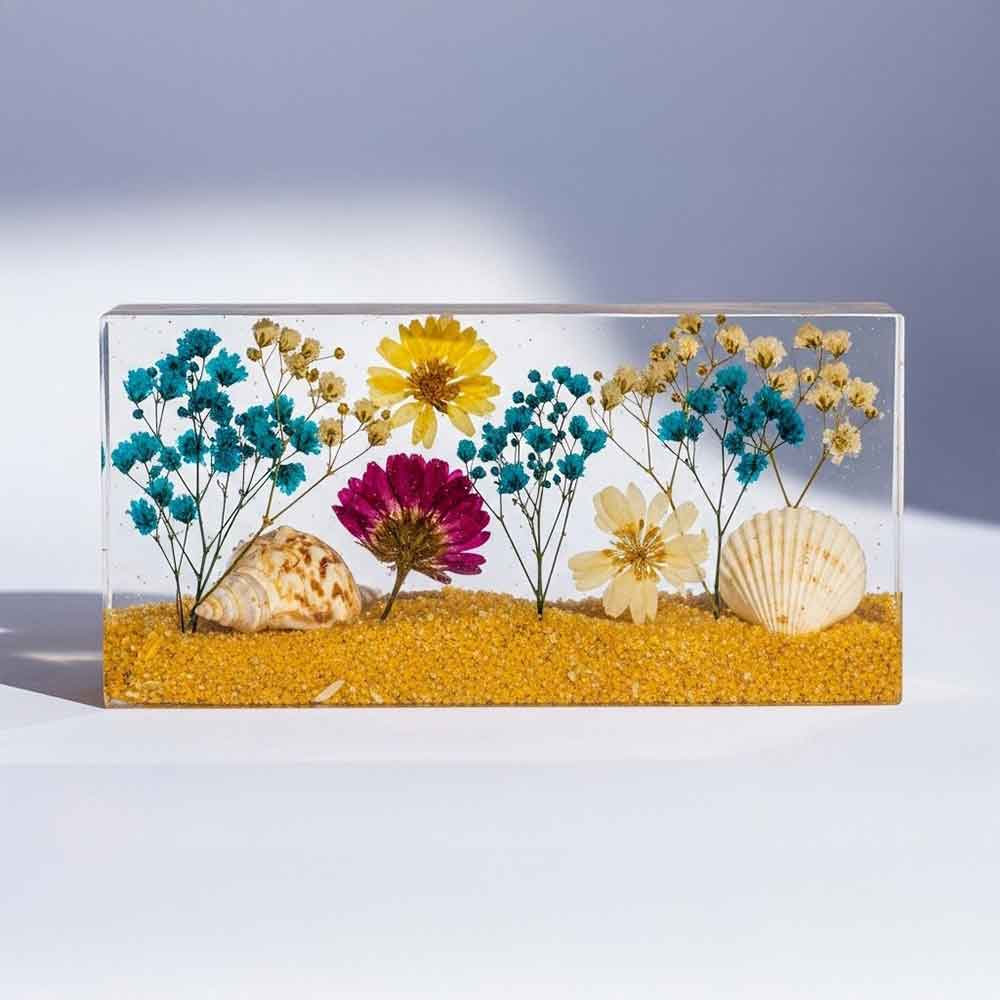
Here, the possibilities are endless! For a “natural” look, for example, you can place a few dried leaves or flowers into your mould, then pour epoxy resin over them to preserve them over time. You can also add pigments and/or glitter for a more festive appearance.
Customising your bathroom soap dispenser
Just like coasters, bathroom soap dispensers are most often seen as functional rather than decorative objects. However, this everyday item can also help enhance the look of your bathroom while remaining practical. Why not turn it into a work of art?
Using epoxy resin, you can fill the bottom of the dispenser to create a trompe-l'œil effect. By pouring resin into the base of your container and adding a few glitter particles and some crumpled iridescent film for a 3D effect, you give depth and originality to your soap dispenser, making it truly one of a kind.
Customising your coffee table
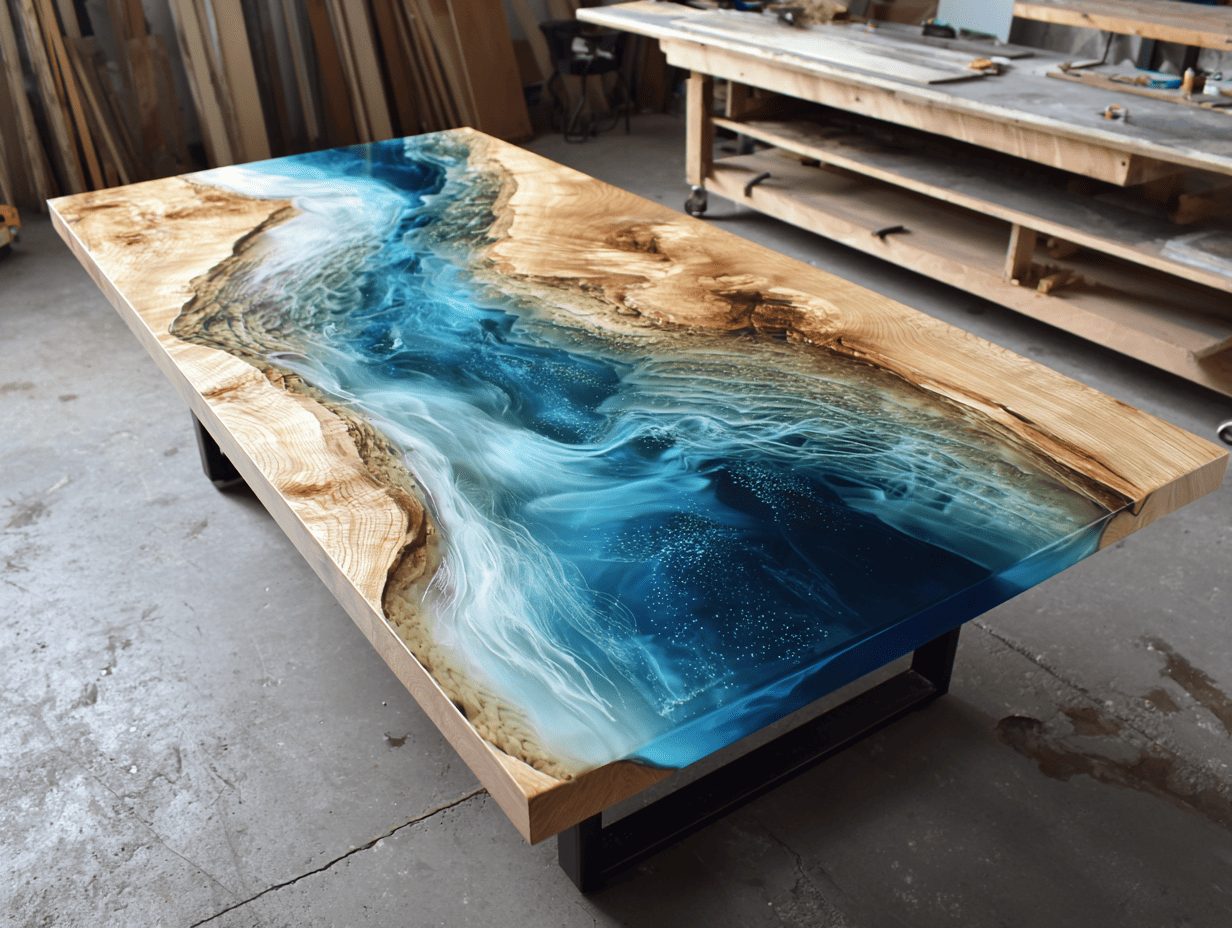
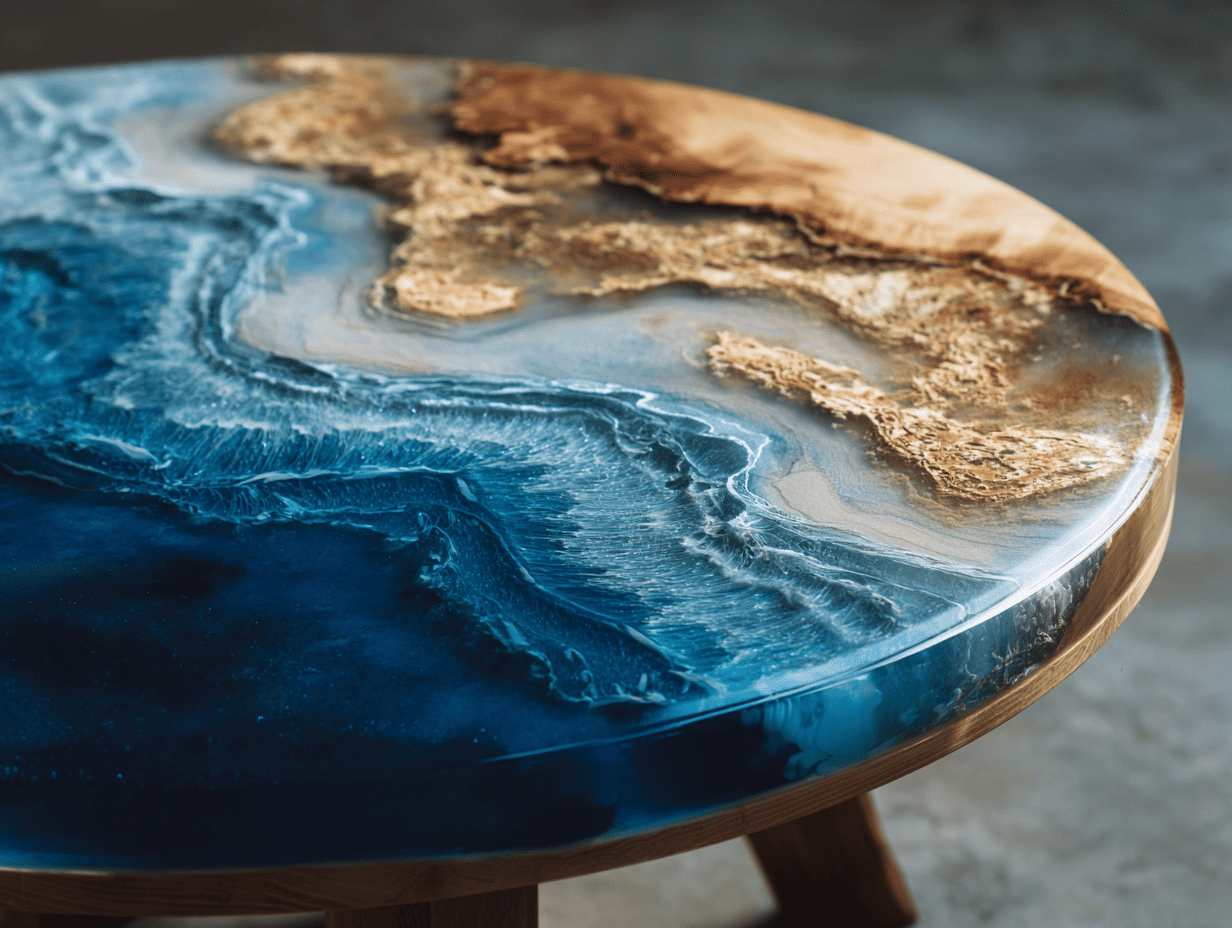
Customising coffee tables with epoxy resin is one of the most common projects. Numerous videos showcasing this type of creation can be found online, and the results are usually impressive. The highly sought-after “river” effect running through the centre of the table, popular among fans of designer furniture, is however more complex to achieve and not within everyone’s reach.
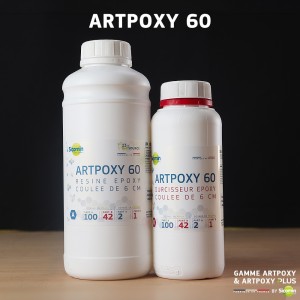
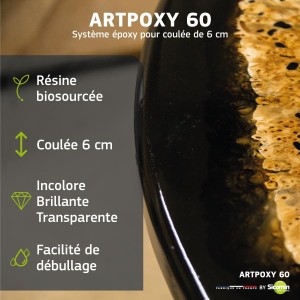
To obtain a satisfactory result, the wood must first be properly prepared so that no irregularities compromise the adhesion of the resin. A mould must then be created to contain the resin pour. This mould needs to be custom-made and perfectly watertight. The resin pour thickness must not exceed 5 centimetres, and both working and curing temperatures should be between 20 and 24°C. Under these optimal conditions, complete curing is achieved in approximately 14 days. However, the process can be slightly accelerated by exposing the resin overnight at 40°C.
Epoxy resin and object customisation: which techniques should be used and what precautions should be taken?
Depending on the type of object being customised, the techniques and precautions required will not be exactly the same. That said, it is always essential to strictly follow the recommended mixing ratios between the resin and its hardener.
In addition, epoxy resin must be handled with care. It is strongly recommended to work while wearing a mask, protective gloves and an apron. Finally, please note that the room in which you handle this product must be sufficiently well ventilated.