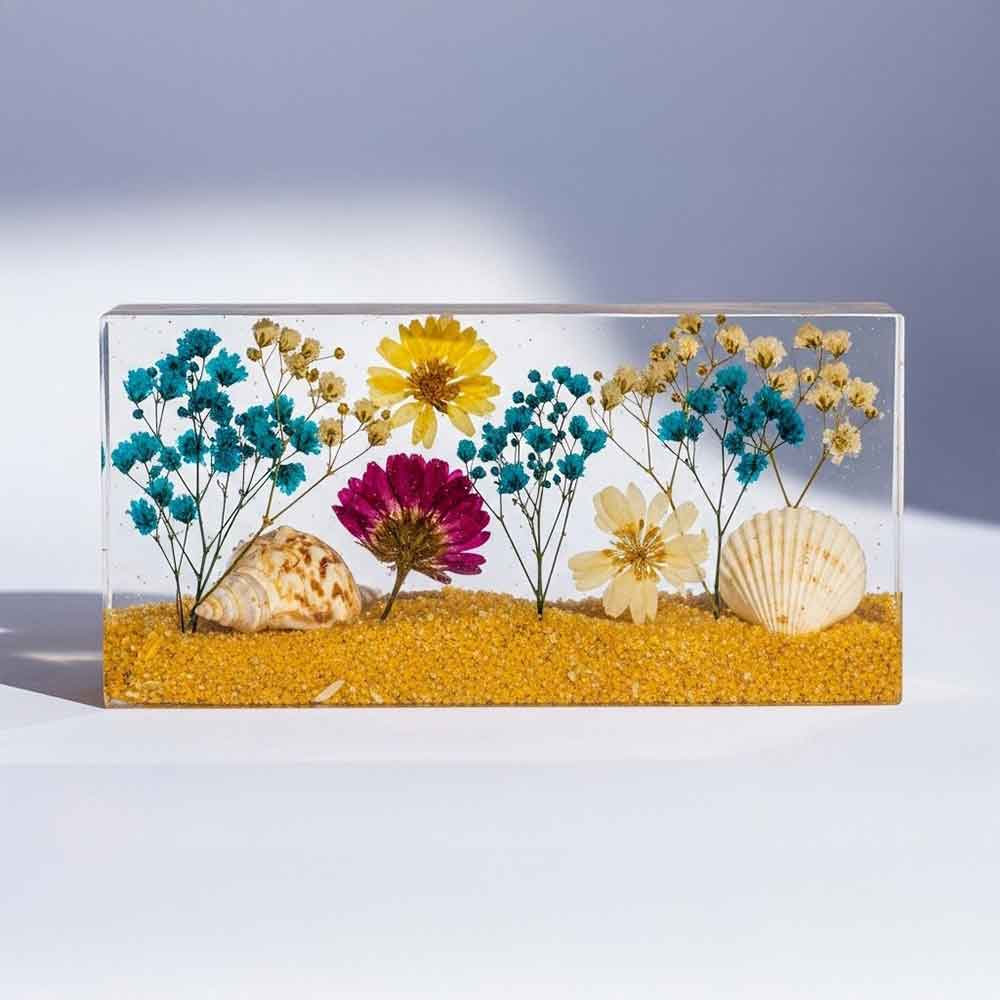
In recent years, epoxy resin has gained recognition well beyond the industrial sectors where it was already highly valued for its exceptional properties and great durability. Today, it is increasingly used in craftsmanship, particularly in the creation of artistic objects and unique pieces of furniture. Whether for inclusions or resin casting to enhance a piece of furniture, the possibilities are numerous, and art and DIY enthusiasts are making the most of them.
While good knowledge of the product and strict adherence to the manufacturer’s recommended mixing ratios are essential for the success of this type of project, it is also necessary to learn how to make a mold to hold the epoxy resin. This is exactly what we will discuss in this article. Which material should you prioritize when making your mold, and what are the steps to follow to ensure a successful outcome? Our experts explain it all.
Making an epoxy resin mold: which material should you choose?
Most molds designed for epoxy resin casting are made from silicone. This is no coincidence—many of our cake molds are made from the same material, as it allows for easy demolding once the material has cured. It is also worth noting that silicone is minimally allergenic and non-toxic, meaning it can be handled safely by the vast majority of people.
However, silicone molds do not withstand wear particularly well and may degrade after several uses, especially leading to increased difficulty during demolding. That said, silicone remains a very good choice for making a mold intended for epoxy resin casting. You simply need to replace it once it starts showing signs of wear.
Good to know: for making your mold, choose silicone rubber. This silicone derivative is easier to handle and cures relatively quickly. You can easily find it in specialist stores. There are several types of silicone rubber, generally classified by their hardness level. This is expressed on the Shore scale, which ranges from 0 to 80 and indicates the flexibility of the silicone. The closer the value is to zero, the more flexible and easier to shape the material is. Values between 40 and 80 indicate a less elastic, harder silicone, which may still be suitable depending on the nature of your project. For molds with many irregularities and decorative details, it is recommended to choose a softer silicone with a low Shore hardness.
The steps to follow to successfully make your mold
Now that you know which material to choose for making your epoxy resin mold, it’s time to get started. Here are the steps to follow to ensure a successful result.
Step 1: choose the model for your mold
When making your mold, you have many options when it comes to shape. To help you, you can use a model to obtain an exact replica of the object you want to create in epoxy resin. In this case, you will need to make what is called a “negative mold” from a “master mold.”
Using a frame, you can then pour the silicone into your reference mold so that your mold takes on its shape. Once you have ensured that the material is evenly distributed, all that remains is to wait for it to fully cure before removing it from the master mold.
You can also choose to make your mold without a master model. In this case, you will need a container to hold the silicone, as well as a mixture of detergent and water to make demolding easier. Be careful not to apply too thin a layer of silicone, as this could result in a mold that is too fragile and prone to breaking.
Step 2: finishing and curing
While the silicone is still uncured and remains malleable, take advantage of this time to knead and shape it so that it retains the form you want. Once this work is complete and you are satisfied with the result, all that remains is to wait for the mold to fully cure, which usually takes about one hour.
Step 3: demolding
Before demolding your mold, make sure that everything is completely dry and fully cured. If this is the case, you can then remove your piece and begin using the mold for your epoxy resin castings. Your mold can be reused several times afterward.