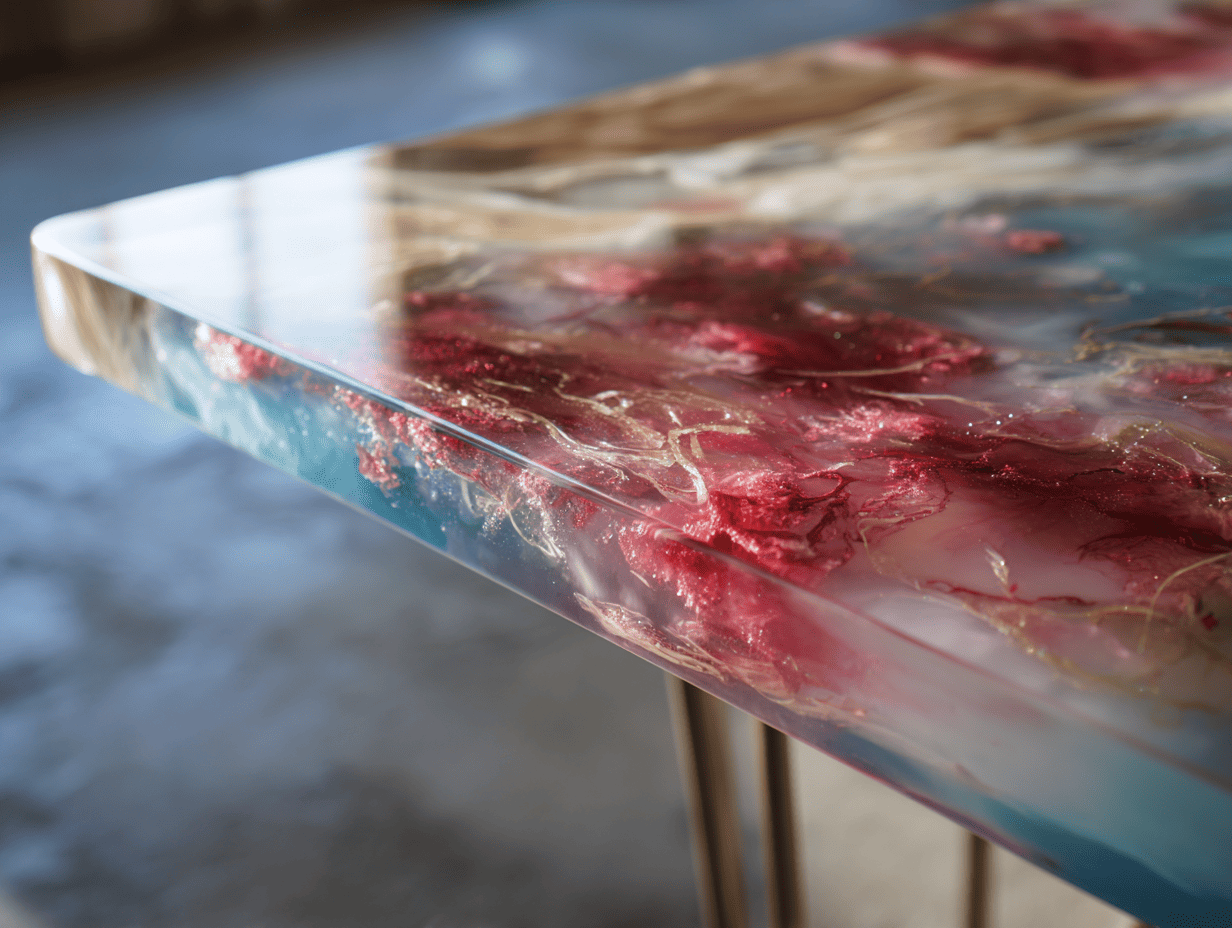





Epoxy can give wood a waterproof and resilient finish. In most cases, it is an ideal coating for wooden projects that will be exposed to moisture or wear. However, in some cases, it is not recommended to use epoxy as the final finish—but you can still benefit from epoxy’s advantages by using it as a sealer before applying your topcoat. Although applying an epoxy layer at this stage of your project takes a bit more time, that extra effort pays off through increased durability and lower maintenance costs.
Why use epoxy resin to seal wood?
Epoxy resin is perfect for wood. It enhances the wood’s natural grain, adds shine, and helps preserve it. Even better, it waterproofs the material thanks to its impermeable properties—making it ideal for sealing wood.
It can be used for all kinds of projects. Whether it’s a table, a cutting board, an old wooden piece of furniture, a countertop, or even a floor coating, you can rely on epoxy resin to seal wood effectively.
To seal wood, it is best to use a laminating epoxy resin. This is an epoxy resin with higher viscosity. After curing, it produces a solid surface that can be sanded or drilled just like wood. It is the perfect resin for sealing wood.
How to use epoxy resin to seal wood
Here are the steps to follow to seal wood with epoxy resin:
1) Clean and prepare the wood
The first step is to clean the wood. Before anything else, you need to remove dust and degrease the surface. This is important because epoxy resin needs a clean, debris-free environment in order to bond properly to the material.
Wipe the surface and let it dry before moving on to the next step. The temperature of the wood and the room are important factors—they should be similar. Also, make sure to work in a moderate environment: it should be neither too cold nor too hot to ensure the best result.
Now that the surface is clean and dry, sand it with sandpaper to improve adhesion. You can also use acetone to degrease the surface. This is particularly useful for oily woods such as olive wood or teak.
Clean again to remove any dust and debris. Wipe and let it dry. Avoid touching the surface again so it stays clean. The goal is to ensure optimal adhesion of the epoxy resin.
Use waterproof masking tape to define the area where you will pour the resin. Create a kind of barrier along the edges to contain the resin.
2) Pour the epoxy resin
Carefully mix the epoxy resin and hardener to avoid air bubbles. This is also the stage where you can add pigments or dyes to tint your resin if desired.
Then pour the mixture in small circles or a zigzag pattern. The goal is to achieve the most even distribution possible. Wait a few minutes for the epoxy resin to self-level.
3) Curing and finishing
You have a limited amount of time to spread and level the resin on the surface. The resin remains liquid for a short while, allowing you to work it.
Once the mixture begins to thicken, it becomes rubbery. At that point, stop working it and let it cure.
Air bubbles may form. To remove them, use a heat gun or a small torch and gently heat the bubbles.
Once the resin is fully hardened, you can sand it if needed to remove any excess. Note that you can apply a second coat before it has fully cured (around 48 hours).
By following these steps, you should be able to seal any wooden piece without any problem. Your turn!