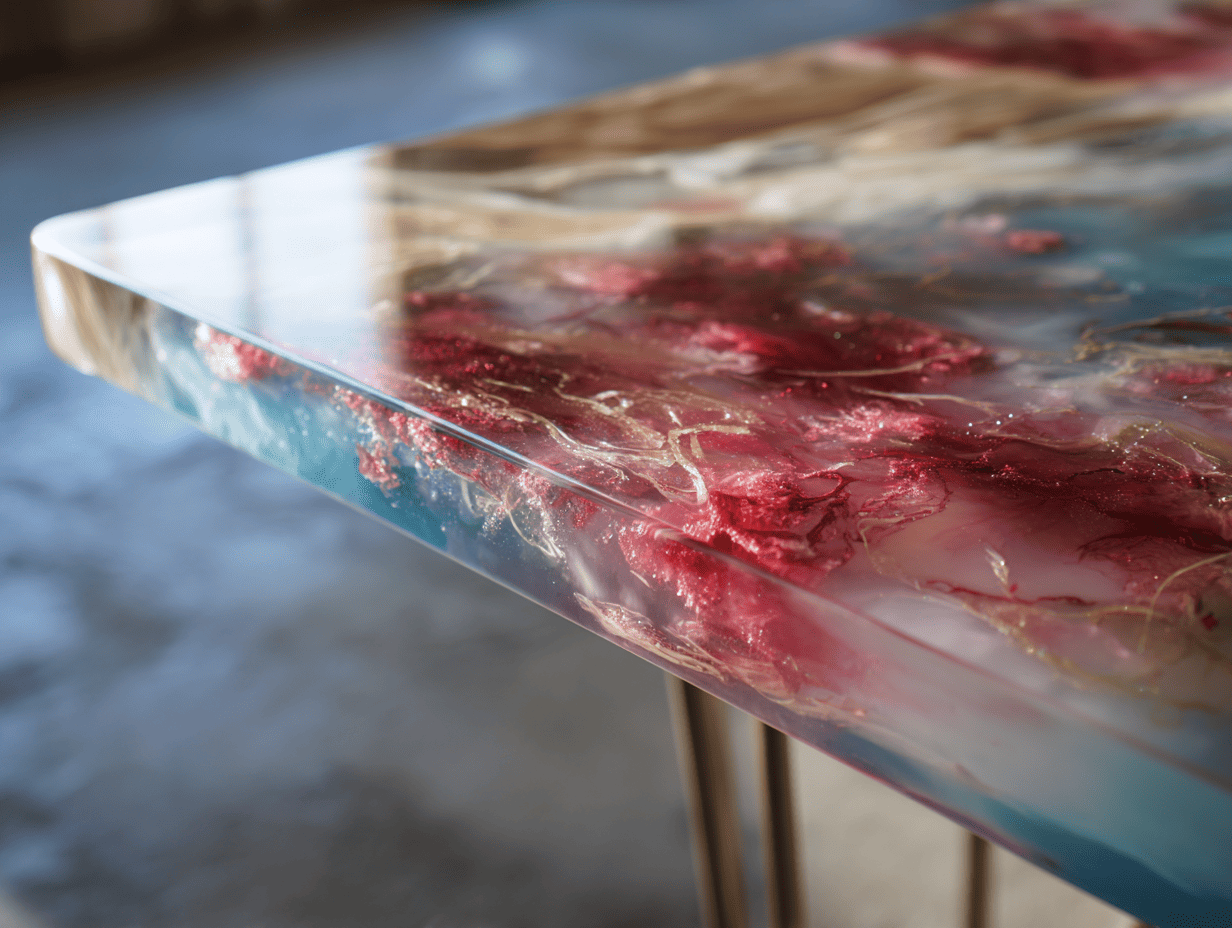
Finishes are essential in any project that combines wood and epoxy resin. This is the stage where the project truly comes to life and reveals its final appearance. Yet, finishes are often overlooked in tutorials. Why? Simply because there is more than one way to finish a wood and epoxy resin project. So, what should you do once your resin is fully cured and solid? Here are some tips to help you properly finish your epoxy resin projects.
My resin is cured: time to sand!
Before moving on to the final steps, sanding is unavoidable. The good news is that the cleaner your work was beforehand, the less sanding you will need to do.
Wait at least two days—depending on the epoxy system used—before grabbing your sander or sandpaper for smaller pieces. The goal is to achieve a smooth, flat surface with no imperfections. You can wet the resin and the wood to make sanding easier.
Remember to wear a mask while sanding to avoid inhaling dust.
Now, let’s look at the different finishing options.
Finish with a thin coat of epoxy
This is one of the most common methods. It enhances your creations by adding a high-gloss finish.
This option is perfect for achieving shiny, waterproof tables. It works very well for several reasons. First, it delivers an outstanding visual result. In fact, this type of finish is often used for restaurant and bar tables. You have probably seen beautifully glossy tables even in dim lighting.
It is also extremely practical for commercial use. Bar and café tables must withstand everything—stains, spills, moisture, and daily wear from hundreds of people. That is why owners favor durable and resistant surfaces.
If you want to make your own project glossy and robust, simply finish it with a thin coat of epoxy resin. This method works best on wood and unpigmented epoxy resin. It highlights the wood grain and its natural features.
Sand and seal with oil (or polyurethane varnish)
The second method consists of sanding everything and then applying an oil or a varnish. You can use either vegetable-based or mineral oil. However, this approach results in much less shine than the previous one. If you are looking for a more neutral or matte finish, this is the option to choose.
It is often used for cutting boards and trays, as food-safe oils are easy to find.
This method is also well suited for desks or bedside tables. It is likely the simplest and most affordable finishing solution.
Sand and polish
This is another excellent option if you want to finish a table—especially a river table.
It is one of the most common and practical solutions for this type of furniture.
Simply sand the surface and then polish it using a wax of your choice. This finish allows you to control the level of shine you want to achieve.
This method is ideal because it enhances both the wood and the epoxy resin. The wax also protects the surface, extending the lifespan of your furniture.
Combine oil and wax
The two previous methods can be combined to achieve an even richer finish. By applying oil followed by wax, you nourish the wood and enhance its natural beauty. The wood grain becomes more pronounced and contrasts beautifully with the epoxy resin.
This is an excellent choice if your main goal is to showcase the wood in your creation.
Which method should you choose?
As a creator, the choice is entirely yours. Decide on the look you want to achieve. Test different finishes if possible, then apply the one that best suits your project. Here are a few suggestions based on typical uses, but ultimately, every piece is unique—and it is up to you to enhance it in the way that feels right.
Thin epoxy coat
-
Bar tables
-
Coffee tables
-
Fully wooden pieces (depending on the desired look)
-
High-traffic surfaces
Oil only
-
Cutting boards
-
Trays
-
Knife holders
-
Children’s furniture
Polishing or oil + polishing
-
Dining tables
-
Desks
-
Large furniture pieces
These are, of course, only suggestions. Be creative and find the best solution for your own project. There are endless ways to create furniture with epoxy resin—because every piece is truly one of a kind.