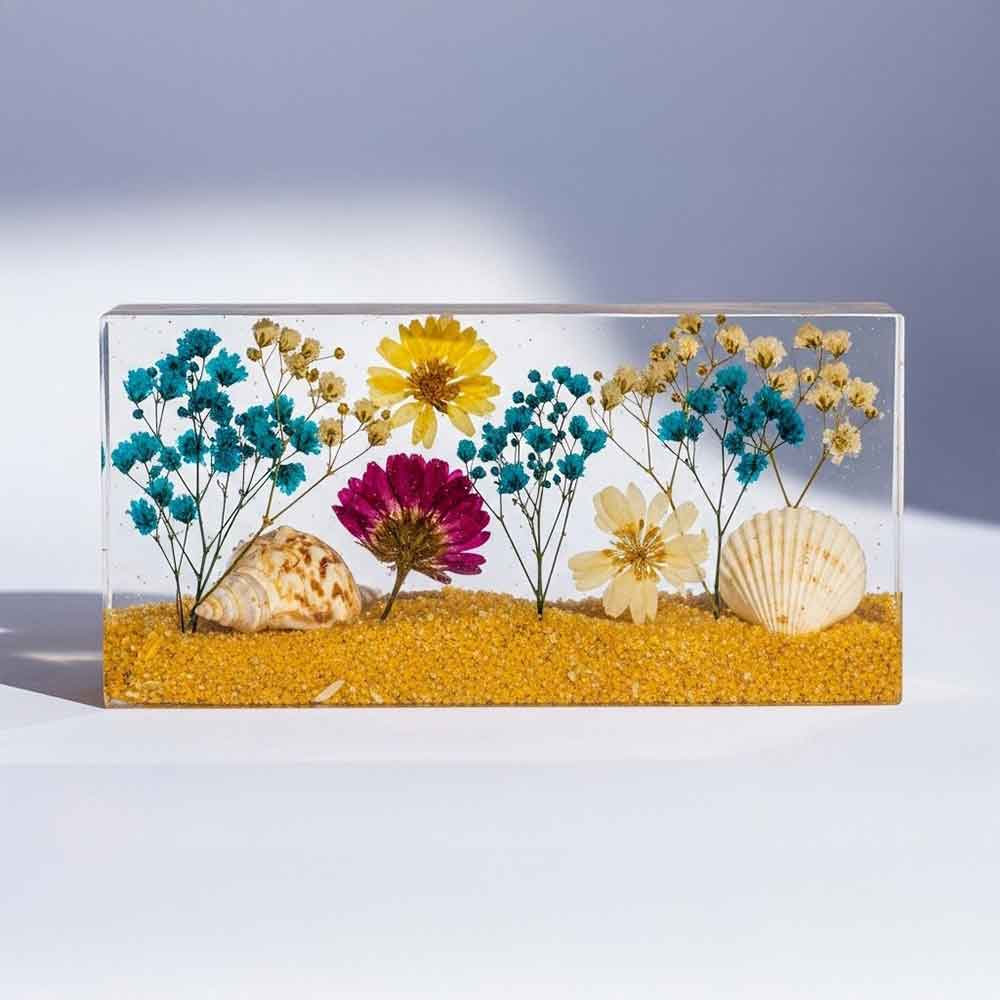
Working with epoxy resin can lead to original and unique creations, but it is important to understand that each project requires a different resin thickness to achieve a high-quality result. Using an inappropriate resin thickness can compromise both the strength and the aesthetics of your creation.
In this article, we will look at the different epoxy resin thicknesses and their uses depending on the most common creative projects. We will also cover the factors to consider when determining the epoxy resin thickness needed for your project, the tools and techniques used to measure resin thickness, and the mistakes to avoid when applying epoxy resin.
Whether you are an experienced professional or a curious beginner, this article will provide useful information to help you work with epoxy resin and create high-quality projects.

Jewelry
Epoxy resin is often used to create jewelry such as pendants, earrings, rings, and bracelets. Its transparency is particularly appreciated, allowing for unique and original pieces.
Interior decoration
Epoxy resin is also popular in interior design projects such as tables, countertops, floors, and walls. These projects often require a greater resin thickness to achieve a flat and smooth surface.
Artistic projects
Epoxy resin is frequently used in artistic projects such as paintings, sculptures, and castings. Its transparency and durability make it ideal for creating strong and visually appealing pieces.
.jpg)
Repairs
Epoxy resin thickness is a key factor in achieving a high-quality result for your creative project. Different resin thicknesses have different properties and characteristics that can influence the final outcome.
Here are the main epoxy resin thickness ranges and their typical uses:
Epoxy resin thickness of 1 to 2 mm
This thickness is suitable for jewelry making, such as pendants, earrings, and rings. It allows for a flat and smooth surface while maintaining the transparency of the epoxy resin.
Epoxy resin thickness of 2 to 4 mm
This thickness is generally used for interior decoration projects such as tables, countertops, floors, and walls. It allows large surfaces to be covered while maintaining a smooth and even finish.
Epoxy resin thickness of 4 to 8 mm
This thickness is often used for artistic projects such as paintings, sculptures, and castings. It allows for the creation of reliefs and textures within the epoxy resin.
Epoxy resin thickness of 8 mm and above
This thickness is reserved for repair projects, such as repairing wood, concrete, or metal surfaces. It allows cracks and holes to be filled in order to obtain a flat and smooth surface.
How to determine the epoxy resin thickness needed for your project
To determine the appropriate epoxy resin thickness for your project, several factors must be considered:
-
The function of the creation
-
The final size
-
The substrate
-
The viscosity of the epoxy resin
To measure epoxy resin thickness, you can use tools such as a micrometer or a caliper. It is important to measure the resin thickness at several points on the project to ensure uniform thickness.
By considering these factors and accurately measuring the epoxy resin thickness, you can determine the correct thickness for your project and achieve a high-quality result.
.jpg)
Mistakes to avoid when applying epoxy resin
Applying epoxy resin requires care and attention to achieve a high-quality result. Here are the most common mistakes to avoid:
-
Not respecting the mixing ratio: Proper mixing of epoxy resin is crucial. If the ratio is not respected, the resin may not cure correctly, affecting the strength of your project.
-
Applying epoxy resin in an unsuitable environment: Extreme temperatures, high humidity, and drafts can negatively affect the final result. A controlled environment is essential for even application.
-
Poor surface preparation: Surface preparation is critical. The surface must be clean and sanded to remove dirt, grease, or irregularities.
-
Not following the manufacturer’s instructions: Each epoxy resin has specific characteristics and application guidelines. Always follow the manufacturer’s instructions to ensure optimal results.
By following these recommendations and paying close attention to each step of the epoxy resin application process, you can create unique, durable, and high-quality projects. If you are looking for high-quality epoxy resins for your creative work, feel free to visit our Epoxy Resin Shop for a wide selection of epoxy resins and accessories.