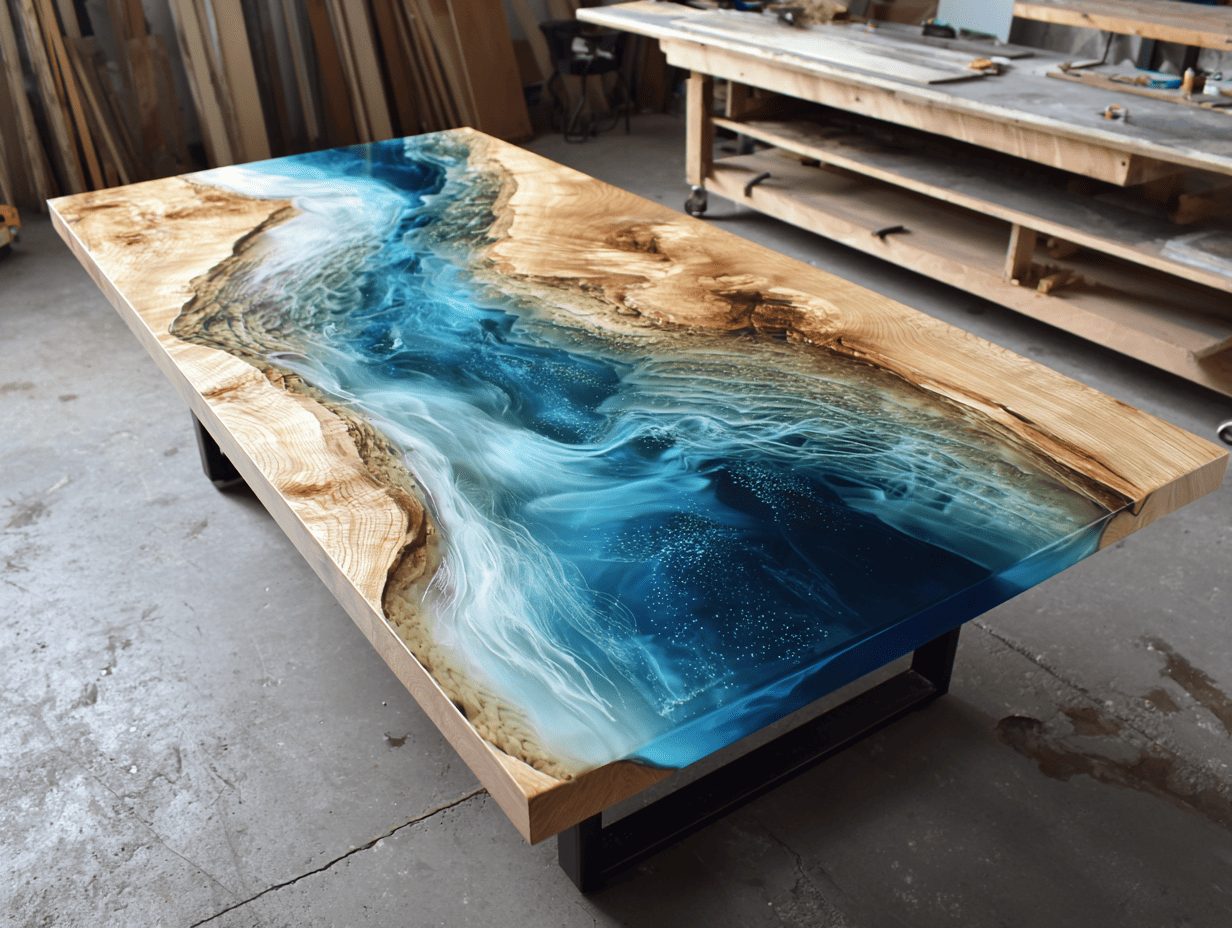
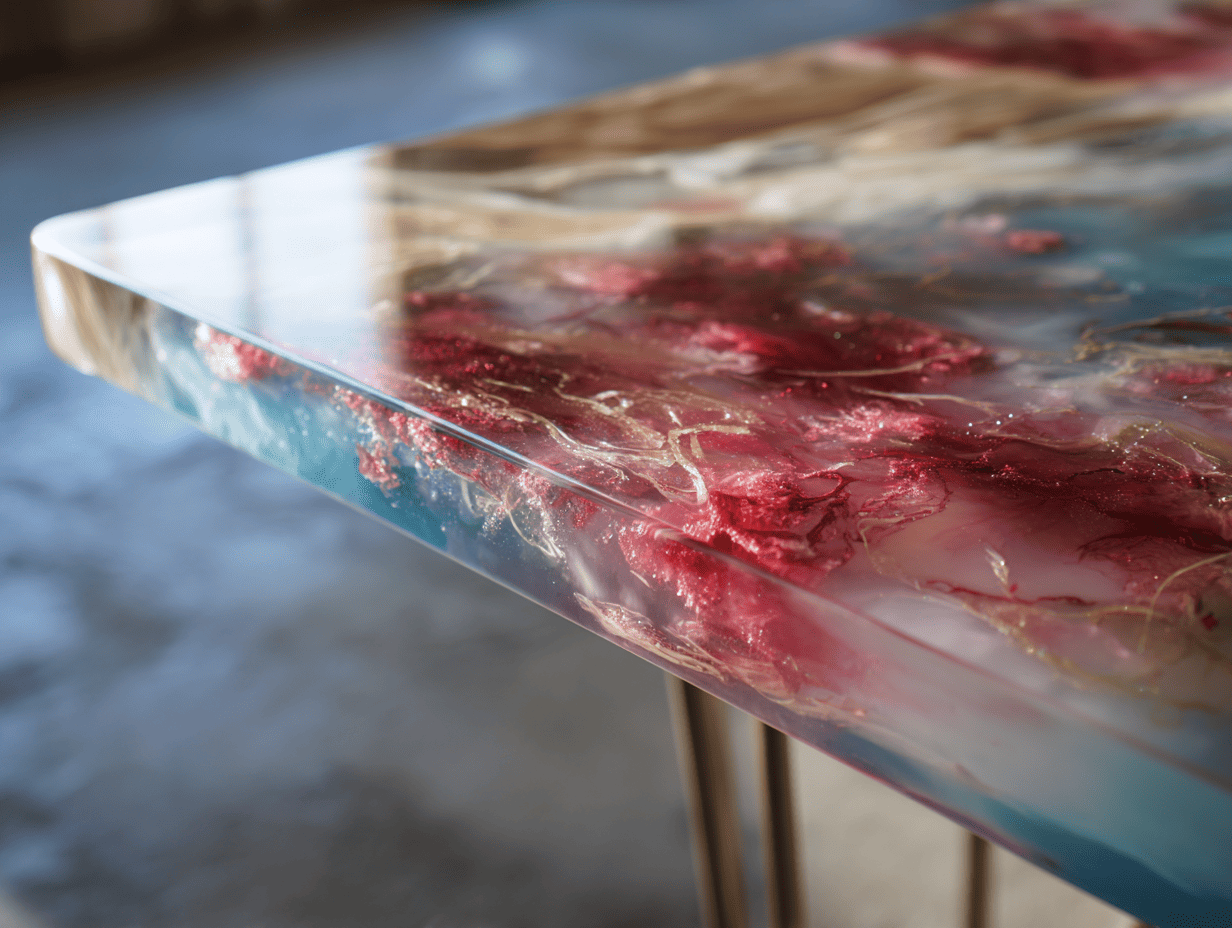
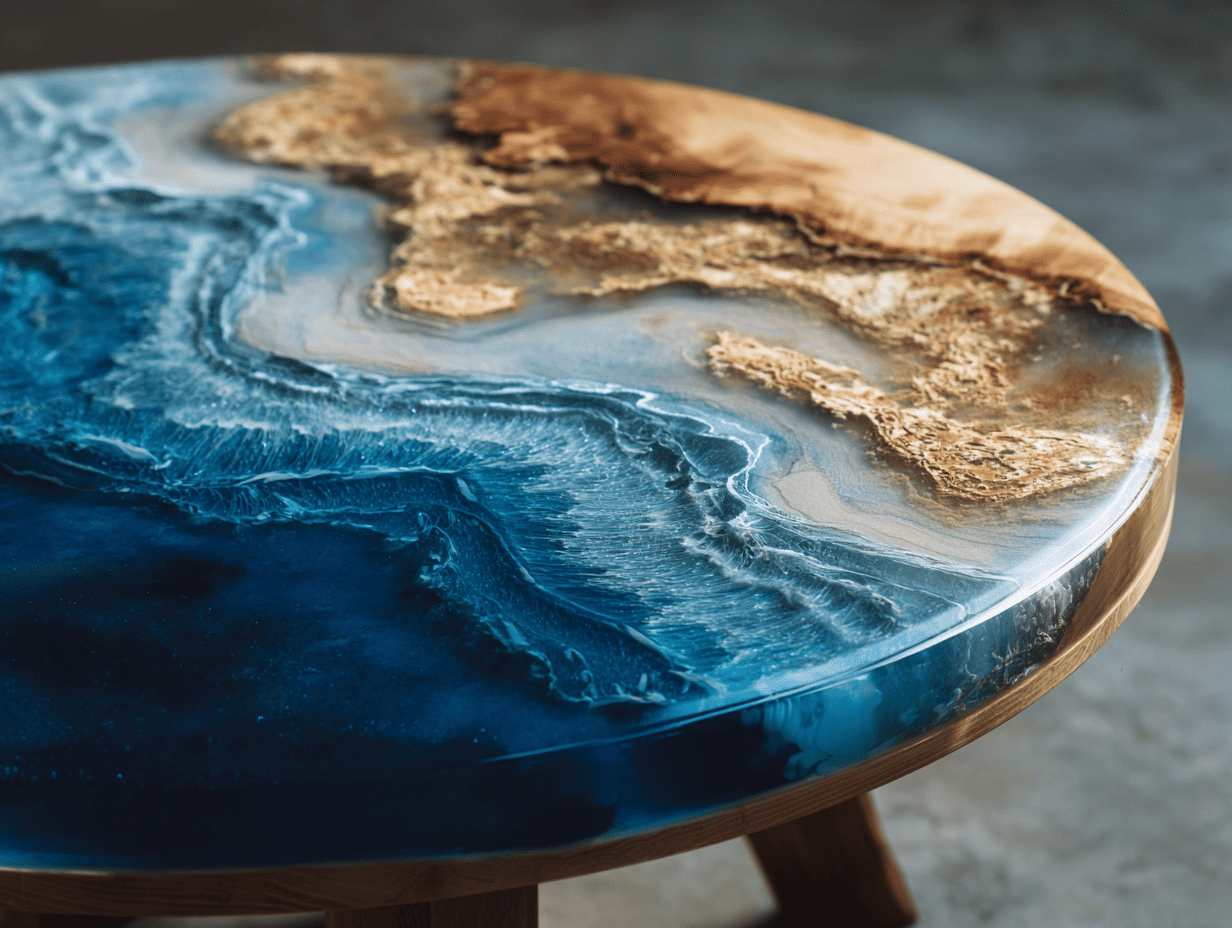
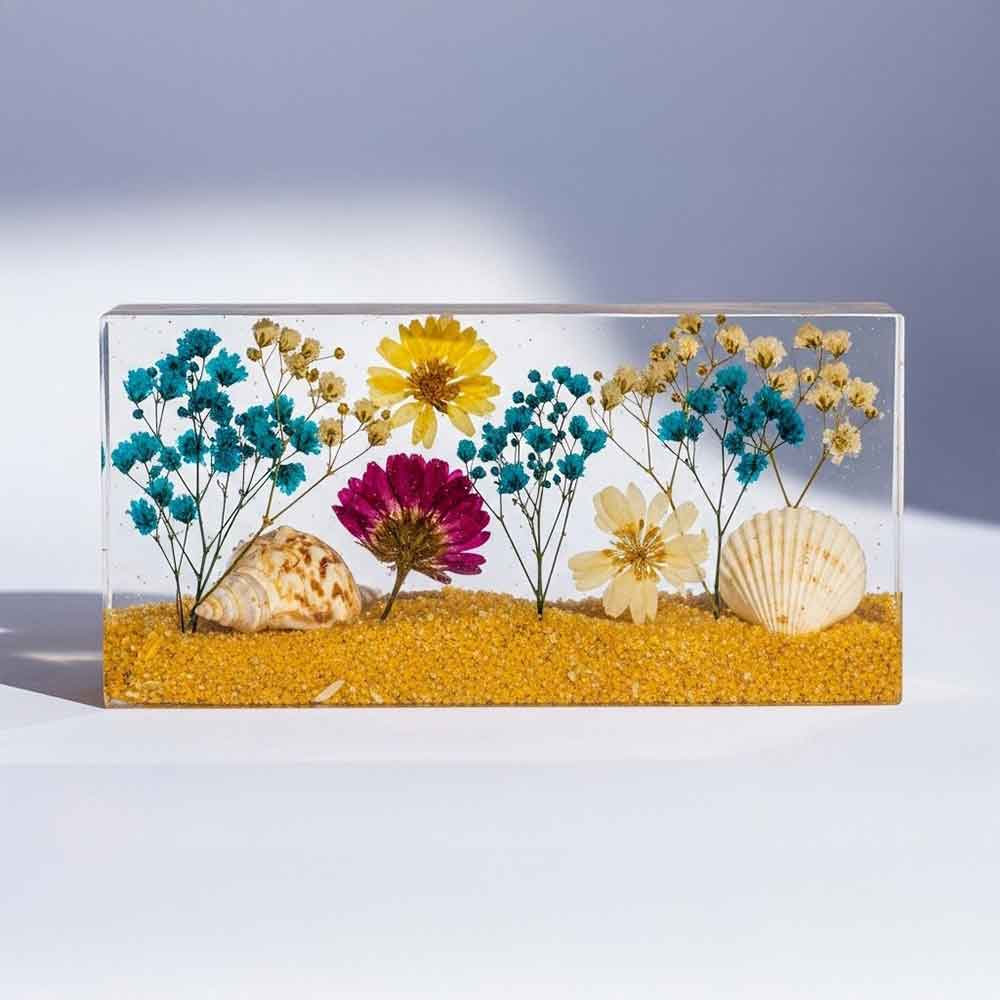
Working with epoxy resin in decorative object creation requires not only creativity, but also mastery of specific techniques to achieve professional results. Whether you are an experienced artist or a passionate hobbyist, knowing and applying the right methods can turn your projects into true works of art. Epoxy resin offers exceptional versatility, making it possible to create objects with flawless finishes—whether jewellery, furniture, or interior décor items.
This article guides you through professional techniques for handling epoxy resin, from initial preparation through finishing and maintenance. We will cover key steps such as mixing and degassing, application methods for simple or complex moulds, and tips for achieving a smooth, glossy finish. By mastering these techniques, you will not only improve the quality of your creations, but also explore new creative possibilities with confidence and precision.
Preparation work before starting with resin
The preparation phase is what ensures the success of your epoxy resin projects. Before you even begin mixing or applying the resin, it is essential to properly prepare your tools, materials, and workspace. Careful preparation not only makes the process easier, but also guarantees a flawless final result.
Choosing and preparing moulds
Mould selection plays a decisive role in the final quality of the decorative object. It is important to choose high-quality silicone moulds, as they offer better flexibility and make demoulding easier without damaging the object. Before pouring the resin, apply a release agent to prevent the resin from sticking to the mould, which could compromise the object’s finish. For more complex creations, make sure the mould is free of dust and particles that could become trapped in the resin.
Preparing the work surface
A clean, organised workspace is essential for working efficiently with epoxy resin. Cover your work surface with a silicone mat, baking parchment, or a plastic sheet to protect against splashes and drips. Also ensure the environment is free from dust and debris, as these contaminants can easily end up in the resin, creating visible imperfections in the finished piece. Working in a well-ventilated area is necessary for safety reasons, as epoxy resin can release potentially harmful fumes.
Accurate measurement of components
Precision is essential when preparing epoxy resin. The mixing ratio between resin and hardener must be strictly followed to ensure complete curing and a high-quality finish. Use a digital scale to accurately measure the required quantities of each component. Incorrect dosing can lead to issues such as incomplete curing or air bubbles in the resin. Make sure to mix the components in a clean, uncontaminated container to avoid any unexpected chemical reaction that could affect the resin.
Mixing and degassing techniques
Once the preparation phase is complete, the next step is to mix and properly degas the epoxy resin. This stage ensures an even application and a defect-free final result. Incorrect mixing or insufficient degassing can result in air bubbles, imperfections, or uneven curing, which may compromise the quality of your decorative object.
Thorough, homogeneous mixing
To achieve a homogeneous mixture, it is essential to mix the epoxy resin and hardener slowly and consistently. Use a clean, uncontaminated container to avoid unexpected chemical reactions. During mixing, use a plastic or wooden spatula to stir the components gently. Avoid mixing too vigorously, as this can introduce air bubbles into the resin. Be sure to scrape the sides and bottom of the container so both components are fully incorporated. A homogeneous mix ensures even curing and a smooth finish.
Degassing the resin
Degassing is an important step to remove air bubbles that may form during mixing. If not addressed, these bubbles can remain trapped in the resin and become visible after curing, negatively affecting the object’s appearance.
Using a heat gun: after pouring the resin into the mould or onto the surface, gently pass a heat gun over the resin. The heat helps bubbles rise to the surface, where they burst easily. Be careful not to overheat the resin, as this can cause deformation or overly rapid curing.
Vacuum chamber: for more complex projects, or when you want to ensure complete bubble removal, a vacuum chamber can be used. This method is particularly effective for large objects or projects requiring perfect transparency. By placing the resin in a vacuum chamber, you reduce pressure, allowing air bubbles to escape before the resin begins to cure.
Temperature control
Temperature plays a key role in mixing and degassing. Resin that is too cold can be difficult to mix and more likely to trap bubbles, while resin that is too warm can cure too quickly, leaving little working time.
Warming the resin: if the resin is too viscous due to ambient temperature, you can warm it slightly by placing the container in a warm water bath. This makes the resin more fluid, improves mixing, and reduces bubble formation. Be careful not to overheat, as this could alter the resin’s properties.
Application and pouring techniques
After properly mixing and degassing the epoxy resin, the next step is to apply and pour it efficiently to achieve a professional finish. Application and pouring techniques vary depending on project complexity, desired effects, and the type of mould or surface used. Mastering these techniques is essential for creating high-quality decorative objects with an impeccable finish.
Pouring in successive layers
For many projects—especially those requiring significant thickness or a bubble-free finish—it is recommended to pour the resin in successive layers. This technique helps minimise the risk of bubbles and ensures even curing.
Method: pour the resin in thin layers, allowing each layer to partially cure before pouring the next. This approach is particularly useful for larger projects or objects requiring substantial resin thickness. Wait until each layer becomes slightly tacky before pouring the next to ensure good adhesion between layers.
Benefits: pouring in successive layers reduces the risk of deformation, overheating, or cracking, which is especially important for large projects or fast-curing resins.
Using pigments and glitter
Adding pigments, inks, or glitter to epoxy resin can transform a simple project into a one-of-a-kind art piece. However, to achieve consistent and striking visual effects, it is essential to master how these additives are mixed and applied.
Pigments: when adding pigments, mix thoroughly to avoid uneven colour patches. Use pigments specifically designed for epoxy resin, as they are formulated to disperse evenly without affecting resin performance. To create marbling or gradient effects, pour coloured resin in stages or use controlled pouring techniques. Discover our epoxy resin colorants.
Glitter: to incorporate glitter, mix it into the resin before pouring and ensure it is evenly distributed. For more original custom effects, you can sprinkle glitter directly into the mould after pouring a first layer, then add a clear resin layer on top to seal the glitter.
Tip: we recommend testing your desired effects in a small amount of resin separate from the mould so you can observe the result.
Applying resin in complex moulds
Projects using complex moulds or irregular shapes require specific techniques to ensure resin reaches all areas correctly.
Using syringes: to reach hard-to-access areas or apply resin into fine details, use syringes to inject resin precisely. This helps prevent air bubbles and ensures the resin reaches every corner of the mould.
Managing resin in corners and recesses: when working with complex moulds, begin by pouring resin into corners and deeper areas to minimise the risk of bubbles. Then gradually fill the mould, slightly tilting it to guide resin toward the remaining areas.
Finishing techniques
Once the epoxy resin has been applied and cured, the final quality of your decorative object will depend heavily on the finishing techniques used. Finishing not only improves the resin’s appearance, but also ensures durability and resistance to wear. Finishing steps include sanding, polishing, varnishing, and correcting any imperfections. Mastering these techniques is essential for achieving a professional, long-lasting result.
Sanding and polishing
Sanding and polishing are essential steps to achieve a smooth, even, glossy surface. After curing, the resin surface may show small imperfections such as air bubbles, bumps, or an uneven texture.
Sanding: start by sanding the surface with medium-grit sandpaper (around 400 to 600 grit) to remove the most noticeable irregularities. Then move to finer grits (up to 2000 or higher) to smooth the surface. Wet sanding is recommended to avoid heating the resin, which could cause cracking or deformation. This method also removes sanding marks while keeping the resin clean.
Polishing: once the surface is well sanded and smooth, polishing restores the resin’s clarity and shine. Use a polishing compound suitable for epoxy resin and a soft cloth or polishing machine to obtain a glossy finish. Work in circular motions with light pressure to avoid damaging the surface.
Varnishing
Varnish can be applied after polishing to add an extra protective layer and intensify resin gloss. Different types of varnish offer specific characteristics in terms of UV protection, scratch resistance, and shine.
Application: apply the varnish in thin, even coats using a brush, foam roller, or spray, depending on the product used. Allow each coat to dry fully before applying the next to avoid streaks or bubbles. Polyurethane varnish is often recommended for its durability and UV resistance, which is particularly important for decorative objects exposed to sunlight.
Matte or glossy finish: depending on the desired look, you can choose a matte, satin, or gloss varnish. Matte varnish provides a subtle, elegant finish, while gloss varnish enhances the depth and clarity of the resin.
Defect repair
Even with careful application, defects can appear, such as small bubbles, uneven areas, or scratches. These can be corrected using specific techniques.
Filling bubbles: to correct small air bubbles that appear after curing, gently pierce the bubble with a fine needle, then fill it with a small amount of fresh resin. Smooth the surface with a plastic spatula and allow it to cure.
Touching up uneven areas: if some areas are thicker or thinner than others, sand the surface to level it, then apply a new coat of resin or varnish to restore uniformity.
Correcting scratches: for superficial scratches, light sanding followed by polishing is usually enough. For deeper scratches, you may need to sand more thoroughly and reapply a thin layer of resin to fill the scratch.
Maintenance and storage of resin objects
Once you have created and finished your epoxy resin decorative object, it is important to care for it so it retains its appearance and durability over time. Regular maintenance and proper storage help prevent yellowing, scratches, and other forms of deterioration that may affect the object’s aesthetics. Below are some tips for maintaining and preserving your epoxy resin creations.
Caring for decorative objects
To maintain the shine and clarity of epoxy resin, it is essential to clean decorative objects regularly. However, resin is sensitive to certain chemicals, so choosing the right cleaning products is important.
Gentle cleaning: use a soft microfibre cloth to dust the objects. For stains or more stubborn dirt, cleaning with lukewarm water and mild soap is recommended. Avoid abrasive cleaners or solvent-based products, as they may dull or damage the resin surface.
Avoiding scratches: when cleaning, make sure you do not use tools or cloths that could scratch the surface. If superficial scratches appear, they can often be corrected with light polishing using a mild abrasive compound.
Protection against UV rays
Epoxy resin, although initially resistant, can degrade under UV exposure. It is therefore important to protect resin objects that are exposed to direct sunlight or used outdoors.
UV protection: apply a UV-protective varnish to your resin objects to prevent yellowing and discolouration. This varnish creates a barrier against sunlight, extending the resin’s lifespan. For items already exposed, regular varnish maintenance is recommended to keep protection at an optimal level. Discover TOP CLEAR, the colourless UV-resistant finish.
Mastering professional techniques for working with epoxy resin in decorative object creation opens the door to a wide range of artistic and technical possibilities. Whether you are creating delicate jewellery, impressive furniture pieces, or unique works of art, the quality of your results will largely depend on the attention you pay to detail at every stage of the process.
From careful preparation of materials and workspace, to precise mixing, degassing, and application techniques, followed by meticulous finishing and regular maintenance—each step is crucial to ensure a final result that is not only aesthetically pleasing, but also able to stand the test of time.