Epoxy resin is a versatile material that has gained popularity in artistic and DIY projects thanks to its ability to create unique visual effects. Whether for artworks, furniture, or jewellery, the special effects achieved with epoxy resin add an artistic and personalised dimension to every creation. This article explores the different techniques used to create special effects with epoxy resin, covering the required materials, application steps, and precautions needed to achieve optimal results.
Understanding epoxy resin
Epoxy resin is a thermosetting polymer that, when mixed with a hardener, transitions from a liquid state to a solid one. This chemical process, known as polymerisation, allows the resin to cure and form a smooth, glossy, and durable surface. Epoxy resin is naturally clear, making it ideal for projects where transparency or colour effects are desired.
Required materials
To create special effects with epoxy resin, it is important to have the right materials:
-
High-quality epoxy resin: make sure to choose a resin specifically designed for creative projects. Lower-quality resins may yellow over time or fail to cure properly.
-
Colorants: epoxy resin colorants are available in liquid pigments, powders, or pastes. They are designed to blend easily with the resin and allow for a wide range of colours and effects.
-
Glitter and metallic powders: these additives are perfect for adding sparkle and metallic effects to your resin.
-
Alcohol inks: alcohol inks react with epoxy resin to create marbled effects and organic patterns.
-
Silicone moulds: if you wish to create resin objects, silicone moulds are essential for achieving precise shapes and easy demoulding.
-
Mixing and protective tools: use spatulas to mix the resin, and wear gloves and safety goggles to avoid skin contact.
Techniques for creating special effects
Marbled effect
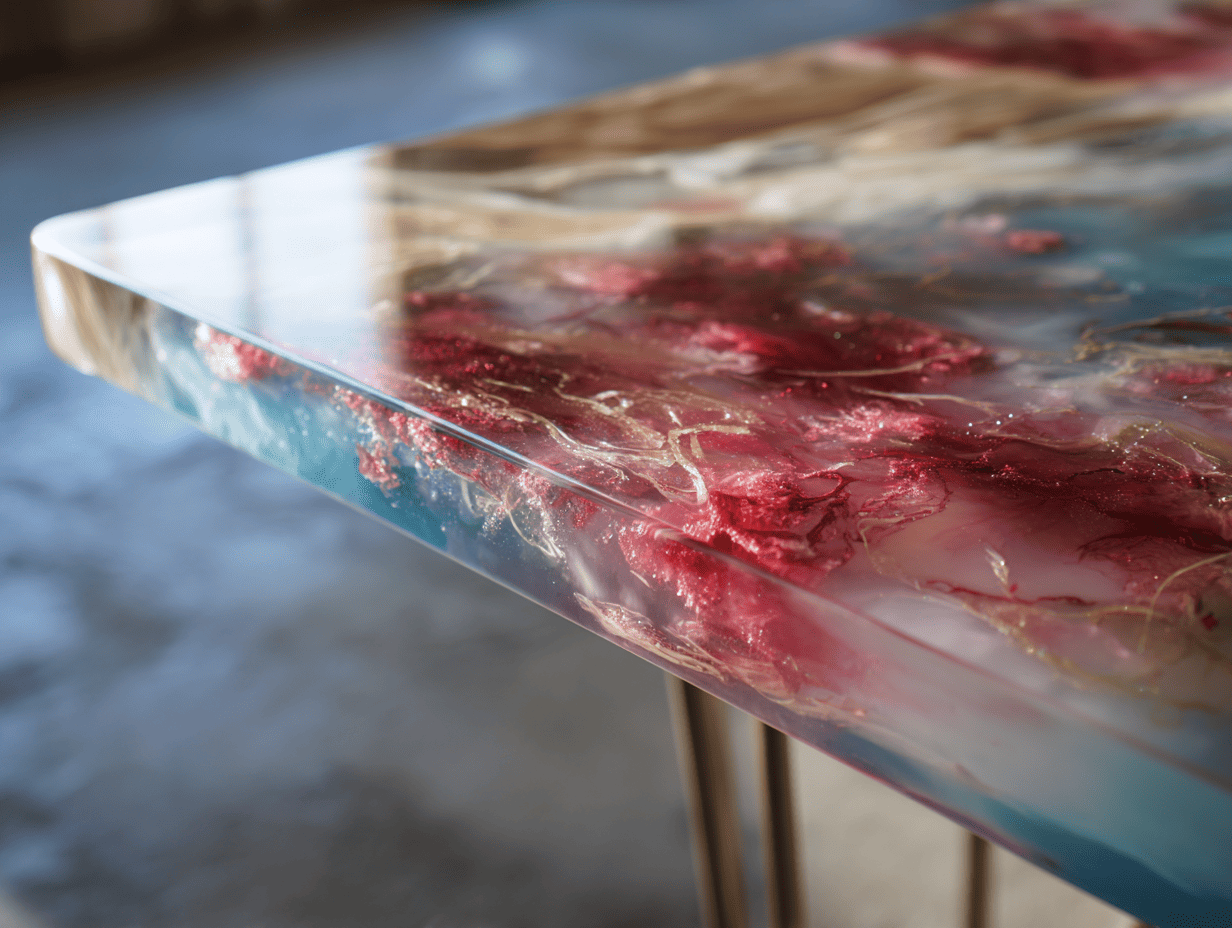
The marbled effect is one of the most popular special effects created with epoxy resin. To achieve this effect, start by mixing the epoxy resin with your chosen colorants. Pour different coloured resins onto the working surface, then use a spatula or mixing stick to gently blend the colours together. The key to a successful marbled effect is not to overmix, so that the individual patterns remain distinct.
Translucent effect
The translucent effect is ideal for creating light-transmitting pieces such as jewellery or decorative panels. To achieve this effect, simply mix a translucent dye with the epoxy resin. You can adjust the amount of colorant to reach the desired opacity. Adding fine glitter can also give a subtle shimmer to the final piece.
Metallic effect
For a metallic effect, add metallic powder to the epoxy resin. These powders are available in various shades such as gold, silver, bronze, and copper. Once the powder is added, mix it thoroughly with the resin before pouring it onto the working surface. The metallic effect is particularly striking when applied to furniture or artworks.
Pearlescent effect
The pearlescent effect is created by mixing mica powder with epoxy resin. This powder gives the resin an iridescent sheen and is commonly used for projects that require an elegant, glossy finish. This effect is often applied in interior decoration projects or artistic creations.
“River” effect
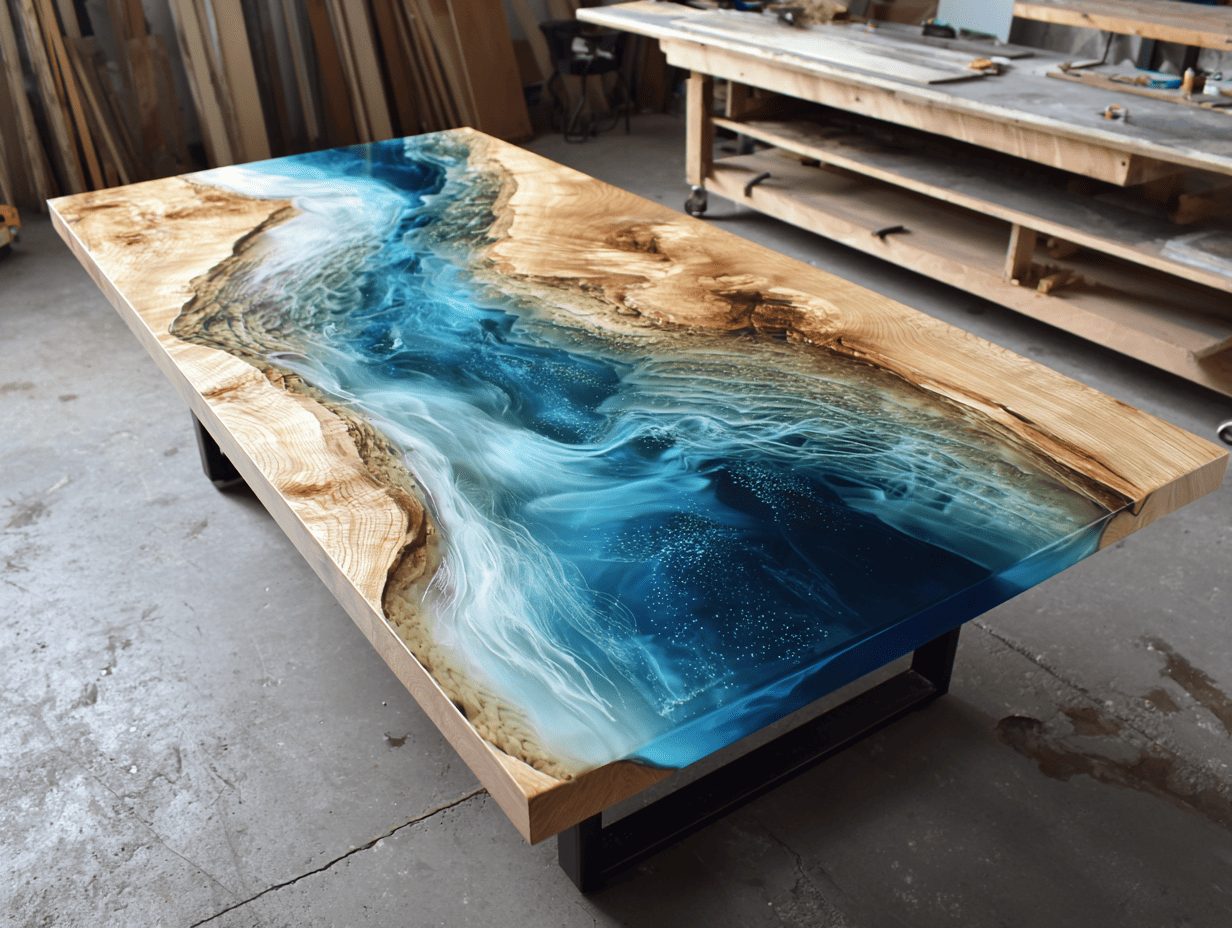
This effect is commonly used for epoxy resin tables, where a “river” of resin flows through the centre of a wooden piece. To create this effect, use epoxy resin tinted blue or green to simulate the appearance of water. You can add pebbles, sand, or small wood pieces to the resin for an even more realistic look. Silicone moulds are often used to contain the resin while it cures.
“Ocean” effect
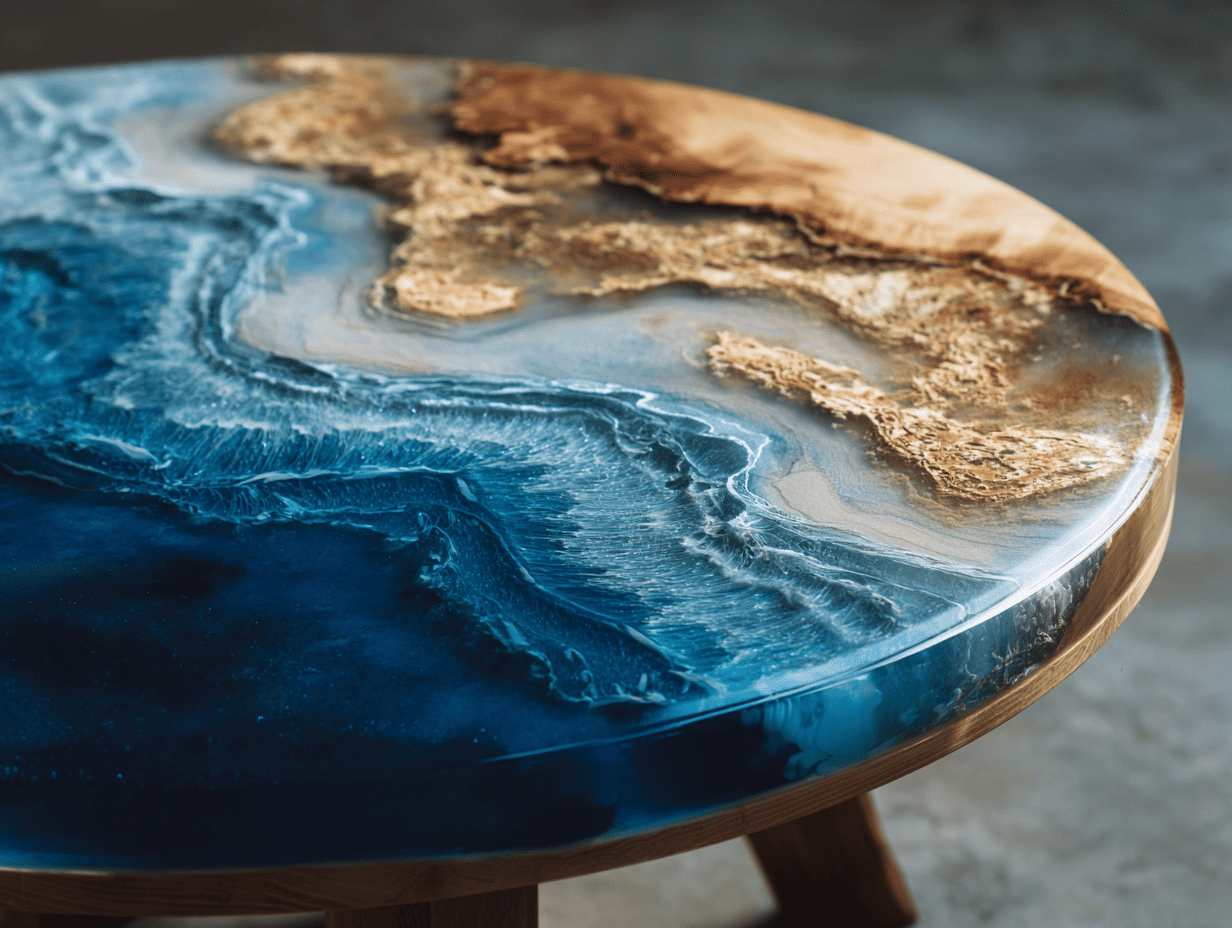
The ocean effect is achieved by using different shades of blue and white to imitate waves and sea foam. To do this, start by pouring a blue resin base onto your working surface, then add white waves using a spatula or brush. Gently blow over the resin with a heat gun or hair dryer to create realistic movement in the waves.
Application steps
Surface preparation
Ensure that the surface on which you will apply the resin is clean, dry, and free of dust. A smooth surface is essential for achieving a flawless final result.
Mixing the resin and hardener
Carefully mix the epoxy resin with the hardener according to the manufacturer’s instructions. Make sure to scrape the sides and bottom of the container to achieve a homogeneous mixture.
Adding colorants and additives
Add your colorants, glitter, or powders to the mixed resin, stirring slowly to avoid introducing air bubbles.
Applying the resin
Pour the resin onto the prepared surface and use a spatula to spread it evenly. To create special effects, apply your chosen techniques (marbling, metallic effects, etc.) at this stage.
Curing
Allow the resin to cure in a dust-free environment. Curing time may vary from a few hours to several days, depending on the product used.
Precautions to take
-
Ventilation: epoxy resin may release fumes, so it is essential to work in a well-ventilated area.
-
Personal protection: always wear gloves, safety goggles, and a protective mask to avoid contact with skin and eyes.
-
Temperature: ambient temperature can affect the curing process. Make sure to work under optimal conditions, generally between 20°C and 25°C.