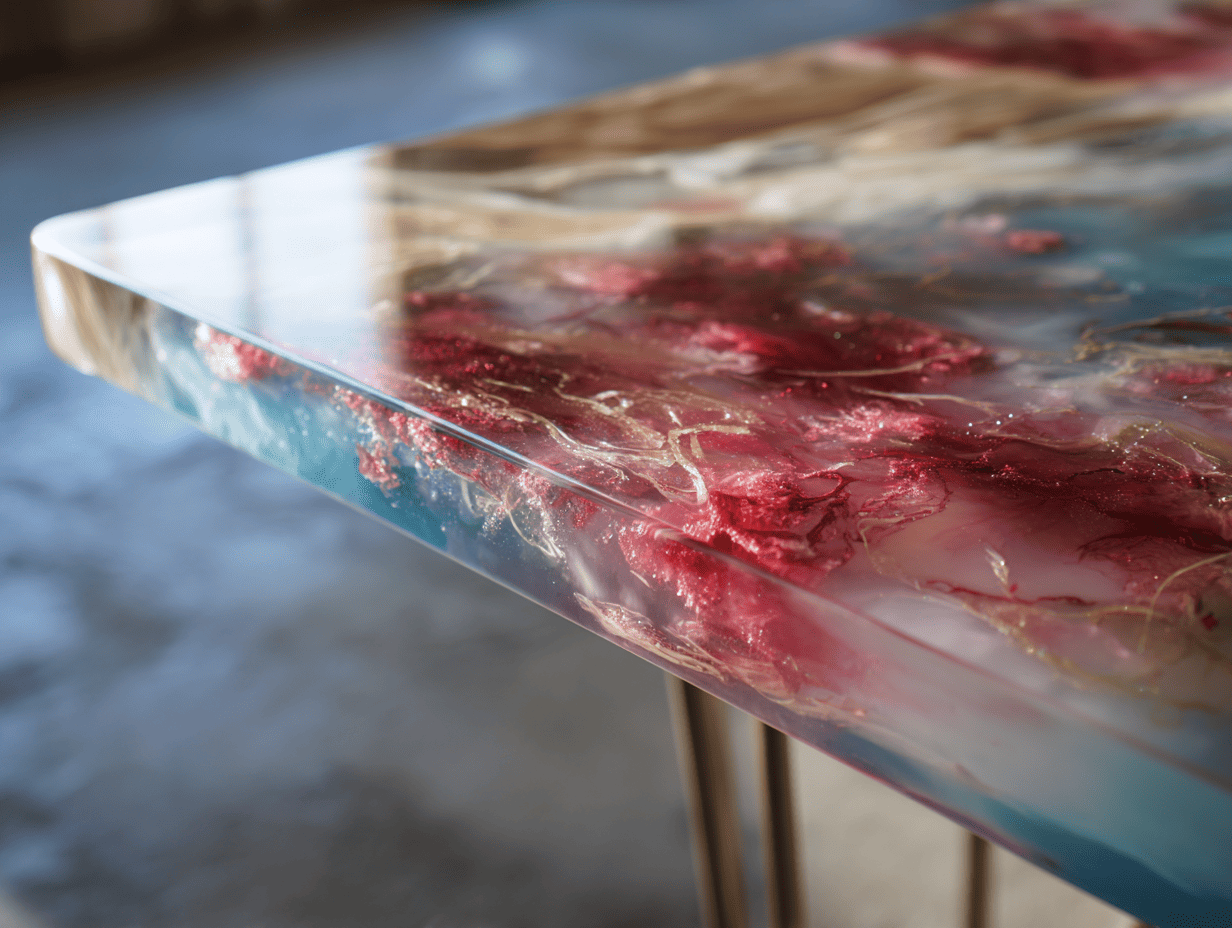
Kitchen renovation is often perceived as a costly and complex undertaking, but there are innovative solutions to modernise your space without major construction work. Among these solutions, the use of epoxy resin for kitchen surfaces stands out for its many advantages in terms of durability, customisation, and cost efficiency. In this article, we explore how epoxy resin can be used to transform your kitchen, focusing on its practical applications, benefits, and the key steps involved.
What is epoxy resin and why use it in the kitchen?
Epoxy resin is a thermosetting polymer that, once applied and cured, forms a solid, durable surface that is highly resistant to scratches, stains, moisture, and chemicals. Used in a wide range of industries—from construction to crafts—it is now increasingly popular in interior renovations, particularly in kitchens. Here is why it is especially well suited to this space:
-
Durability: epoxy resin is highly resistant to impacts, moisture, and scratches, making it ideal for a kitchen environment where surfaces are subject to intensive use.
-
Easy maintenance: once cured, epoxy resin provides a smooth, non-porous surface that is very easy to clean.
-
Customisation: epoxy resin can be tinted, enhanced with pigments, glitter, or even embedded objects to create a unique design.
Possible applications of epoxy resin in the kitchen
Worktops
The worktop is one of the most important and heavily used surfaces in a kitchen. Applying a layer of epoxy resin to your worktop helps protect it against scratches, heat, and moisture, while giving it a modern and elegant appearance.
Splashbacks
The splashback, located behind cooking or food preparation areas, must be both attractive and easy to maintain. Epoxy resin is an excellent option for a customised splashback, featuring coloured pigments or marble-like effects.
Advantages and disadvantages of epoxy resin in the kitchen
Advantages
-
High resistance: perfectly suited to the demanding conditions of a kitchen.
-
Custom appearance: experiment with colours, effects, and inclusions.
-
Easy maintenance: a simple soft cloth is enough for cleaning.
Disadvantages
-
Preparation and application time: requires a curing time of 24 to 48 hours.
-
UV sensitivity: may yellow without specific treatment.
How to apply epoxy resin to renovate your kitchen
-
Surface preparation: clean and sand the surface.
-
Protect the work area: use protective sheets and wear safety equipment.
-
Mixing the resin and hardener: strictly follow the recommended ratios.
-
Applying the resin: apply evenly using a spatula or roller.
-
Removing air bubbles: use a blowtorch to eliminate them.
-
Curing time: allow 24 to 48 hours.