Sticky or Soft Resin: What to Do When It Doesn’t Harden?
Epoxy resin is an exceptional material, but it requires rigor and precision. Especially when starting out, it can happen that the resin remains sticky, soft, or does not cure at all—even after several hours. Here are the most common mistakes, and most importantly, how to avoid them easily.

1. Incorrect Mixing Ratio
The mixing ratio between resin and hardener is critical. It must never be estimated “by eye” or approximated. Even a small error can prevent the resin from curing properly.
Tip: Always use a precision scale. Follow the ratio indicated by the manufacturer. Never change the ratio to speed up or slow down curing.

2. Poorly Mixed Resin
Mixing too quickly or incompletely can create areas of poorly blended resin. These zones will remain sticky or soft, even if the rest of the piece appears hard.
Tip: Mix slowly and thoroughly, scraping the sides and bottom of the container. Do not skip this step, even if the mixture looks uniform.

3. Resin Not Suitable for Your Project
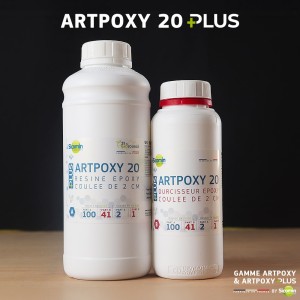
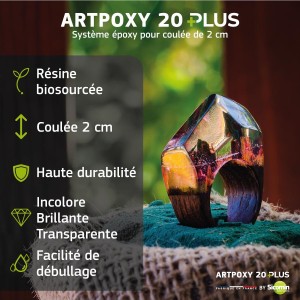
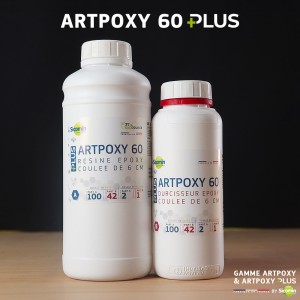
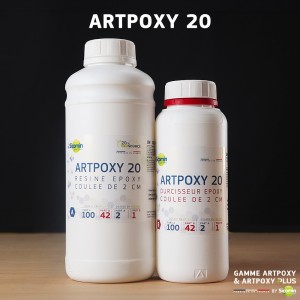
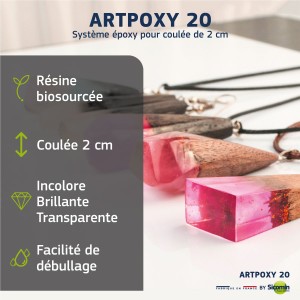
Some resins are designed for thin pours, others for thick pours. For example, using ARTPOXY 20 PLUS for a pour thicker than 2 cm will lead to improper curing.
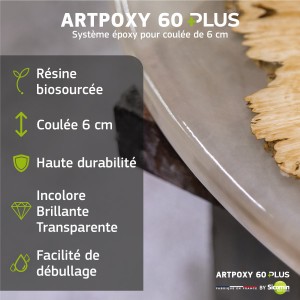
Tip: Always check the type of resin you are using. For thick pours (over 2 cm), choose ARTPOXY 60 PLUS.

4. Excessive Colorants or Additives
Pigments, powders, or inks can interfere with the chemical reaction if used in excessive amounts.
Tip: Always start by testing a small quantity with the colorant or additive you plan to use. This helps ensure you are not exceeding acceptable limits.

5. Damaged or Poorly Stored Resin
Resin that is too old, exposed to moisture, or stored in excessive heat may lose its properties and fail to cure completely.
Tip: Store your resin in a dry place, protected from light. Always close the containers tightly after use.