




Focus on wood epoxy resin: what areFocus on epoxy resin for wood: what are its advantages and disadvantages?
You have heard about epoxy resin for wood and would like to use it to create works of art with tables, cupboard doors, jewellery and other accessories? Here is an overview of the advantages and disadvantages of this product.
The advantages of epoxy resin for wood
When talking about epoxy resin, the advantages are generally more numerous than the disadvantages. Indeed, this resin is highly versatile and allows you to give free rein to your imagination. To enhance wooden surfaces, this product is available in a wide range of colours and enables you to create many different effects for a unique and personalised result.
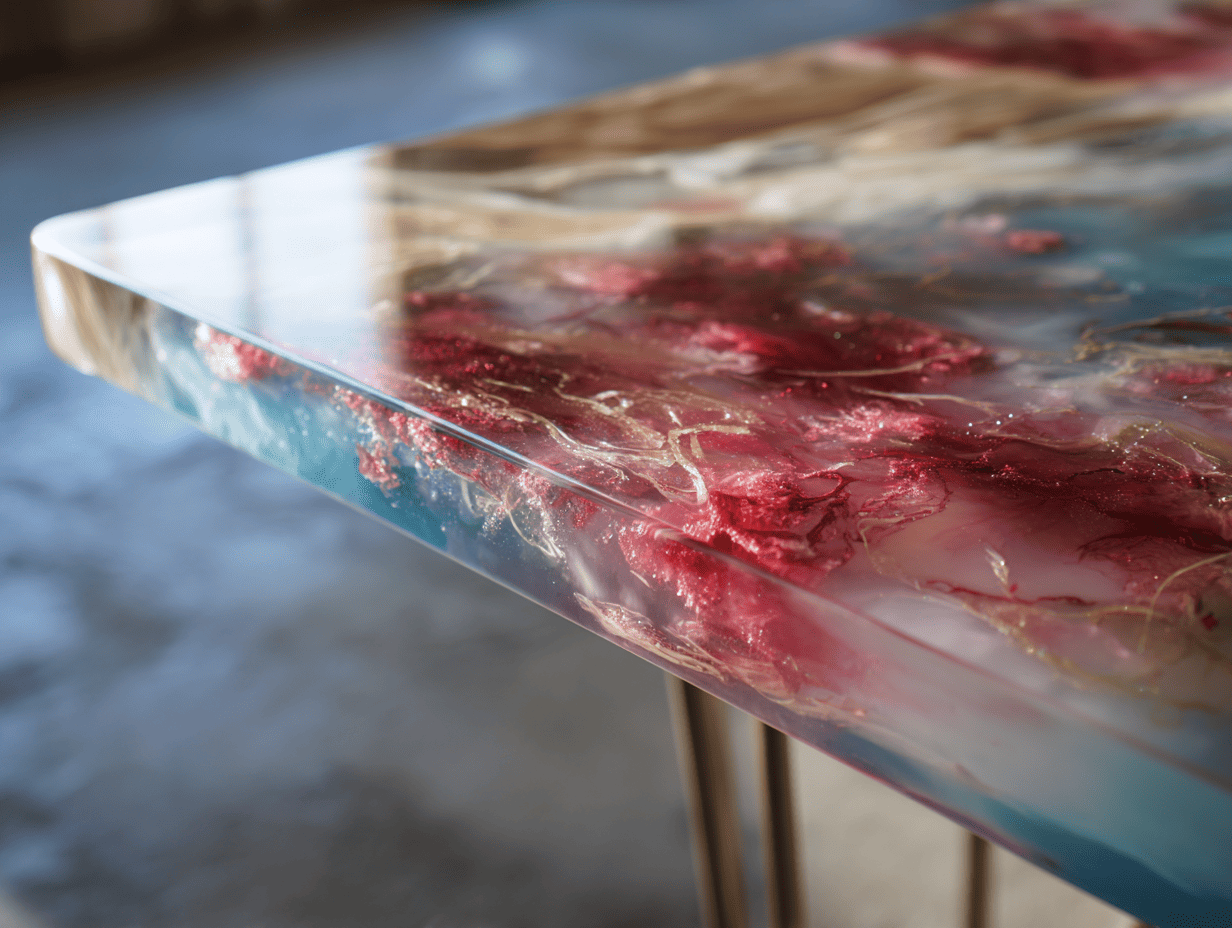
In addition, epoxy resin helps to enhance wooden objects and furniture, as every knot, imperfection or even crack can be highlighted using this product. With its glass-like effect, epoxy resin for wood also makes furniture and accessories easier to maintain while protecting them from everyday wear and tear.
The disadvantages of epoxy resin for wood
Despite its many advantages, epoxy resin for wood does have a few drawbacks that should be considered before use. Its application requires certain precautions in order to achieve a satisfactory result. The resin/hardener mixing and the pouring process must be carried out properly to avoid surface bubbles.
Despite its strength, it should also be noted that epoxy resin for wood is quite sensitive to scratches, meaning that appropriate precautions must be taken—especially when used on wooden coffee tables or dining tables.
In which situations and how should epoxy resin for wood be used?
Epoxy resin can be used in many situations, particularly to enhance wooden objects. However, to achieve an optimal result that meets your expectations, certain precautions must be observed. In which contexts should epoxy resin for wood be used, and how should it be applied? We explain below.
In which contexts should epoxy resin for wood be used?
As you have understood, epoxy resin can be used to give a second life to your wooden furniture, objects and accessories. Have you grown tired of your wooden table that has several defects or cracks? Instead of getting rid of it, you can create an “epoxy river table”. Very trendy, this artistic approach consists of creating a river effect in a wooden table using epoxy resin. The result is often stunning!
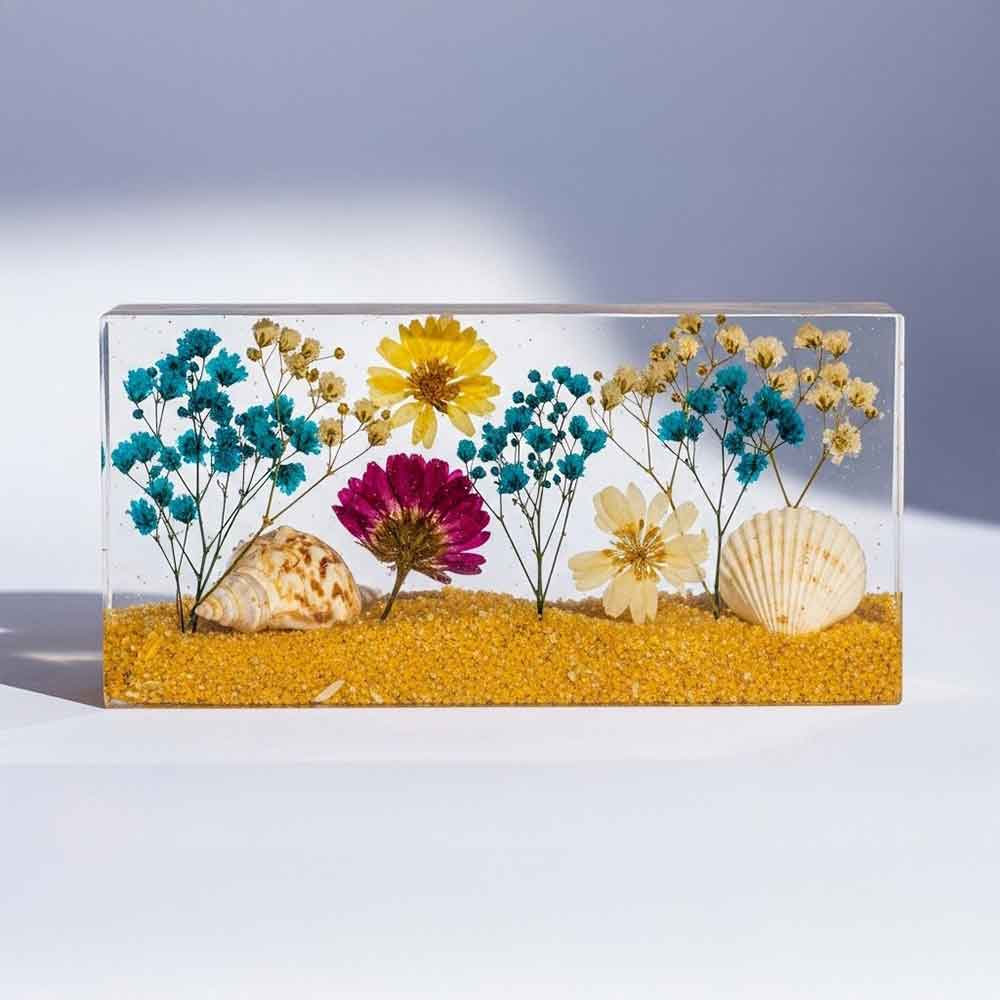
Epoxy resin can also be used to enhance damaged cupboard doors or to create decorative accessories. The possibilities are numerous, and you will find plenty of ideas online.
What precautions should be taken when using epoxy resin for wood?
Once cured, epoxy resin offers no second chance if the result does not meet your expectations. It is therefore essential to carefully follow the usage precautions when handling this product.
-
Properly prepare the surface: whether it is a table or wooden objects, the surface must be clean and smooth before pouring the resin. To prevent bubbles, it is recommended to seal the wood with an acrylic PU varnish and allow it to dry for at least 12 hours.
-
Properly prepare the mould: before pouring the resin, the mould must be carefully prepared using a melamine panel cut to the desired dimensions. To prevent the resin from sticking to the surface, it is also recommended to line the mould with a specific protective film (such as Polyane).
Good to know: if bubbles appear on the surface, you can use a hairdryer or a heat gun to remove them.
its advantages and disadvantages?
You've heard about wood epoxy and you want to use it to create works of art with your tables, closet doors, jewelry and other accessories? Let's take a look at the pros and cons of this product.
The advantages of epoxy wood resin
When it comes to epoxy resin, the advantages are generally more numerous than the disadvantages. Indeed, this resin is very versatile and allows you to let your imagination run free. To dress up your wooden surfaces, this product comes in many colors and allows you to achieve many effects for a unique and personalized result. In addition, epoxy resin contributes to sublimate your wooden objects and furniture since each knot, each defect or even each crack will be sublimated thanks to this product. With its glass effect, epoxy wood resin also makes it easier to maintain your furniture and accessories while protecting them from everyday aggressions.
The disadvantages of wood epoxy resin
Despite its many advantages, wood epoxy resin has a few disadvantages that must be taken into account before using it. Also, you should know that its application requires some precautions in order to obtain a satisfactory result. The resin/hardener mixture as well as the pouring must be done according to the rules of art in order to avoid bubbles on the surface. In spite of its solidity, you should also know that wood epoxy resin is quite sensitive to scratches and that it will be necessary to take precautionary measures accordingly, especially if it is a wooden coffee or dining table.
In which cases and how to use wood epoxy resin ?
Epoxy resin can be used in many cases and in particular to enhance your wooden objects. Nevertheless, to obtain an optimal result that meets your expectations, certain precautions must be observed. In what context should you use wood epoxy resin and how should you use it? We enlighten you on the subject.
In what context should I use wood epoxy resin?
As you can see, epoxy resin can be used to give a second life to your wooden furniture, objects and accessories. You are tired of your wooden table that has several defects and cracks? Instead of thinking about getting rid of it, you can create an "Epoxy River Table". Very fashionable, this artistic wave consists in creating a river effect to your wooden table thanks to resin. The result is often stunning! Epoxy resin can also be used to dress up your damaged cupboard doors or to create decorative accessories. The possibilities are numerous and you can find many ideas by browsing the web!
What are the precautions for using wood epoxy resin?
Once cured, epoxy resin does not offer a second chance if the result is not up to your expectations. It is therefore essential to follow the precautions for use when handling this product.
- Prepare the surface well: whether it is a table or wooden objects, the surface must be clean and neat before pouring the resin. In addition, to avoid bubbles, it is recommended to insulate the wood with an acrylic PU varnish and to let it dry at least 12 hours.
- Prepare the mold well: before receiving the resin pouring, the mold must be carefully prepared with a melamine panel of the desired dimensions. In addition, in order to avoid the resin sticking to the support, it is advisable to line the mold with a specific fabric (such as Polyane).
Good to know: in case of bubbles on the surface, you can use a hair dryer or a thermal stripper to remove them.