
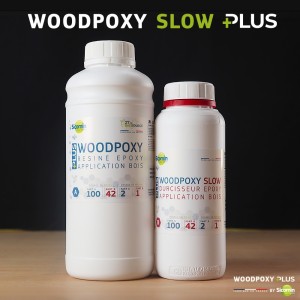

If you own a boat, you know that it’s not uncommon to need to carry out repairs from time to time. Epoxy resin is an excellent material to help you maintain your boat. It has many qualities that make it a powerful ally against time and harsh environmental conditions. So how do you choose the right marine epoxy resin for your boat? Find everything you need to know in this article.
Why use epoxy resin to repair your boat?
Epoxy resin is particularly well suited to marine projects. It is waterproof and withstands harsh conditions extremely well over time. Epoxy resin is often used to repair boat hulls or underwater pipes.
It is an excellent choice because it offers superior adhesion and strength compared to many other types of resin. It bonds easily to metals, all types of wood, glass, rubber, and fiberglass.
It can be used as a highly durable gel coat or as a repair material, as it adapts easily to most surfaces. It is transparent, making it discreet for minor repairs, but it can also be mixed with pigments to achieve the color you want.
It is also a great option when you are looking for a smooth, glossy finish.
In short, epoxy resin is perfect for repairing your boat. However, it is essential to choose a resin that is suited to your specific project.
Criteria for selecting an epoxy resin
To choose the right resin, you first need to define your needs. Are you looking to repair or enhance your boat? Is the issue located on the hull or inside the cabin? The epoxy resin you need will likely differ depending on these situations.
If you are repairing your boat’s hull with epoxy resin, we strongly recommend taking the time to choose a high-quality resin.
To make the right choice, you should consider:
-
The viscosity of the resin
-
The curing time
-
Whether it can be sanded
-
Whether it can be colored
-
Whether it adheres well to your substrate
Choosing a resin with the right viscosity is essential to ensure a successful result. A low-viscosity resin is used to fill holes or cracks or to cast molds. A higher-viscosity resin is used as a coating or filler to protect, seal, and add shine to a surface.
Curing time is also influenced by resin viscosity. It is important because it must give you enough working time to properly apply and shape the resin if needed. This information is provided by the manufacturer (as long as the recommended mixing ratios are respected).
Other technical aspects should also be considered. Check whether the resin is easy to sand. If you want to add color, make sure the resin is compatible with pigments. Finally, ensure that the resin does not remain tacky after curing.
Marine epoxy resins: our recommendations
An epoxy resin for small repairs
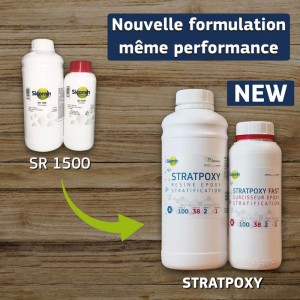
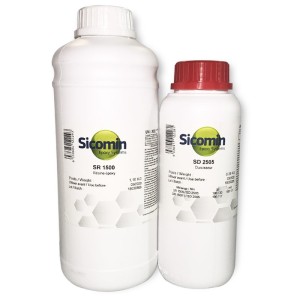
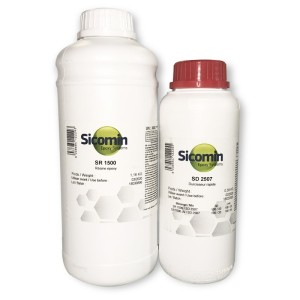
The SR 1500 epoxy resin with its slow hardener SD 2503 offers excellent adhesion on all types of substrates. It can be used to repair, fill, or seal holes and cracks in wood or fiberglass. It is also perfect for small repairs or for creating strong, waterproof joints.
An epoxy resin for larger repairs
The SR 5550 epoxy resin combined with its very slow hardener SD 5502 is designed to withstand marine environments. It provides a glossy, non-tacky finish. Its very slow hardener allows for precise application. It is recommended for boatbuilding, bonding, and laminating, and is ideal for repairing or manufacturing a hull.
A gel coat for coating a boat hull
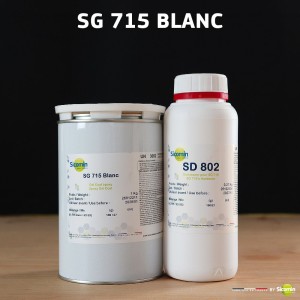
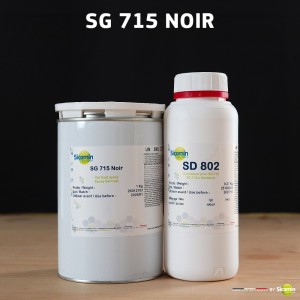
The SG 715 white epoxy gel coat with its SD 802 hardener is recommended for protecting your boat’s hull. It can be applied with a brush or spray gun, saving you time during application.
You now know the key criteria to consider before choosing an epoxy resin for your boat. For more options and detailed information, we recommend visiting our boating and marine category, where you can discover a wide range of marine epoxy resins.